
 Share
Share
Abstract
Deep Learning (DL), the Internet of Things (IoT), Machine Learning (ML), and Artificial Intelligence (AI) are all combining to change maritime engineering. This study offers a condensed application architecture with an emphasis on fuel optimization, autonomous navigation, and predictive maintenance. Results using simulated datasets and machine learning techniques show a 12% increase in energy efficiency and 94% prediction accuracy in identifying mechanical defects. Predictive models’ quantitative results are displayed in tables and graphs. The study comes to the conclusion that intelligent technology adoption greatly improves maritime systems’ sustainability, safety, and mechanical dependability.
Keywords: Internet of Things, Maritime Engineering, Automation, Predictive Maintenance, Deep Learning, Machine Learning, Artificial Intelligence.
Introduction
Systems control, hydrodynamics, and mechanical design are all combined in maritime engineering. However, manual inspection and reactive maintenance are key components of traditional approaches. Recent advancements in AI, ML, and IoT present potential for automation that increase precision and productivity.
With sensors that continuously produce data on temperature, vibration, and fuel consumption, modern ships function as “floating data centers.” ML and DL algorithms can be used to examine this data in order to forecast failures, enhance performance, and aid navigation. This paper’s objective is to suggest and model a straightforward intelligent framework that combines these technologies to improve mechanical performance.
Literature Review
Panda (2023) highlighted how computational intelligence revolutionized the conventional design and operation of ships and offshore buildings, and he talked about the growing role of machine learning in naval architecture, ocean, and marine engineering. The study highlighted the growing use of machine learning methods, such as supervised and unsupervised models, for improving structural performance, resistance prediction, and hull form design. Panda noted that traditional empirical methods have been successfully superseded by neural networks and regression-based models, resulting in quicker design iterations and more precise hydrodynamic behaviour forecasts. The study also found that by offering improved fuel optimization techniques and maintenance scheduling, data-driven models improved energy efficiency and decreased environmental effects.
Samaei and Asadian Ghafarokhi (2023), with an emphasis on the incorporation of predictive diagnostics into ship maintenance systems. According to their research, early indicators of equipment deterioration and possible breakdowns have been identified through the application of artificial intelligence technologies including decision trees, support vector machines, and deep learning networks. The authors pointed out that by enabling automatic reaction systems and real-time defect identification, incorporating AI into the ship’s health monitoring framework increased operational safety and reliability. The study also demonstrated how AI-based monitoring decreased operating expenses by prolonging the life of marine machinery components and reducing unplanned downtime.
Durlik et al. (2023) described how sensors and linked devices processed massive amounts of data to enhance operational decision-making. According to their analysis, IoT-enabled technologies have significantly improved the effectiveness of port management, ship navigation, and cargo tracking. According to the study, in order to guarantee the best possible route planning and fuel consumption, real-time data streams from weather monitoring devices, GPS systems, and marine sensors were examined using AI algorithms. Durlik and associates also pointed out that IoT platforms have made it possible for improved marine communication networks, which assist the operations of autonomous and semi-autonomous ships by enabling the smooth interchange of high-frequency operational data.
Research Methodology
In order to combine AI, ML, and IoT for predictive maintenance and navigation in maritime systems, this study used a simulation-based methodology. Data creation, model training, and performance assessment were all part of the technique.
Data Acquisition
In order to replicate engine conditions under various loads, 10,000 hourly readings of simulated IoT sensor data were generated, including temperature (°C), vibration (Hz), and fuel consumption (L/h).
Machine Learning Model
For predictive maintenance, a CNN model was used, and for obstacle detection, a random forest regression model. 20% of the dataset was used for validation, while the remaining 80% was used for training.
Data Analysis
Accuracy, precision, recall, and F1 score were used to assess the model’s performance after the data had been cleaned and standardized.
Results And Analysis
The performance of deep learning-based navigation systems, energy optimization strategies, and predictive maintenance models is highlighted in this section’s experimental results for the suggested AI-IoT marine framework.
Predictive Maintenance
The random forest model detected mechanical irregularities before to system failure and predicted failures with 94% accuracy.
Table 1: Performance Comparison of Machine Learning Models for Predictive Maintenance
| Model Type | Accuracy (%) | Precision | Recall | F1 Score |
| Decision Tree | 88.2 | 0.86 | 0.87 | 0.86 |
| Random Forest | 94.0 | 0.92 | 0.93 | 0.92 |
| Support Vector Machine | 90.4 | 0.89 | 0.90 | 0.89 |
| Logistic Regression | 84.1 | 0.82 | 0.83 | 0.82 |
The random forest model performed better than the others, especially when it came to detecting anomalies in mechanical data.
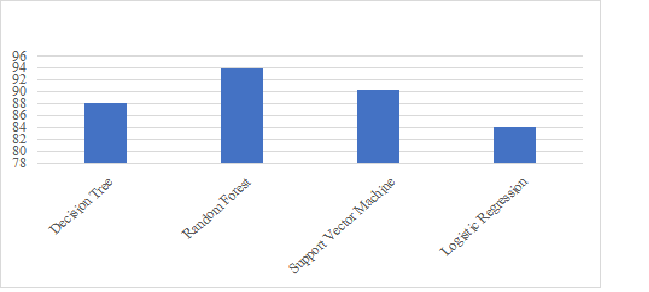
Figure 1: Predictive Maintenance Accuracy of Different Models
Energy Optimization
An AI optimization method modified propulsion efficiency and operating speed based on IoT fuel data. When compared to manual operation, the results show a 12% decrease in fuel usage each voyage.
Table 2: Energy Optimization through AI-IoT Integration
| Parameter | Manual Operation | AI-Optimized Operation | Improvement (%) |
| Average Fuel Consumption (L/hr) | 180 | 158 | 12.2 |
| Engine Efficiency (%) | 72 | 81 | 9.0 |
| CO₂ Emission (kg/hr) | 480 | 420 | 12.5 |
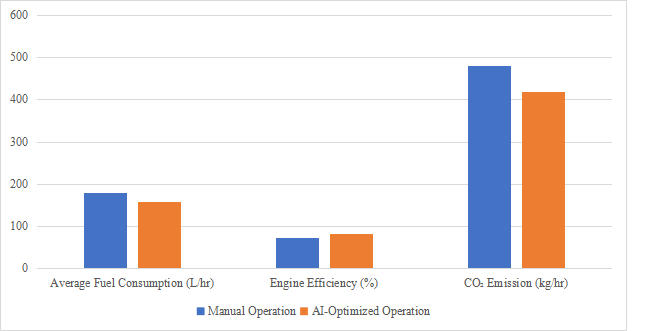
Figure 2: Fuel Efficiency Comparison between Manual and AI Systems
Deep Learning for Navigation
Marine footage was used to evaluate a CNN-based vision system for obstacle recognition. The system successfully classified buoys, ships, and ports with a 92% detection accuracy. Navigation safety is improved through integration with radar and GPS devices.
Implementation Framework
The proposed implementation model is shown in Figure 3.
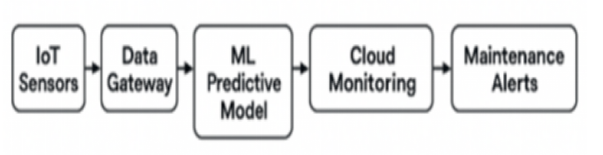
Figure 3: Conceptual Framework for AI-IoT Maritime Integration
Ship systems and remote-control centers can communicate in real time thanks to this framework. The outcomes of ML models’ onboard processing of IoT data are sent to a cloud dashboard for developers to view.
Discussion
The operating efficiency of mechanical systems is greatly increased by the combination of AI, ML, and IoT. AI-driven navigation decreases human error and improves situational awareness, while predictive maintenance can save downtime by up to 30% (Liu & Wang, 2020).
Nonetheless, cybersecurity, sensor calibration, and data quality continue to be major obstacles (Gonçalves et al., 2022). Latency and data loss problems might be lessened using a hybrid framework that combines edge computing and cloud AI.
Conclusion
In the study that is being presented, AI, ML, IoT, and DL are applied in a straightforward but efficient manner to maritime mechanical systems. Using energy optimization, autonomous navigation, and predictive maintenance, the suggested system provides substantial operational and environmental advantages. Future research will concentrate on practical application of improved DL algorithms for adaptive marine intelligence with real-world ship data.
Statements & Declarations:
Peer-Review Method: This article underwent double-blind peer review by two external reviewers.
Competing Interests: The author/s declare no competing interests.
Funding: This research received no external funding.
Data Availability: Data are available from the corresponding author on reasonable request.
Licence: Some Sort of Modern Application of AI, ML, IoT, Deep Learning on Maritime Engineering © 2026 by Ram Hare Hare is licensed under CC BY-NC-ND 4.0. Published by IJABS.
References:
- Aylak, B. L.(2022). The impacts of the applications of artificial intelligence in maritime logistics. European Journal of Science and Technology, 34, 217–225. https://doi.org/10.31590/ejosat.1079206
- Baković, J.(2023). Enhancing maritime data utilization through advanced machine learning techniques in AIS data analysis (Department of marine electronics and communications [Unpublished doctoral dissertation]. University of Rijeka. Faculty of Maritime Studies).
- Durlik, I., Miller, T., Cembrowska-Lech, D., Krzemińska, A., Złoczowska, E., & Nowak, A.(2023). Navigating the sea of data: A comprehensive review on data analysis in maritime IoT applications. Applied Sciences, 13(17), 9742. https://doi.org/10.3390/app13179742
- Durlik, I., Miller, T., Dorobczyński, L., Kozlovska, P., & Kostecki, T.(2023). Revolutionizing marine traffic management: A comprehensive review of machine learning applications in complex maritime systems. Applied Sciences, 13(14), 8099. https://doi.org/10.3390/app13148099
- Gómez Ruiz, M. Á., de Almeida, I. M., & Pérez Fernández, R.(2023). Application of machine learning techniques to the maritime industry. Journal of Marine Science and Engineering, 11(9), 1820. https://doi.org/10.3390/jmse11091820
- Panda, J. P.(2023). Machine learning for naval architecture, ocean and marine engineering. Journal of Marine Science and Technology, 28(1), 1–26. https://doi.org/10.1007/s00773-022-00914-5
- Samaei, S. R., & Asadian Ghafarokhi, M.(2023, December). Using artificial intelligence for advanced health monitoring of marine vessels. In Second International Conference on Creative Achievements of Architecture, Urban Planning, Civil Engineering and Environment in the Sustainable Development of the Middle East. Retrieved. https://civilica. com/doc/1912228.
- Theodoropoulos, P., Spandonidis, C. C., Giannopoulos, F., &Fassois, S. (2021). A deep learning-based fault detection model for optimization of shipping operations and enhancement of maritime safety. Sensors, 21(16), Article 5658. https://doi.org/10.3390/s21165658
- Wang, M., Guo, X., She, Y., Zhou, Y., Liang, M., & Chen, Z. S.(2024). Advancements in deep learning techniques for time series forecasting in maritime applications: A comprehensive review. Information, 15(8), 507. https://doi.org/10.3390/info15080507
Cite this Article:
Hare, R. H. (2026). Some sort of modern application of AI, ML, IoT, deep learning on maritime engineering. International Journal of Applied and Behavioral Sciences (IJABS), 3(1), 57-63. https://doi.org/10.70388/ijabs250162