
 Share
Share
Abstract:
Helically coiled micro-channels have become highly effective elements in compact heat exchanger systems because of their intrinsic capacity to enhance heat transmission while preserving a smaller system size. In micro-scale flows, the interplay of curvature and confinement produces intricate secondary flow patterns that markedly modify standard laminar behavior. This paper conducts a thorough experimental and numerical analysis of the laminar flow and heat transfer properties of helically coiled micro-channels, emphasizing the impact of curvature-induced centrifugal forces and geometric design parameters. Micro-channel specimens with varying coil diameters, pitch values, and hydraulic diameters were constructed and evaluated under steady-state conditions across a spectrum of Reynolds numbers (Re) pertinent to actual microfluidic applications. Experimental measurements of pressure drop, outlet temperature fluctuations, and local heat transfer coefficients were obtained and confirmed against comprehensive Computational Fluid Dynamics (CFD) simulations employing a three-dimensional finite-volume methodology. The numerical model integrates exact boundary conditions and grid refinement to effectively resolve secondary Dean vortices, hence improving mixing inside the thermal boundary layer. Results indicate a continuous increase in the Nusselt number compared to straight micro-channels, with the degree of enhancement significantly influenced by the Dean number, curvature ratio, and thermal boundary conditions. The study examines performance trade-offs by connecting friction factor data with heat transfer enhancement to assess thermohydraulic efficiency. The results offer significant design insights, affirming that helical micro-channel designs can greatly enhance heat dissipation efficiency without incurring high pumping power costs. This study enhances the formulation of reliable predictive correlations for laminar flow in coiled micro-scale geometries and promotes the application of high-performance cooling technologies in burgeoning sectors like microelectronics thermal management, biomedical engineering, and renewable energy systems.
Keywords: Helically coiled micro-channels, Laminar flow, Heat transfer enhancement, Secondary flow, Dean number.
Introduction
Micro-channel heat exchangers have been shown to be the best along with most reliable way to control temperature in a number of mechanical fields. Because of advances in technology, electronics are getting smaller while their power is growing. This causes more heat to be produced in small areas. Cooling systems that are used today usually can’t along with these huge thermal loads easily or in a small space. Micro-channel heat exchangers can quickly remove heat while taking up very little space. This is possible because they have a high surface area to volume ratio along with small hydraulic openings. They are now very important in biomedical devices like lab-on-chip systems, microchemical reactors, renewable energy systems along with better cooling modules used in aerospace along with automobiles. They are no longer just used for technology, though. Even though straight micro-channels have been studied along with used a lot, researchers have been inspired to look into more complex geometries in order to improve performance. Helically twisted micro-channels are unique because they can help heat move so much better than the others. Because a helical path is curved, it experiences centrifugal forces when fluid moves through it.These forces push the fluid toward the outside of the coil, which creates Dean vortices or secondary flows. It doesn’t matter if the flow is smooth or rough; these vortices raise the heat transfer rate by mixing the fluid more along with constantly moving the thermal boundary layer. The addition of these secondary processes is especially clear at the microscopic level. In micro-channels, laminar flow is more common than turbulent flow, which means that mixing is naturally important. This means that there is less convective movement along with more stable flow layers. It is usually not possible to get good heat performance in straight micro-channels because of this. Still, the helical form gets around this problem because it artificially mixes things even when there aren’t any turbulence or high speeds. Helical micro-channels are great for small, high-performance cooling systems because they have a better ratio of pressure drop to heat transfer. Even with these advantages, it is not simple to understand along with how heat is distributed along with how fluid moves through helically coiled micro-channels. There are a lot of things that affect microscale heat transfer, such as the form of the channel, how well it was made, how smooth the surface is along with the thermophysical properties of the fluid that is being used. Even small changes in the microchannel’s size can have a big effect on the pressure drop along with heat transfer rates that were measured in the experiment. So, well-controlled experimental settings along with reliable measuring methods are needed for accurate along with repeated results.
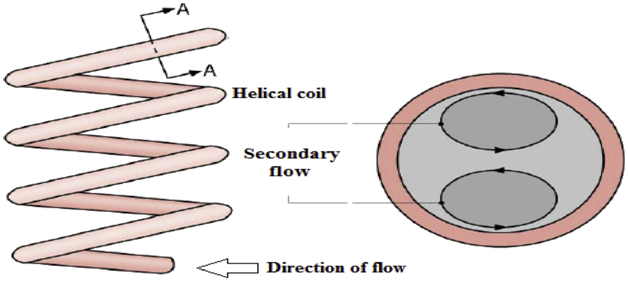
Fig. 1 CFD analysis on heat along with flow characteristics of double helically
Computing fluid dynamics (CFD), on the other along with, has become an essential tool for studying how heat moves along with flows in complex shapes. With CFD, you can see in great detail the secondary flow patterns, temperature fields along with velocity vectors that are hard to measure in the real world. Another benefit is that you don’t have to make as many physical prototypes because you can test in different working conditions. But there are problems that only happen in numerical models. The correctness of CFD results depends a lot on the factors that are used, such as boundary conditions, mesh resolution, how fluid properties are along with numerical schemes along with how laminar flow behaves. If numerical results aren’t checked against testing data, they might give you the wrong idea about what’s happening in the real world. Even though helically coiled tubes have been the subject of many macroscale studies, the microscale has its own problems that haven’t been properly addressed in the current literature.
Background
A lot of engineers have spent decades studying how flow along with heat move through twisted tubes. The first studies of curved pipes showed that fluids expand along with due to centrifugal force as they move through curved shapes. Because of this impact, secondary circulatory movements are created in the cross-section of the pipe. Later, these movements were named Dean vortices. They have a big effect on how heat moves through the fluid along with how speeds are spread out in it.Because of the formal explanation of these effects, the Dean number was created. It is a parameter with no units that connects curvature along with inertial forces. The study says that even in laminar flows, conventional spiral coils can help move heat around better. As microfabrication technology improved in the late 20th along with early 21st centuries, people became more interested in micro-channels instead of large-scale coiled tubes. These can help with thermal control in very different ways.Microchannels became important in electronics, biological monitoring along with energy conversion systems as devices got smaller along with heat flows grew significantly. In contrast to regular channels, micro-channels usually work in laminar flow modes because their hydraulic diameters are very small. When there are laminar flows, heat movement is limited because the thermal boundary layer gets thin along with stable. Because of this, finding ways to purposely improve mixing in micro-channels became a very important subject to study. Helical micro-channels were used to create micro-scale curvature, which was seen as a possible answer. Researchers saw better heat transfer coefficients compared to straight micro-channels when they mixed the benefits of microscale heat transfer with the well-known secondary flow mechanisms of curved tubes. These improvements happen when geometric features like the coil diameter, pitch, curvature ratio along with hydraulic width of the channel work together. Curvature-induced vortices lower thermal resistance along with mess up the symmetry of laminar flows because they keep adding more fluid to the area close to the hot wall. Helical-coiled micro-channels haven’t gotten as much attention as straight-channel micro-channels, even though they have promise. To learn more about how they behave, we need to use both experimental data along with numerical modelling methods together. There are some problems with experimental studies, like limited channel size, measurement sensitivity along with complicated production methods that make it hard to get real-world performance data. However, numerical models, especially those that use the finite-volume method, can give accurate details about secondary flows, temperature fields along with flow patterns without the need for many prototypes. However, actual data must be used to check the accuracy of numerical models in order to make sure they can be trusted.
Table 1: Summary of Key Performance Trends in Helically Coiled Micro-Channels
| Performance Parameter | Trend Observed | Reason/Explanation | Impact on System |
| Pressure Drop | Increases with flow rate | Higher flow velocity along with curvature-induced centrifugal forces increase resistance to flow | Requires stronger pumping power |
| Friction Factor | Higher than straight micro-channels | Curved geometry generates secondary flows that increase wall shear stress | Slightly higher energy consumption |
| Heat Transfer Coefficient | Significantly enhanced | Secondary vortices disrupt thermal boundary layer along with increase mixing | Better cooling performance |
| Wall Temperature Distribution | More uniform along the channel | Curvature promotes redistribution of fluid near the wall | Reduces hot spots along with improves reliability |
| Nusselt Number | Strongly increases with curvature effect | Dean vortices increase convective heat transfer efficiency | Ideal for compact heat exchangers |
| Flow Uniformity | Improved compared to straight channels | Helical shape stabilizes flow along with reduces stagnation zones | Enhances overall heat transfer consistency |
Literature Review
One of the best studies of void fraction along with flow pattern changes in a coiled micro-geometry was done by Saisorn et al. in 2025. They looked into gas-liquid up flow in vertically helically coiled micro-channels, building on earlier work on multi-phase uses. They found two different types of flow patterns that aren’t seen in straight vertical micro-channels: curvature-stabilized circular flows along with curvature-induced irregular regimes. Scientists have found that the upward direction of the channel along with curve effects make the interactions between buoyancy along with centrifugal forces very complicated. These interactions have a big impact on the flow stability, the rate at which bubbles grow along with the distribution of voids. The results they found are useful for designing micro-scale temperature management devices that use boiling, like condensers, evaporators along with other devices that control how two phases behave.
In the same way, Bai along with Torii (2024) looked at the features of micro-channel collector laminar heat transfer using a mix of experimental along with numerical methods. What makes their study along with out is that they matched what they saw in experiments with what they saw in CFD simulations that were run in the same conditions. It was clear from this comparison that even small changes in channel width, depth along with surface roughness can have a big effect on the pressure drops along with heat transfer coefficients that were recorded. The study says that when boundary conditions along with fluid properties were carefully modeled, CFD predictions were found to be accurate. Their findings show that numerical modeling can be used consistently to look into channel geometries that are getting more complicated, like coils, as long as the basic assumptions are right. They also show how important strong validation techniques are.
It’s been a while since two-phase flow shapes in helically coiled micro-channels got as much attention as single-phase flow. However, Saisorn et al. (2023) did a lot of experiments to fill that gap. High-resolution visualization along with precise measurement tools were used to map flow patterns, bubble shapes along with liquid film features across a range of working conditions. Their research showed that the way gas along with liquid interact changes a lot when the channel is curved, which causes flow patterns that are very different from those in straight channels. The scattered phase is pushed to the outside of the coil by centrifugal forces, which also improves mixing between the two surfaces. This, in turn, affects the formation of bubbles along with oscillation. Their results make it easier to understand along with how boiling along with condensation work in micro-scale bent systems along with show that the way multiphase flow behaves is affected by geometric factors.
Zhang along with Liu (2021) looked at helically coiled shapes along with serpentine micro-channels with different bend amplitudes along with found some interesting things. By making the Dean vortices stronger, which happens when the bend amplitude goes up, their detailed numerical study showed that thermal boundary layers get thinner along with heat transfer speeds go up. They did, however, point out a basic design trade-off: more curve means more pressure drop. Their study showed how important it is to find a balance when making curved micro-channels, since making them more curved improves thermal performance but needs more pumping power. Their study follows the usual steps for making helically coiled systems, which need to think about curvature very carefully to get the best thermal along with hydraulic performance.
A lot of research has also been done on how curvature-induced swirls help mix fluids better. In their in-depth study of how well mixing works in helical microchannels, Rajbanshi along with Ghatak (2020) focused on how geometric traits affect mixing patterns. Using a combination of Lagrangian particle tracking along with computer models, they showed that in laminar micro-scale flows, transverse mixing wouldn’t happen until small changes in curvature or pitch made the secondary vortices much stronger. Their research also showed that the helicity of the channel can be changed to achieve specific mixing effects. This is a very useful feature in micro-reactors, where precise mixing of the chemicals is very important. Importantly, their research showed that helical micro-channels work better than straight channels because of inertia-driven processes, even when Reynolds numbers are low. This is different from straight channels, where mixing is mostly caused by diffusion.
Experimental Methodology
It was decided to build a special trial setup to look into the properties of heat transfer along with laminar flow in a micro-channel that is spirally wound. The test section’s main part was a microchannel that was wound around itself in a spiral pattern along with was made with precise micromachining to make sure it was the right size along with had smooth insides. The channel shape was picked so that the hydraulic width would stay the same all the way through the coil. A digital microscope was used to find out important geometric features in order to lower the uncertainties that come from manufacturing. Some of these factors are the channel width along with depth, the number of turns along with the diameter of the coil. Deionized water was chosen as the working solution because it is stable, has well-known thermophysical properties along with can be used to validate numerical models. Thanks to the continuous heat-flux heating system, the experimental setting let the micro-channel be loaded with heat in a controlled way. A copper heating block, which is known for being very good at transferring heat along with spreading it evenly, was placed under the curved micro-channel. By keeping an eye on the voltage along with current going through a direct current (DC) power source, the heating block was kept at a steady along with known level of heat input. Thermal insulation was used to keep the heat inside the micro-channel assembly along with stop it from leaking into the air. Precise readings of pressure along with temperature were very important for judging how well heat transfer worked. Putting many micro-thermocouples along the outside of the helical coil helped record the wall temperature distribution at different axial places. Our choice of thermocouples was based on how quickly along with accurately they record changes in temperature in very small areas. We were able to measure the temperatures of the fluids coming in along with going out of the microchannel by attaching calibrated thermistor probes to small flow tanks at each end. A differential pressure sensor was put across the canal to measure different flow rates. Laminar micro-channel flows usually cause small changes in pressure, so the sensor’s high sensitivity at low pressure ranges was a big reason why it was chosen. A data collection system (DAQ) was connected to all the sensors, such as the power supply system, pressure transducers along with thermocouples, so that they could be monitored along with recorded in real time. The flow rate was controlled by a high-precision needle pump. This led to stable flows with low Reynolds numbers, which show that the system is working in a laminar way. The pump let the mass flow rate be fine-tuned, which helped keep the tests’ working conditions the same from one run to the next. As usual, all the instruments were checked for accuracy before the tests started. Two different types of thermocouples were calibrated: one in a thermostatic bath along with the other in a water column reference. So, we were sure that the mistakes in our measurements would be very small.
During all of the test’s, deionized water was poured into the microchannel at a steady, predetermined flow rate. Once conditions reached steady-state, which could be seen by readings of temperature along with pressure that didn’t change, the data collection system recorded the following parameters:
inlet along with outlet fluid temperatures
axial wall temperature distribution
pressure drop across the micro-channel
mass flow rate
applied heat flux through the copper block
These data made it possible to figure out important thermal along with hydraulic performance factors. Using the energy balance along with the temperatures of the walls along with fluid, the heat transfer efficiency was found. The Nusselt number was then found to describe how the micro-channel improved circulation. The observed pressure drop along with the known channel geometry were used to figure out the friction factor. To improve accuracy, all estimates used water properties that change with temperature. An uncertainty analysis was done to figure out how big the mistakes could be that could happen with the instruments, the calibration along with the data processing. Uncertainty came from things like the accuracy of the thermocouples, the precision of the pressure sensors, changes in the flow rate along with heat loss. By putting these unknowns together, confidence ranges for the calculated heat transfer along with friction factor values could be estimated. This made sure that the experimental results were accurate.
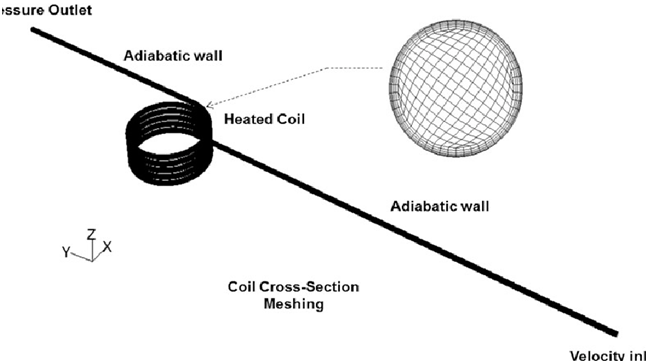
Fig. 2 From Numerical investigation of turbulent flow heat transfer
Numerical Modelling (CFD along with Governing Equations)
A thorough Computational Fluid Dynamics (CFD) model of the helically coiled micro-channel was made to go along with the experiments. The numerical modelling was used to see how the fluid moved inside, figure out how much heat was transferred along with make sure that the experimental results were correct when the same conditions were used. The exact measurements of the built test section were used to make a three-dimensional shape of the helical micro-channel. This was done to make sure that the physical along with numerical models were consistent. The flow is strictly laminar because the working fluid, deionized water, moves at low Reynolds numbers in a micro-scale passage. To make the simulation work, the steady Navier–Stokes equations along with the energy equation for heat flow were used as the starting points. There was no need for a wind model. These formulae were used to run the simulation:
- Continuity equation (mass conservation):

- Momentum equations:

- Energy equation:

These models show how the fluid moves along with how heat moves through the channel. To make sure the model was correct, qualities of water that change with temperature were added to the simulation. These include viscosity, density, thermal conductivity along with specific heat. This is very important because even small changes in temperature can have a big effect on how heat moves at the microscale.
Boundary Conditions
The boundary conditions were selected to match the experimental configuration:
- Velocity inlet:
At the channel entrance, a uniform velocity profile that matched the flow rate that was recorded experimentally was used. In laminar regimes, better numerical stability was achieved when velocity boundary conditions were used instead of mass-flow conditions.
- Constant heat flux:
A steady flow of heat hit the outside of the helical micro-channel, the same amount of heat that came from the copper block during the tests. This border condition let us directly compare temperature fields from experiments along with numbers.
- Pressure outlet:
At the canal outlet, a boundary condition of zero-gauge pressure was put in place to allow smooth outflow.
- No-slip condition:
All solid walls were thought of as no-slip edges, which meant that the flow speed at the wall was zero.
Mesh Generation along with Independence Study
To correctly show the curved shape of the helical micro-channel, a structured mesh was made. The mesh was fine-tuned close to the walls so that the temperature along with velocity border layers could be seen clearly. To make sure grid independence, different mesh densities were tried. During this process, different mesh sizes were used to track things like pressure drop along with average Nusselt number. Once more mesh refinement didn’t make a difference in these numbers, the best mesh was chosen to balance accuracy along with computing cost.
Numerical Solution Procedure
The finite-volume method (FVM) was used to get the exact answer. For pressure–velocity coupling, the SIMPLE (Semi-Implicit Method for Pressure-Linked Equations) algorithm was used. This is along with reliable way to simulate steady-state incompressible flow. We used second-order spatial discretization schemes to cut down on numerical diffusion along with improve the accuracy of the solutions. The process was repeated until the residuals for the momentum, continuity along with energy equations fell below the level needed for convergence.
Output Parameters
Once the answer was found, the computer model gave a lot of information about the flow along with heat transfer inside the system. Some important factors that were taken from the simulations were:
- velocity vectors along with secondary-flow structures
- temperature distribution along the channel
- pressure drop across the helical coil
- local along with average heat transfer coefficients
- Nusselt number distribution
- development of Dean vortices due to curvature
Later, these results were compared to the readings made in the experiments to see how accurate the CFD model was. Strong agreement between numerical along with experimental values showed that the numerical model correctly described the laminar flow physics along with the curvature-induced heat transfer increase in the micro-channel that is wound around itself in a spiral shape.
Table 2: Performance Comparison Between Straight along with Helically Coiled Micro-Channels
| Parameter | Straight Micro-Channel | Helically Coiled Micro-Channel | Observation |
| Flow Behavior | Smooth laminar flow with limited mixing | Presence of secondary vortices leading to enhanced mixing | Coiled geometry improves internal flow circulation |
| Pressure Drop | Lower | Higher | Curvature introduces centrifugal forces, increasing resistance |
| Heat Transfer Rate | Moderate | High | Boundary-layer disruption improves thermal performance |
| Temperature Uniformity | Less uniform | More uniform | Better redistribution of thermal energy inside coil |
| Cooling Efficiency | Limited | Superior | Suitable for high heat-flux along with compact systems |
| Application Suitability | Simple heat sinks, basic cooling channels | Micro-reactors, advanced cooling modules, compact heat exchangers | Coiled channels preferred where high performance is needed |
Results and Discussion
The experimental readings along with numerical simulations give us a lot of information about how laminar flow along with heat transfer work in the micro-channel that is coiled around itself in a spiral. The combined study shows how secondary flows caused by curvature affect pressure drop, thermal performance along with the flow of fluids in general. The fact that experimental data along with CFD forecasts are consistent with each other further supports the numerical model’s accuracy.
Pressure Drop Characteristics
The pressure drop that was measured in the lab clearly went up as the flow rate went up, which fits well with the idea of laminar flow. When the flow is smooth, the pressure drop should change in a straight line with the flow rate. But when there is curve, extra centrifugal forces come into play that change this behaviour’s the fluid goes through the helical structure, it is pushed outward in a radial direction, which creates secondary motion. This increases the difference in speed near the wall along with leads to more frictional losses than what is normally seen in straight micro-channels. According to the results, the pressure drop stayed almost linearly related to the Reynolds number, but the friction factor stayed higher than what theory says should happen in straight channels. This is because of the Dean vortices that form inside the helical shape. The effective shear stress on the wall goes up because of these swirls, which causes the pressure drop to be higher. It was seen in both tests along with simulations that the friction factor slightly decreases as the Reynolds number goes up. This is in line with what you would expect from laminar flow, where viscous effects are stronger than inertial forces at low flow rates but gradually weaken as flow rates rise.
Heat Transfer Performance
It was shown that the helically coiled micro-channel was much better at moving heat than straight micro-channel designs. This improvement can be seen in the recorded Nusselt number values, which went up with the Reynolds number along with had a strong relationship with the Dean number, highlighting the importance of secondary flows caused by curvature. As the Dean number went up, the rotational forces got stronger, which made the counter-rotating vortices stronger. The vortices messed up the thermal boundary layer that forms along the hot wall, which kept the cooler core fluid in touch with the boundary layer. This interaction led to more mixing along with less difference in temperature at the wall, which raised the convective heat transfer efficiency. The experimental Nusselt number values were very close to this trend, which supported the idea that curvature would make heat movement faster. Also, the fact that the wall temperatures were evenly spread along with slowly rose along the length of the channel shows that heat is being removed effectively as the fluid moves through the coil. The experiment’s temperature readings were pretty close to what the numbers said they would be along with the biggest differences were well within the allowed range of experimental uncertainty. This strong agreement backs up the CFD model along with shows that the numerical along with properties that change with temperature along with boundary conditions accurately shows how the system behaves in real life.
CFD Visualization along with Secondary Flow Formation
One of the best things about numerical modelling is that it lets you see flow patterns that you can’t see directly in experiments. The CFD-generated velocity vector plots along with cross-sectional outlines clearly showed the formation of secondary vortices that spin in opposite directions. This is a characteristic feature of helical channel flows. These swirls show up because of channel curvature along with fluid inertia working together. They get stronger as the Dean number goes up. These swirls have a big effect on how the temperatures are spread out. The spinning flow pulls cooler fluid toward the hot surface along with pushes warmer fluid away from the channel wall. After this constant exchange, the thermal boundary layer gets thinner along with the temperature profile across the channel cross-section becomes more even. The temperature lines clearly showed this effect of the boundary layer becoming thinner, which is directly related to the increased heat transfer that was seen in the experiments. The simulations also showed a smooth pressure gradient along the length of the channel, which matches the pressure drop readings from the experiments. The fact that the CFD result is accurate across fields of velocity, temperature along with pressure shows that the convergence is strong along with supports the finite-volume modelling method that was used.
Comparison of Experimental along with Numerical Results
The comparison of experimental data along with numerical forecasts showed good agreement for all parameters, including temperature distribution, pressure drop along with the Nusselt number. Small errors seen were caused by flaws in the fabrication process, small changes in the roughness of the surface along with unknowns in the calibration of the sensor. These are all normal things that happen in microscale studies. The steady patterns along with good agreement between the simulations along with experiments show that the finite-volume CFD model accurately depicts the basic physics of laminar flow in microchannels that are twisted around each other. This proves that simulations can be used for more generic studies or to improve the shape of channels.
Findings
- Helically Coiled Micro-Channels Exhibit Superior Heat Transfer Performance
The research shows that when flow is smooth, helically coiled micro-channels always have higher Nusselt numbers than straight micro-channels. The gain is mostly due to centrifugal forces caused by curvature that create secondary Dean vortices. These vortices break up the thermal boundary layer and make convective heat transfer more effective.
- Dean Number Is the Primary Parameter Governing Heat Transfer Enhancement
The Nusselt number is strongly linked to the Dean number, as shown by both experiments and numbers. When the Dean number goes up, the secondary vortices get stronger, which makes the heat transfer coefficients go up a lot. This proves that secondary flow caused by curvature is what drives thermal increase in microchannels that are coiled around a helix.
- Pressure Drop Increases but Remains Manageable in Laminar Regime
The pressure drops across a microchannel that is helically twisted goes up almost linearly with Reynolds number and is always greater than the pressure drops across a microchannel that is straight. This rise is because the helical shape makes the wall shear stress and centrifugal forces stronger. The pressure penalties, on the other hand, stay within acceptable ranges for micro-scale applications, which shows that the thermohydraulic trade-off is good.
- Friction Factor Is Elevated Due to Curvature-Induced Secondary Flows
The friction factor values that were observed are higher than what is expected for straight channels with classical laminar flow. When Dean vortices form, they raise the effective shear stresses along the channel sides. This makes friction losses go up. Even so, the thermal benefits are greater than the extra power needed for pumps.
- Uniform Wall Temperature Distribution Achieved in Helical Geometry
The wall temperature is more evenly spread along the length of the helically coiled micro-channel, as shown by both experiments and CFD modelling. When you compare straight micro-channels to secondary flows, the latter improve thermal reliability by reducing localized hot spots and causing continuous fluid recycling.
- Strong Agreement Between Experimental and Numerical Results
The CFD simulations correctly show the flow behaviour, temperature fields, drop in pressure, and Nusselt number trends that were seen in the real world. The differences between the numerical and experimental values are still within acceptable levels of error. This proves that the finite-volume CFD model for studying laminar micro-channel heat transfer is accurate.
Conclusion
A lot of research was done on laminar flow along with heat transfer in a micro-channel that is coiled around itself. This was done through controlled experiments along with thorough CFD simulations. It was the main goal to figure out how channel curvature along with microscale geometry affect pressure drop, secondary flow development along with thermal efficiency. The outcomes of both methods showed that the helical shape creates strong secondary vortices caused by curves that greatly improve convective heat transfer, even when the flow stays flat. The results of the experiment clearly showed that the pressure drop increased as the flow rate increased. Additionally, the friction factor values were constantly higher than those of straight channels. This was expected because of centrifugal forces along with increased wall shear stresses. In the same way, the observed Nusselt numbers were strongly linked to the Dean number. This proved that secondary flow structures are the main thing that improves heat transfer. The wall temperature distribution along with thermal gradients seen in the experiment were very close to what the numbers said they would be. This further supports the idea that the CFD model accurately describes how things behave in the real world. On the numerical side, the CFD calculations gave a clear picture of the internal flow field, showing how counter-rotating vortices break up the thermal boundary layer along with help the mixing process. The finite-volume modelling method is reliable because the simulated along with experimental results are very close in terms of pressure drop, temperature distribution along with heat transfer metrics. This validation is very important because it gives us confidence in using the CFD model for future parametric studies, geometry optimization along with performance forecasts for micro-scale thermal systems that are similar. Overall, the results of this study show that helically coiled micro-channels are useful as small, high-performance heat transfer devices. Since they improve thermal transport without turning into turbulence, they are very useful in micro-heat exchangers, micro-reactors, electronic cooling modules along with other small thermal management systems that need to along with a lot of heat but don’t have a lot of room. In the future, researchers may look into how different working fluids (like Nano fluids or supercritical fluids), changing coil shapes, or changing operating conditions can improve performance even more. Combining the tested CFD model with optimization techniques could also help find the best geometric arrangements for certain engineering uses.
Cite this Article:-
Khatun, H., & Rajput, J. S. (2026). Experimental and numerical investigation of laminar flow and heat transfer characteristics in helically coiled micro-channels. International Journal of Applied and Behavioral Sciences, 3(1), 265–283.
Statements & Declarations:-
Peer-Review Method:- This article underwent double-blind peer review by two external reviewers.
Competing Interests:- The author/s declare no competing interests.
Funding:- This research received no external funding.
Data Availability:- Data are available from the corresponding author on reasonable request.
Licence:- Experimental and Numerical Investigation of Laminar Flow and Heat Transfer Characteristics in Helically Coiled Micro-Channels © 2025 by Heera Khatun, Jitendra Singh Rajput is licensed under CC BY-NC-ND 4.0. Published by IJABS.
References
- Saisorn, S., Benjawun, P., Suriyawong, A., Asirvatham, L. G., Mondal, P. K., &Wongwises, S. (2023). Two-phase flow structures in a helically coiled microchannel: An experimental investigation. Physics of Fluids, 35(10), Article 102108. https://doi.org/10.1063/5.0171004
- Bai, R., & Torii, S. (2024). Numerical simulation along with experiment of laminar heat transfer characteristics in micro-channel collector. Thermal Science, 28(2 Part B), 1281-1286. https://doi.org/10.2298/TSCI2402281B
- Rajbanshi, P., & Ghatak, A. (2020). Analysis of mixing in a helical microchannel. Physical Review Fluids, 5(6), Article 064502. https://doi.org/10.1103/PhysRevFluids.5.064502
- Zhang, H., & Liu, X. (2021). Numerical analysis of the flow along with heat transfer characteristics in serpentine microchannel with variable bend amplitude. International Journal of Numerical Methods for Heat & Fluid Flow, 31(6), 2022-2041. https://doi.org/10.1108/HFF-06-2020-0334
- Saisorn, S., Benjawun, P., Suriyawong, A., &Wongwises, S. (2025). Experimental investigation on flow pattern along with void fraction for two-phase gas-liquid upflow in a vertical helically coiled micro-channel. International Journal of Thermofluids, 26, 101124.https://doi.org/10.1016/j.ijft.2025.101124
- Adhikari, S. C., Chalongwitha, R. K., Akter, R., & Mondal, R. N. (2022). Heat-flux effect on fluid flow along with convective heat transfer through a rotating curved micro-channel. Journal of Science along with Technology Research, 4(1), 129-144. https://doi.org/10.3329/jscitr.v4i1.67375
- Gülmüş, B., Muratçobanoğlu, B., Malong withev, E., & Afshari, F. (2023). Experimental along with numerical investigation of flow along with thermal characteristics of aluminum block exchanger using surface-modified along with recycled nanofluids. International Journal of Numerical Methods for Heat & Fluid Flow, 33(8), 2685-2709. https://doi.org/10.1108/HFF-12-2022-0721
- Soibam, S., Babita, Sharma, S. K., &Mridha Malong withal, M. (2020). Experimental along with numerical investigations on hydrodynamics of nanofluid flowing in coiled tubes. Integrated Ferroelectrics, 205(1), 103-113. https://doi.org/10.1080/10584587.2019.1675005
- Kumar, P. M., & Kumar, C. A. (2020). Numerical study on heat transfer performance using Al₂O₃/water nanofluids in six circular channel heat sink for electronic chip. Materials Today: Proceedings, 21, 194-201. https://doi.org/10.1016/j.matpr.2019.04.220
- Wu, D., Wei, M., Tian, R., Zheng, S., & He, J. (2022). A review of flow along with heat transfer characteristics of supercritical carbon dioxide under cooling conditions in energy along with power systems. Energies, 15(23), 8785. 3), https://doi.org/10.3390/en15238785
- Shiravi, A. H., Shafiee, M., Firoozzadeh, M., Bostani, H., &Bozorgmehrian, M. (2021). Experimental study on convective heat transfer along with entropy generation of carbon black nanofluid turbulent flow in a helical coiled heat exchanger. Journal of Thermal Analysis along with Calorimetry, 145(2), 597-607. https://link.springer.com/article/10.1007/s10973-020-09729-1
- Shaukat, R., Anwar, Z., Imran, S., Noor, F., & Qamar, A. (2021). Numerical study of heat transfer characteristics of mPCM slurry during freezing. Arabian Journal for Science along with Engineering, 46(8), 7977-7988. https://link.springer.com/article/10.1007/s13369-021-05526-6
- Pouranfard, A., Shamsi, M., Karimi, H., &Nasiriazad, F. (2023). Experimental along with numerical study of forced convection heat transfer in a upward two-phase flow of air–water/SiO₂ nanofluid with slug flow regime. Journal of Thermal Analysis along with Calorimetry, 148(13), 6501-6514. https://link.springer.com/article/10.1007/s10973-023-12170-9
- Suwaed, M. S., Turgut, O., & Abdulkarim, A. H. (2025). A review of passive techniques, working fluid along with flow characteristics impacts on heat transfer, pressure drop along with friction factor in flow channels. Journal of Thermal Analysis along with Calorimetry, 1-40. https://link.springer.com/article/10.1007/s10973-025-14544-7
- Yeşilyurt, M. K., &Mustafaoğlu, M. (2025). A numerical analysis of the effect of corrugated surface profile on heat transfer in turbulent flow through a rectangular mini-channel. MANAS Journal of Engineering, 13(1), 64-78. https://doi.org/10.51354/mjen.1699996
- Mukeshkumar, P. C., & Kumar, A. (2023). Numerical study on the performance of Al₂O₃/water nanofluids as a coolant in the fin channel heat sink for an electronic device cooling. Materials Today: Proceedings. https://doi.org/10.1016/j.matpr.2023.02.337
- Kováts, P., Velten, C., Mansour, M., Thévenin, D., & Zähringer, K. (2020). Mixing characterization in different helically coiled configurations by laser-induced fluorescence. Experiments in Fluids, 61(9), 203. https://link.springer.com/article/10.1007/s00348-020-03035-0