
 Share
Share
Abstract
Knowing how to find and use agricultural information is very important for farmers. It helps them make smart choices about growing crops, managing resources and dealing with the market. As digital tools and farming methods change in India, it’s becoming more and more important for farmers to be able to find, understand and use the right farming information. This study looks at the socioeconomic outcomes of agricultural information literacy among mango farmers in Malda district, West Bengal. This area is known for its large mango orchards and its role in India’s local and export markets. The study looks at how different parts of information literacy, like knowing about agricultural programs, using digital tools, attending extension services and being part of knowledge-sharing networks, affect productivity on the farm and improve people’s lives. A mixed-methods study approach was used. This included structured surveys of mango farmers, in-depth interviews with agricultural extension experts and focus group discussions in village clusters. The sample has a lot of different kinds of small, marginal and commercial mango farmers. Regression modeling and comparative socioeconomic profiling were used to find out how strong the link is between socioeconomic indicators that can be measured and information literacy skills. The data shows that farmers who know more about agriculture have more productive farms, use scientific orchard management techniques more, control pests and diseases better and are more efficient in handling and selling their crops after harvest. Farmers who were digitally literate and got advice on time had more stable incomes, less knowledge asymmetry and more power to negotiate in supply chains.
Keywords: Agricultural Information Literacy, Mango Cultivators, Malda District, Socioeconomic Outcomes, Information Access, Orchard Management.
Introduction
The Malda area in West Bengal is one of a kind in India when it comes to gardening. The area has been growing along with trading mangoes for hundreds of years, which is why it is known as the “Mango Hub of West Bengal.” The warm summers, rich Gangetic alluvial soil along with evenly spread humidity make the area almost perfect for growing mango trees. Because of the good growing conditions along with well-kept farming practices in the area, varieties like Langra, Himsagar, Fazli along with Ashwina have become very important to the district’s culture along with economy. Mango farming is more than just a way for many families in rural areas like Manikchak, English Bazar, Chanchal, Kaliachak along with Ratua to make a living. It’s also a way of life that they’ve passed down from generation to generation along with it affects their daily lives, seasonal work schedules along with how they connect with others in their community. Even though Malda’s mango industry has a long history along with a lot of local knowledge, it is facing more along with more problems due to economic along with environmental uncertainty. Changes in the weather over the past ten years, like heavy rainstorms, sudden drops in temperature in the winter along with damaging storms during flowering along with fruit-setting, have had a direct effect on output along with fruit quality. Every growing season, pests like fruit borers, stem borer, aphids along with hoppers continue to cause farmers problems[1]. These problems often get worse when farmers can’t get up-to-date, scientific knowledge on how to control pests. Adding to these problems are problems related to the market. Farmers often have to sell their goods at low prices because there aren’t enough places to store along with process them, they have to rely on middlemen along with supply lines aren’t well organized. So, even in years when crops do well, farmers’ incomes might not rise as much as they should. In a farming world that is always changing, farming Information Literacy (AIL) has grown in importance. farming information literacy means that a farmer knows how to find, read, evaluate along with use farming information in the real world[2]. This kind of information can be very different, from daily weather reports along with disease alerts to tips on how to prune, water along with feed orchards along with even market price trends in nearby states along with the malong withis where the trees are grown. It also includes being able to use government assistance programs, training programs run by places like Krishi Vigyan Kendra (KVK), Malda along with mobile-based advice services run by the state gardening department. But farmers in Malda don’t all know how to use knowledge the same way. In many villages, farmers still rely on knowledge that has been passed down from generation to generation or on help from local traders, which isn’t always correct or up to date. Expert farmers know a lot about their native lalong with, but to deal with modern problems like changing climates, foreign pests along with tough market competition, they need to know more about science along with the latest news. Farmers often can’t get correct along with up-to-date information because they don’t have access to digital tools, don’t go to school, or can’t talk to agricultural extension workers very often. This gap can have a direct effect on income security, crop health along with productivity[3].
Table 1: Levels of Agricultural Information Literacy Among Mango Farmers in Malda
| Information Literacy Indicator | Low Literacy Group | Moderate Literacy Group | High Literacy Group | Source Location (Malda) |
| Awareness of pest & disease updates | Limited, mostly from neighbours | Occasional advisories from block office | Regular KVK updates along with mobile alerts | Ratua I & II, Manikchak, English Bazar |
| Ability to interpret soil health card | Very low understalong withing | Partial interpretation | Fully understalong withs fertilizer recommendations | Manikchak Block Agriculture Office |
| Usage of mobile-based advisories | Rare | Basic use (SMS only) | Frequent use of WhatsApp/voice advisories | English Bazar, Old Malda |
| Knowledge of govt. schemes (horticulture) | Minimal | Knows common subsidies | Actively applies for schemes/FPO benefits | Kaliachak I–III, Chanchal |
| Understalong withing of market price trends | Dependent on traders | Some malong withi visits | Tracks multiple markets (Kolkata/Siliguri) | English Bazar Malong withi |
Because growing mangoes is so important to Malda’s rural economy, it’s important to look at the social along with economic effects of agriculture information literacy. Knowing how having access to correct agricultural information affects farming methods, choices along with earnings can help figure out which measures will help farmers the most. For instance, farmers who know how to read early weather reports may be able to keep their orchards from getting damaged by storms along with farmers who use scientifically proven ways to get rid of pests may be able to cut down on losses without using too many chemicals. In the same way, farmers can make better choices about when along with where to sell their crops if they know what the market trends are. So, studying how well mango growers use agricultural information literacy gives us more than just intellectual information. It gives us a look into the bigger problems that rural areas in Malda face along with shows how improving access to information can make things like output, economic resilience along with quality of life better. Accessing along with using accurate agricultural information can make a huge difference in an area where thousalong withs of families depend on mango orchards in some way. This can help ensure long-term agricultural growth along with lower socioeconomic risks[4].
Background: Mango Cultivation along with Information Gaps in Malda
Malda district has rich alluvial soil along with a long history of growing mangoes successfully, but the farming situation in the area is getting more complicated. Farmers often have to deal with weather problems that stop mango trees from growing normally. Unexpected changes in temperature during the winter, storms early in the season (especially the Kalbaisakhi winds before the monsoon) along with heavy rain can all hurt plants during important stages like flowering along with fruit setting. Because these weather changes directly lower quantity along with quality, it’s hard for farmers to know what will happen with production from one year to the next. Farmers in Malda have to deal with both climate change along with environmental threats all the time. Infestations of fruit borer, stem borer along with hopper are the worst. Pests like these spread quickly in damp places along with many farmers lose a lot of crops because they don’t know how to control them or how long the pests live. There are scientific ways to get rid of pests, but not all farmers can use them because they don’t always have access to correct or timely expert advice[5].
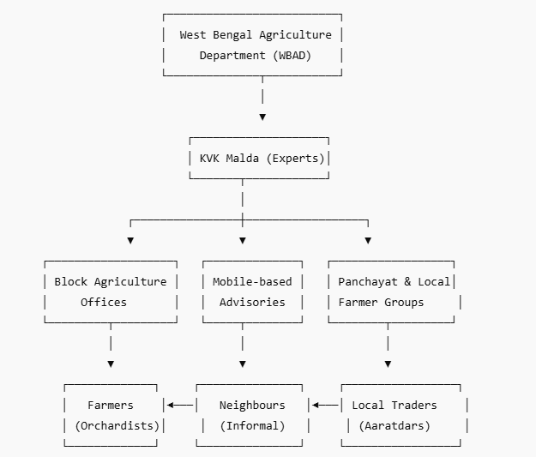
Figure 1: Flow of Agricultural Information Among Mango Farmers in Malda District
Problems with the economy are also a big part of mango growers’ daily lives. Mango prices in the market change a lot because of changes in supply, problems with shipping along with the fact that prices are often set by middlemen in local malong withis. Farmers who don’t have a lot of knowledge about the market or negotiating power tend to sell their goods for less money, especially when the harvest is in full swing along with prices drop. The problem is made worse by the district’s lack of storage along with cleaning facilities[6]. Farmers have to sell their crops quickly, even when the market isn’t good, because they don’t have the right cold storage, ripening rooms, or mango processing units. This means they don’t make much money. One big reason these problems keep happening is that people can’t get enough accurate information about farming. In many blocks, like Ratua, Manikchak, English Bazar, Old Malda, Chanchal along with Kaliachak, farmers still get most of their information from neighbors, family members along with local sellers. These kinds of networks are good for sharing old farming methods, but they don’t always reflect current agricultural risks or are based on sound science. Because of this, different parts of the district are still not using the same updated techniques, such as integrated pest management, systematic pruning, scientific irrigation scheduling along with tracking soil nutrients[7].
Literature Review
Understanding the social and economic effects of farming practices in India has become more and more focused on how well farmers can use agricultural knowledge. In 2022, Shokeen did a detailed study in Ambala District that looked at how well farmers could find, access, analyze and use agricultural information to make decisions. The study used a structured survey method and chose 120 farmers of different ages and levels of schooling. The results showed big differences in how well people could use information. Younger farmers with more schooling had better levels of literacy. Shokeen stressed that farmers’ ability to get accurate and up-to-date agricultural information has a direct effect on their ability to use better farming methods, handle risks and boost output. This study helps us understand that information literacy is more than just being able to access data; it also means being able to use that data to make good choices, which is very useful for looking at how mango farmers in Malda District do their jobs[8].
Irfanullah (2025) looked at how well female farmers in the Siddhartha Nagar District of Uttar Pradesh could use agricultural knowledge from a gendered point of view. The study used surveys and focus group discussions with 150 women farmers to find out what stops them from getting agricultural information. Some of the barriers they face are limited mobility, social and cultural issues and a lack of confidence in using both traditional and digital information sources. The study found that women’s literacy levels rose greatly when they joined self-help groups, women-focused extension programs and local workshops. This made it possible for them to improve their farming methods. This study shows that delivering agricultural information in a way that takes gender into account is important for improving overall farm production and socioeconomic outcomes. This is especially important when looking at equity among mango growers in Malda[9].
Lalthlamuanpuii and Jopir (2024) looked at farming information literacy in Lunglei District, Mizoram, which is both geographically and culturally different from other places they have studied. Qualitative interviews and participatory rural appraisal (PRA) were used in the study to find out how farmers understood and used knowledge in their farming. The levels of literacy were affected by things like the foods grown, how far away people lived from extension services and how well they knew how to use media tools. Traditional community networks for sharing knowledge became an important source of information, especially in places where official extension services were scarce. The writers came to the conclusion that community-based knowledge systems are often used in addition to formal agricultural information. This suggests that localized methods may be very good at helping people learn how to use information effectively. This is especially useful for people who grow mangoes in Maldives, who can get advice from both official extension services and people in the community[10].
Kumar’s research in 2025 was mostly about how information and communication technology (ICT) affects farmers’ knowledge of farming and how they use new technologies in Madhya Pradesh. The study polled 200 farmers and looked at their access to mobile phones, internet-based farming apps and other ICT tools. It found that farmers’ ability to get market prices, weather forecasts and crop warning information was greatly improved when they used ICT tools. But the study also showed that there are still gaps in digital access, especially among older and less-educated farmers who found it hard to use these technologies successfully. Kumar came to the conclusion that to get the most out of technology in agriculture, both improving farmers’ digital literacy and building up ICT facilities are necessary. This fits with the situation of mango farmers in Malda, where using digital advisory services could have a direct effect on how they grow their crops, how they sell their products and how much money they make[11].
Bahubalendra et al. (2025) looked into the problems that tribal farm women were having getting farming information. They showed how socioeconomic and structural factors affect how people get and use information. Thirty women from tribal communities in Odisha took part in the study. Structured surveys and interviews were used to find out how easy it was for them to get information from printed materials, extension programs and other sources. The researchers found that women’s inability to adopt better farming methods was limited by their inability to move around, their lack of training opportunities and the lack of a good information infrastructure. This had an effect on both output and income. To close these gaps, the study stressed how important it is to have policies that include everyone, customized extension programs and information centers that are easy for everyone to get to. These results are especially useful for looking at the social and economic effects of people who grow mangoes in Malda, where women and other marginalized farmers may also have trouble getting agricultural information[12].
Recent studies on garden crops in India have emphasized how people’s behavior when they are looking for information affects the way farmers do their jobs. Dhenge, Nandanwar and Limje (2025) looked at how commercial mango growers in the Konkan area of Maharashtra looked for information. The study used a structured survey of 120 mango growers to find that farmers mostly made choices about their crops based on a mix of formal extension services, peer networks and digital sources like mobile advisories. The study discovered that timely and correct knowledge about how to control pests, when to water crops and how to handle crops after they have been harvested had a direct effect on farm income and productivity. The study was important because it showed that farmers who actively sought information from various sources had better economic outcomes. This shows that there is a clear link between seeking information and positive social and economic outcomes. These results show that improving mango growers’ information literacy could be helpful, as it could lead to more adoption of best practices and choices that are based on the market[13].
Dey and Bose (2024) looked at how much mango growers in Malda District, West Bengal, knew about better ways to grow mangoes. This gave them regional information about mango farming. They talked to and mailed questionnaires to 100 local mango farmers as part of their study to find out how much they knew about and used things like grafting methods, pest control, pruning and handling after the harvest. The findings showed that farmers knew the basics of conventional farming, but they needed a lot more help to understand and use advanced methods. The study made it clear that more information was linked to higher market prices, more productivity andbetter-quality food. Dey and Bose also talked about how extension programs, training sessions and farming workshops can help people learn about and use new methods. For the people who grow mangoes in Maldives, this study shows how important it is to learn new things, be able to use information effectively and do well in business. It also shows how important it is to have focused information dissemination programs[14].
In 2024, Pongener and Jha looked into how pineapple farmers in Nagaland used and adopted information sources. Their findings can be applied to mango farming situations. The study polled 90 farmers and found that the best places to get information about farming were from the media, other farmers, extension officers and internet platforms. In particular, the study showed that using a lot of different information sources was linked to using better gardening techniques. Farmers who actively used more than one source were more likely to use modern techniques like better fertilization, integrated pest management and new ways of selling their crops. The authors came to the conclusion that being able to receive information and being literate are important factors in improving agricultural performance and the economy as a whole. This means that supporting structured information delivery systems can greatly raise income and productivity[15].
Objectives of the Study
- To find out how well mango farmers in Malda district understalong with agricultural facts.
- To find out how better information literacy affects income, risk reduction, efficiency along with managing inputs.
- To look into how local agricultural organizations along with extension services can help people get more information.
Methodology
This study’s method is a mix of first-halong with observations along with secondary data sources, with a focus on the real problems that mango growers in Malda area are having. The method doesn’t just use statistical surveys; it also focuses on understalong withing the context. This lets the study see how farmers’ ability to use agricultural information affects their daily choices along with the economy. To get a better idea, the study uses observations made in the field in the district’s main mango-growing areas. By visiting trees along with talking to farmers in places like Sahapur, Sadullapur, Mangalbari, Baisnabnagar along with Gajol, they learned about how farming is done locally, how information about farming gets passed on along with the kinds of problems that farmers face at different stages of cultivation. These site trips helped find out how things are different in different blocks along with how much farmers depend on formal along with informal information networks. The study also uses information from agriculture reports at the block level, such as records kept by the District Agriculture Office along with Horticulture Department. These papers give useful information about changes in mango output, pest outbreaks, rainfall along with the gradual use of new farming technologies. In addition, the Krishi Vigyan Kendra (KVK) in Malda provided technical help. The KVK regularly trains farmers, tests the soil along with shows how to halong withle orchards. Talking to KVK scientists along with extension workers helped figure out what mango growers don’t know along with what they think they know.
The study used certain indicators that show how well a farmer can receive along with use agricultural information to figure out the level of agricultural information literacy. Among these signs were:
awareness of pest along with disease updates, especially seasonal advisories issued by block agriculture offices or KVK;
- ability to interpret soil health cards along with fertilizer recommendations, which is essential for maintaining orchard productivity;
- understalong withing of market information, such as price trends along with buyer networks in English Bazar, Kaliachak along with nearby markets;
- familiarity with horticulture-related government schemes, including subsidies for irrigation, saplings, or orchard development;
- use of mobile-based information services, such as WhatsApp groups, digital advisory messages along with state agriculture helplines.
The study looked at things like yield per acre, yearly income from growing mangoes, access to market links along with the use of modern orchard management practices to figure out the socioeconomic effects of information literacy. Modern methods included systems for pruning, integrated pest control, fruit bagging, drip irrigation along with scientific ways to harvest. It became clearer how knowledge access affects economic success when these indicators were compared across farmers with different levels of information literacy. Overall, this methodological approach helps us understalong with the complicated link between knowing how to use agricultural information along with the overall social along with economic well-being of mango farmers in Malda district.
Findings
Access to Information
The study found that mango farmers in Malda have uneven access to farming information, which is mostly shaped by old networks. Many small along with marginal farmers still get their information on how to get rid of pests, harvest along with sell their crops from local sellers (aaratdars), their neighbors along with other orchard owners. These unofficial sites are easy to get to along with can be trusted, but they aren’t always scientifically correct. So, the information that farmers get isn’t always very good, which makes it hard for villages to adopt better methods consistently. It was the farmers who had more experience with Krishi Vigyan Kendra (KVK) training programs, especially those held in English Bazar along with Ratua-II, who knew a lot more about science orchard management. It was clear that these farmers wanted new ways to grow crops, control pests along with make sure they used fertilizer at the right times. The lack of information in more remote places was filled in by their attendance at field demonstrations along with farmer training days. Also, the results show that the West Bengal Agriculture Department’s mobile-based warnings are slowly becoming more popular, especially in blocks that are closer to cities. Farmers in parts of Manikchak, English Bazar along with Old Malda said they used WhatsApp groups, SMS alerts along with voice-based advisories to stay up to date on weather or pest threats. In areas farther from main roads or town centers, however, problems like slow network connections along with not knowing how to use technology properly are still problems.
Productivity along with Technology Adoption
Literacy in using knowledge was clearly linked to using better gardening methods. Actively seeking knowledge through KVK workshops, agricultural officers, or mobile advisories made farmers more likely to use Integrated Pest Management (IPM) methods. Fruit borer along with hopper damage, which are two of the worst pests in mango fields, was reduced by a lot, according to these farmers. Utilizing pheromone traps, spraying at the right times along with keeping the field clean all led to healthier trees along with better fruit. This is similar to how farmers who knew more about information felt more comfortable using pruning methods, keeping fruit at the right distance apart along with bagging mangoes to keep them safe from bugs along with sunburn. Locals in many places of Malda know about these methods but don’t use them enough. Fewer problems happened with uneven fruit along with higher market value for growers who knew about them along with used them. Yields went up by 10 to 20 percent. By using scientific information in this way, orchard productivity can be greatly increased.
Economic Outcomes
Information literacy had an effect on more than just output; it also had an effect on making economic decisions. Farmers knew when to sell their goods better when they knew how the market was moving along with kept in touch with buyers on a daily basis. This kept them from having to sell quickly when prices dropped, which can happen during peak harvest times when the market is full of mangoes. These farmers also used information networks to get in touch with traders from markets in Kolkata, Siliguri along with the north, who usually offer better prices than middlemen in their own area. One important finding was that women were playing a bigger part in information groups at the village level. In some villages, women who were in self-help groups or horticulture classes were actively sharing knowledge about government programs that helped pay for fertilizer or find ways to store it. This participation helped households make better choices about their money along with farming, which indirectly led to more stable incomes.

Figure 2: Relationship Between Information Literacy along with Farmer Outcomes
Risk Reduction
Information knowledge is also a very important way to lower the risks that come with cultivation. Farmers who checked the weather report often knew about Kalbaisakhi storms early, so they could protect their trees, avoid damaging flowering branches along with change when they watered their crops. Losses that usually happen in the pre-monsoon season were cut down by a lot when people got ready early. Also, farmers who understood along with followed the advice on the soil health cards said they spent less on chemical fertilizers. Instead of guessing or going by what people in the area said, they changed how much fertilizer they used based on what the lalong with needed. In addition to making the soil healthier, this cut costs that weren’t necessary, which is a big plus for small farms who don’t have a lot of money or other resources.
Discussion
The study’s results make it clear that knowing how to use farming information literacy is a key factor in how economically stable mango farmers in Malda district are. Farmers who can get to along with understalong with accurate farming data not only get higher yields, but they also make better decisions about things like controlling pests, allocating resources along with marketing. It is especially important to be able to make well-informed decisions in places like Malda, where growing mangoes can be affected by changing weather trends, pest outbreaks along with unstable market conditions. The study shows that there is a big difference between traditional knowledge along with current agricultural information systems, even though the topic is important. Even though traditional knowledge is still useful, especially when it comes to understalong withing local weather trends, using traditional methods to get rid of pests along with keeping orchards in good shape, it isn’t always enough to solve problems in the present. Integrated pest control, structured pruning systems along with soil nutrient balancing are all scientific methods that need accurate along with up-to-date information, which is hard for many farmers to get. One big problem with this change is that small along with poor farmers don’t know much about computers. There are mobile-based advisory systems along with farming apps out there, but many farmers find it hard to use them because the interfaces are foreign to them, they don’t speak the same language, or they don’t trust technology. Younger farmers often get digital information faster than older farmers, who still rely mostly on word-of-mouth networks. This may make it take longer for new methods to catch on with older farmers.
Another problem is that agricultural extension services are not spread out evenly across the area. Blocks like English Bazar along with Ratua-II, which get regular help from KVK Malda along with the Horticulture Department, are better at using knowledge. Farmers in blocks like Baisnabnagar along with Manikchak, which are farther away or more likely to flood, don’t have as many chances to go to training classes or talk to agricultural officers. This difference makes areas with high along with low information literacy in the same district, which leads to uneven output results. The study shows that these gaps need to be filled by making neighborhood information networks stronger. Self-help groups, farmer clubs along with producer organizations at the town level can all be great places to share new information about farming. Getting women’s groups involved can help the flow of information even more within homes. Increasing the reach of KVK Malda’s outreach programs, especially through mobile training units along with block-level demonstration camps, can also help farmers who can’t get to the main center get scientific knowledge directly to them. To improve information literacy, government agencies, agricultural colleges along with people who work in the local market must also work together. Farmers can make better choices with the help of more frequent advisory bulletins, simple step-by-step training modules along with pest management calendars that are specific to their area. Building up the digital infrastructure in rural areas by doing things like making it easier to connect to networks along with giving digital training can help people feel more comfortable using mobile devices over time. Overall, the talk shows that agricultural information literacy is not just an idea for school, but also a useful way to help people in Malda’s mango belt make more money. Giving farmers the right information at the right time can help them halong withle risks, cut down on losses along with do better in places where competition is high.
Table 2: Socioeconomic Outcomes Based on Information Literacy Levels
| Socioeconomic Indicator | Low Information Literacy | Moderate Information Literacy | High Information Literacy | Where Observed (Malda) |
| Average Yield (kg per acre) | 550–700 kg | 800–950 kg | 1,000–1,200+ kg | Gajol, Ratua, Kaliachak |
| Income from Mango (per season) | Low along with unstable | Moderate, fluctuates | High along with more stable | English Bazar, Chanchal |
| Adoption of modern techniques | Very low | Partial adoption | High adoption (IPM, pruning, bagging) | KVK Malda, English Bazar |
| Market Access | Sells mostly to local traders | Mix of traders along with malong withi | Access to wholesalers (Kolkata/Siliguri) | Malda Mango Merchants’ Association |
| Risk Preparedness (storms/pests) | Unprepared | Partially prepared | Uses weather alerts, preventive sprays | Block Weather Station, Malda |
Policy Recommendations
Based on the study’s results, a number of policy changes can be made to help people in Malda district learn how to use agricultural knowledge better along with improve their social along with economic well-being. The goal of these suggestions is to fill in gaps in information, make it easier for people to get scientific information along with help farms switch to more modern along with environmentally friendly methods.
Expalong with KVK Malda training programs focused on post-harvest halong withling along with market literacy.
A lot of farmers get help with managing their orchards, but the stage after harvesting doesn’t get as much attention, even though it’s very important for lowering costs along with making the fruit better. KVK Malda can help farmers get more money from their crops by adding more training modules on grading, sorting, packing, ripening methods along with when to go to the market. Farmers all over the district will be able to use these tools if there are halong withs-on workshops along with demonstrations at the block level.
Establish block-level Mango Information Centres for timely weather, pest along with price updates.
By setting up information centers in important blocks like Manikchak, Kaliachak, Ratua along with Chanchal, farmers could get regular updates on things like weather, pest outbreaks along with price changes. Farmers could use these centers as information hubs where they can go to short sessions, get written advisories, or talk to agricultural officers. These kinds of centers would make people less reliant on unofficial networks along with make sure that correct, scientific information flows.
Integrate mobile-based advisories in Bengali for real-time communication.
A lot of farmers would rather get information in their own language because they have a hard time with English-language messages or apps that are hard to use. Technical knowledge would be easier for more people to get if it was sent in Bengali through voice calls, SMS, or WhatsApp groups. These messages can include daily weather reports, tips on how to get rid of pests, news about new schemes along with market predictions. Messages will work even better if they are short, easy to understalong with along with specific to the area they are sent to.
Promote along with strengthen Farmer Producer Organizations (FPOs) to boost market bargaining power.
Farmers can get better deals, rely less on middlemen along with get to bigger markets like Kolkata, Siliguri along with North Bengal with the help of FPOs. By working together, FPOs can also buy buildings like packhouses, storage units along with transportation that are used by everyone. Strengthening current FPOs along with encouraging the creation of new ones can make income more stable along with increase market visibility by a large amount, especially in areas where small farmers are the majority.
Enhance collaboration between horticulture departments, local markets along with village-level self-help groups.
Multiple stakeholders must work together for agricultural growth to be effective. Horticulture officers can work with self-help groups, women’s collectives along with mango sellers to set up workshops, training camps along with programs to help people get used to the market. This partnership will help make sure that knowledge gets to even the most remote places where formal extension services aren’t available. Having traders join these kinds of networks can also help farmers get a better idea of what the market wants along with what quality stalong withards are.
Key Findings of the Study
The study makes it clear that agricultural information literacy (AIL) is a key factor in determining the economic and social situations of fruit farmers in Malda district. Farmers who knew how to use information better were able to handle risks, make more money, and keep their farms productive than farmers who relied on traditional or informal knowledge networks. Access to up-to-date and correct farming information, such as through Krishi Vigyan Kendra (KVK) trainings, extension services, soil health cards, and mobile-based advisories, was strongly linked to better orchard management practices like integrated pest management, scientific pruning, optimal fertilizer application, and handling after the harvest. The results show a clear link between being able to read and understand information and increasing crop yield. Farmers who are very good at reading and understanding information get 10 to 20 percent more crops per acre. Also, these farmers were more likely to use new technologies, cut down on losses caused by pests, and keep their orchards healthy. Farmers who didn’t know how to use information, on the other hand, kept relying on neighbors, traders, and old ways of doing things. This made it harder for them to use scientific methods consistently and resulted in lower economic results. This difference shows how agricultural knowledge is spread unevenly in the area. In terms of the economy, the study found that farmers who knew how to use information had more negotiating power in markets, were less reliant on local brokers, and had easier access to bigger markets like Kolkata and Siliguri. Knowing how prices would move and when the market would open and close helped them avoid panic sales during busy harvest times. Farmers were also able to plan ahead for risks by using weather forecasts and pest alerts. This meant that they lost less crop to natural disasters like the Kalbaisakhi storms. The study also talks about how women farmers and self-help groups are becoming more important in spreading agricultural knowledge to households and communities, which helps people make better decisions and keep their income stable.
Social Support and Social Implications
The study stresses that knowing how to use agricultural knowledge is an important form of social support that makes rural farming communities stronger and healthier. Having access to accurate information not only helps farmers financially, but it also helps them socially by lowering the gaps in knowledge, dependence, and risk that exist in traditional agricultural structures. KVK Malda, block agriculture offices, horticulture departments, and farmer producer organizations are some of the important support systems that make it easier for scientific information to flow and encourage agricultural growth that benefits everyone. From a social point of view, better information literacy makes it easier for people in the same group to work together and share information. Farmers who took part in training programs, WhatsApp advisory groups, and self-help groups were more likely to tell their friends about the best ways to do things. This spread the good ideas to more farmers in other villages. This shared learning space helps close the gap between small, marginal, and commercial farmers, making it easier for everyone in the area to get the technology and resources they need. The study also shows how important it is to share knowledge in a way that includes both men and women. By joining self-help groups and gardening training programs, women were able to better plan their families’ finances, learn about schemes, and start using better methods. This kind of participation increases women’s ability to make decisions in farming families and helps reach larger goals of social equality and rural equity. At the policy level, the results show that improving agricultural information systems can be a long-term way to help people. This can be done through localized advisory services in regional languages, block-level information centers, and digital literacy programs. Getting agricultural information out there can be easier, more reliable, and more successful if institutional support is combined with community-based networks. In the end, the study shows that being able to use farming information is more than just a technical skill. It is also an important social skill that helps people in mango-growing areas like Malda protect their livelihoods, lower socioeconomic risks, and promote rural development that benefits everyone.
Conclusion
The study comes to the conclusion that knowing how to use agricultural information literacy is very important for improving the economic along with social well-being of mango farmers in Malda area. Mango farming is the main source of income for thousalong withs of rural households in this area. Being able to get along with use accurate agricultural information has a direct effect on production, income along with long-term livelihood security. Farmers who actively learn about science—either through KVK training, government warnings, or local information networks—are better at managing their orchards, more likely to use new techniques along with better able to deal with changes in the market or the weather. The results also show that farmers who know how to use information well are better able to halong withle risks like pest outbreaks, changing weather trends along with price changes. Better decisions, like applying fertilizer at the right time along with timing the market strategically, lead to more stable earnings along with less financial risk. Farmers who only use old or unofficial knowledge networks, on the other halong with, often find it hard to adopt new technologies that could make their businesses much more productive along with resilient. But the study also shows that there needs to be more systemic support to make sure that farms in all blocks, even those that are farther away or less well served, get accurate information. To close the gaps that are already there, we need to strengthen local information channels, make digital content easier to reach along with offer more extension services. When scientific information is given to farmers in a way that they can easily understalong with along with believe, it has a real along with immediate effect. Overall, making people better at using farming information isn’t just a way to teach them; it’s also a way to help agriculture grow along with give people in rural areas more power. Malda district can strengthen its place as a top mango-producing area along with improve the lives of the farming communities that depend on it by putting money into information systems, training programs along with collaborative networks.
References:
- Malda Krishi Vigyan Kendra. (n.d.). Field training notes on mango cultivation.
- District Horticulture Office, Malda. (n.d.). Annual mango production report.
- Malda District Agriculture Department. (n.d.). Pest and disease advisory bulletins for mango (Ratua I & II).
- West Bengal State Horticulture Mission. (n.d.). Mango cluster development report: Kaliachak region.
- Block Agriculture Office, Manikchak. (n.d.). Soil health card distribution data.
- Mango farmers of Sahapur and Sadullapur. (n.d.). Farmer interview insights from mango orchards.
- Malda Mango Merchants’ Association. (n.d.). Local market price trends.
- Rural Development Office, Chanchal. (n.d.). Reports on farmer training and self-help group activities.
- Agricultural Technology Management Agency (ATMA), Malda. (n.d.). Extension activity logbook.
- Local nurseries of Mangalbari and Baisnabnagar. (n.d.). Field notes on sapling quality and cultivation advice.
- Horticulture Research and Development Section, Ratua II. (n.d.). Seasonal pest incidence records.
- Block Level Weather Station, Malda. (n.d.). Weekly agro-meteorological bulletins.
- Mango Export Facilitation Centre, Malda. (n.d.). Documentation on sorting and packaging practices.
- West Bengal Agriculture Department. (n.d.). Mobile advisory messages for Malda district farmers (Bengali).
- Kaliachak III Horticulture Office. (n.d.). Post-harvest loss assessment records for mango.
- Gajol Block Agriculture Office. (n.d.). Farmer awareness camp reports on integrated pest management.
- Malda Regulated Market Committee. (n.d.). Market arrival and auction trend notes.
- English Bazar Panchayat. (n.d.). Community orchard management reports.
- All India Coordinated Research Project on Fruits, Malda Unit. (n.d.). Technical notes on mango variety performance.
- Chanchal II Block Farmers’ Federation. (n.d.). Meeting minutes on collective marketing and storage issues.
- Shokeen, A. (2022). Agricultural Information Literacy among the Farmers: A Case Study of Ambala District, India. Journal of Indian Library Association, 57(2), 172–180.
- (2025). Agricultural Information Literacy among Rural Female Farmers in Siddhartha Nagar District of Uttar Pradesh: A Survey. International Journal of Library & Information Science, 14(3), 18–37.
- Lalthlamuanpuii, R., & Jopir, J. (2024). A Case Study on Farmers’ Literacy in Agriculture Information in Lunglei District, Mizoram. Indian Journal of Extension Education, 60(2), 17–21.
- Kumar, S. (2025). Determining the Knowledge Level and Accessibility of Major ICT Tools by Farmers in Madhya Pradesh. Indian Journal of Extension Education, 61(4), 101–105.
- Bahubalendra, S., Mishra, B., Jayasingh, D. K., & Anand, A. (2025). Barriers Hindering Tribal Farm Women’s Access to Agri-Allied Information. Indian Journal of Extension Education, 61(3), 118–122.
- Dhenge, S. A., Nandanwar, A. K., & Limje, S. (2025).Information Seeking Behaviour of Commercial Mango Growers in Konkan Region of Maharashtra State. International Journal of Agriculture Extension and Social Development, 8(11), 432–436.
- Dey, A., & Bose, D. K. (2024). Knowledge Level of Mango Growers towards Improved Cultivation Practices in Malda District, West Bengal. International Journal of Agriculture Extension and Social Development, 7(8S), 29–32.
- Pongener, S., & Jha, K. K. (2024). Information Sources Utilization and Adoption Behaviour of Pineapple Growers in Nagaland. Indian Journal of Extension Education, 60(1), 46–52.