
 Share
Share
Abstract
This study explores the capability of self-healing in Internet of Things (IoT) networks through the application of artificial intelligence (AI) techniques for fault detection and recovery. By leveraging deep learning and machine learning methods, the research investigates automated processes that diagnose and rectify network issues in real-time, ensuring reliable communication within interconnected environments. The findings highlight how these AI-driven approaches enhance network resilience and operational efficiency, reducing downtime and minimizing the need for human intervention. Furthermore, the study examines the implications of integrating AI in IoT architectures, demonstrating significant improvements in fault tolerance. The results underscore the transformative potential of AI in the management of complex IoT systems, paving the way for more robust and adaptive network solutions.
Keywords: Self-healing networks, Internet of Things (IoT), Fault detection, Fault recovery, Artificial intelligence (AI), Machine learning.
INTRODUCTION
Even though the Internet of Things (IoT) has made many things easier and more connected than ever before, it has also made it much more difficult to keep networks running reliably and efficiently. In IoT environments, where faults and failures can disrupt vital operations, traditional network management systems struggle to keep up with the dynamic and complex nature of the environment. This study introduces the idea of AI-driven self-healing IoT networks as a solution to these problems [1]. These networks are capable of automatically detecting, diagnosing, and recovering from problems in real-time by utilizing advanced AI techniques like deep learning and machine learning. By reducing the need for human intervention and increasing fault tolerance, AI ensures that networks continue to function efficiently and continuously [2, 3]. With this introductory material under way, we can delve deeply into AI-driven techniques and the revolutionary possibilities they hold for the administration of IoT networks [4].
Background
Applications of the Internet of Things (IoT) extend across many sectors, including smart homes, healthcare, transportation, and industrial automation, and it signifies a paradigm shift in the way gadgets communicate and interact. Due to the varied communication protocols, dynamic network topologies, and heterogeneous devices in IoT ecosystems, guaranteeing network stability is becoming more complicated as these ecosystems grow [5]. When put under these conditions, conventional methods of network management and fault recovery frequently fail due to inefficiencies in scalability and problem detection and repair. Based on the idea of self-repairing biological systems, the concept of self-healing networks presents a potential remedy [6]. With the help of AI, specifically ML and DL, self-healing networks can monitor, detect, and fix problems on their own, without any help from humans. With the help of AI algorithms, massive volumes of network data can be analysed to spot trends and outliers that could indicate impending problems [7, 8]. This allows for immediate and proactive solutions. With the importance of AI in improving network resilience and performance laid bare in this introductory part, readers will be better equipped to grasp the rationale for AI’s incorporation into IoT networks and the transition from conventional to self-healing systems [9.10].
Fault detection
IoT network management requires defect detection to keep devices and systems working properly. In today’s complex and ever-changing Internet of Things (IoT) ecosystems, static rules and human intervention-based issue detection methods often fail. IoT networks are complicated and change quickly, thus traditional solutions typically fail, resulting in delayed responses and long outages [11]. AI in defect detection allows for more complicated and adaptable methods. AI-driven fault detection searches vast amounts of real-time data for patterns and outliers that may indicate a problem. These smart solutions help improve IoT network resilience by predicting and detecting faults faster and more precisely, decreasing interruption. This introduction depicts the move from manual to AI-driven defect detection, demonstrating AI’s revolutionary role in assuring the viability of modern IoT systems.
Self-healing networks
Self-healing networks can detect and fix problems to maintain IoT infrastructures. Self-healing networks use advanced artificial intelligence (AI) approaches modelled after biological systems to make them more resilient and less dependent on humans. Deep learning (DL) and machine learning (ML) are used in these networks to detect problems, remediate in real time, and monitor network conditions. Self-healing networks can adapt to changing conditions, predict failures, and mitigate disruptions using AI. The Internet of Things (IoT) is becoming more significant in healthcare, transportation, and smart cities [12]. This pre-emptive strategy lowers downtime and ensures system efficiency and reliability. Self-healing networks have transformed network management from reactive to proactive, demonstrating AI’s groundbreaking ability to sustain and improve these complex webs of interdependent devices.
Figure 1: Self-healing home network framework [21]
Internet of Things
The revolutionary Internet of Things (IoT) connects many systems and devices to share data, communicate, and perform activities autonomously. This huge network of interconnected things includes home appliances, wearable gadgets, industrial machines, and smart city infrastructures. IoT seamless connections between digital and physical worlds boost automation, efficiency, and data-driven decision-making. In transportation, IoT devices optimize traffic flow and vehicle safety, while in healthcare, they monitor patients’ vitals in real time [13]. IoT apps can streamline predictive maintenance and production, reducing operational costs and downtime. Internet of Things (IoT) has many benefits, but its biggest issues are network administration, security, and scalability. As connected devices multiply quickly, ensuring reliable and secure connectivity becomes harder. We need new methods like AI-powered self-healing networks that detect and resolve faults to boost IoT ecosystem efficiency and robustness. This section describes the Internet of Things (IoT) environment, its uses, and how cutting-edge innovation solves its difficulties [14].
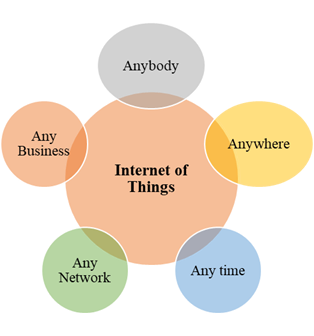
Fig 2 Internet of Things
Role of AI in Fault Detection and Recovery
The Internet of Things (IoT) is revolutionizing fault detection and recovery with the help of artificial intelligence (AI), thanks to its remarkable data analysis and interpretation capabilities. With the use of deep learning and machine learning algorithms, AI is able to discover patterns and abnormalities that could indicate defects with a high degree of accuracy, frequently in real-time [15]. This allows for the early detection of problems before they worsen, which reduces disruptions and downtime. In addition to automating recovery, AI-driven systems can deploy predefined or adaptable solutions depending on the fault’s type, drastically cutting down on human interaction and reaction times. The overall efficiency and resilience of IoT networks are enhanced by AI systems, which learn from fresh data continuously and improve their tactics for problem detection and recovery over time. By incorporating AI, we can overcome the shortcomings of conventional fault management approaches while simultaneously bolstering the scalability and adaptability of today’s Internet of Things (IoT) ecosystems [16].
Significance of research
Self-healing IoT networks enabled by AI-based fault detection and recovery can improve the reliability and management of increasingly complex IoT ecosystems [17]. Keeping connections stable and operating well is becoming increasingly crucial as IoT devices expand. In healthcare, smart cities, and industrial automation, disruptions can have far-reaching repercussions. Traditional fault detection and recovery methods are unsuitable for IoT systems due to their heterogeneity and rapid development [18]. Self-healing networks reduce downtime and human involvement by automating fault identification, localization, and correction using AI approaches like deep learning and machine learning. Since our research improves network resilience and efficiency and enables more resilient and scalable IoT systems, IoT technology can be fully realized across many sectors. Recent advances in AI-powered problem identification and remediation demonstrate the transformative significance of intelligent systems in IoT network availability and performance.
Challenges to research
AI-driven, self-healing IoT networks hold great potential for creating more resilient systems that can identify and fix problems autonomously. However, achieving this capability presents several real-world challenges. First, managing the vast and varied data these networks produce is a complex task. With countless devices and sensors constantly generating information, the system needs to sift through massive amounts of data to pinpoint faults in real-time. This level of data handling can be demanding, often overwhelming central processing units. One effective way to address this is through edge computing, which allows data to be processed closer to its source, reducing both the network load and the time required to detect problems. Another challenge is the accuracy of fault detection itself. For machine learning algorithms to effectively spot and address issues, they need extensive, high-quality data to learn from. However, gathering labelled data that represents the full range of potential faults in dynamic IoT environments can be difficult. Any misidentification of problems, or worse, missed faults, can lead to performance issues or open the network up to security risks. Developing robust algorithms that can adapt to new fault patterns requires ongoing fine-tuning, often blending different AI techniques to improve reliability.
Additionally, many IoT devices come with limited resources, such as low processing power, minimal storage, and restricted battery life, which makes it challenging to run advanced AI models directly on the devices themselves. Instead, lightweight models are often used, or some of the processing is shifted to nearby, more capable edge devices. Security and privacy also add another layer of complexity; IoT networks gather sensitive information that must be kept secure to prevent unauthorized access. Balancing the need for secure data handling with efficient fault detection and recovery requires sophisticated encryption methods and secure protocols. Overcoming these challenges is crucial for enabling the full capabilities of self-healing IoT networks powered by AI. [20].
Literature review
The purpose of this study is to investigate the feasibility of employing artificial intelligence (AI) to detect and repair faults in self-healing Internet of Things (IoT) networks. Deep neural networks, anomaly detection, and predictive analytics are some of the methods that have recently seen significant research advancements, which bode well for the enhancement of fault diagnosis and system resilience. Using these innovations as a foundation, this study will develop novel self-healing techniques to improve the performance and dependability of IoT networks.
Nand (2023) studied AI-based anomaly detection, supervised learning, and reinforcement learning defect detection techniques. These systems’ capabilities and restrictions in diverse network situations are assessed, taking into account data accessibility, capacity to manage rising demands, and immediate processing. This paper also discusses AI-based defect detection in network monitoring systems and telemetry data sources. It stresses the importance of data-driven fault identification. Along with problem detection, the research examines AI-powered self-healing network recovery solutions. AI-based predictive analytics enables pre-emptive recovery measures like predictive maintenance and network reconfiguration [1].
V. Soni (2023) created a new deep neural network (DNN) that combines Bi-LSTM and CNN. WISDM and UCI-HAR are available datasets used to evaluate the model. The model has 97.96% WISDM and 97.15% UCI-HAR accuracy. Additionally, the simulation findings show that the suggested strategy outperforms existing cutting-edge methods [2].
A.S. Alhanaf (2023) advocated employing ANNs and 1D-CNNs to detect problems. Our method is more accurate and efficient than others since it uses sensor data like voltage and current measurements. The IEEE 6-bus system yields impressive accuracy. Identification of defective lines was 99.99% and 99.98%, while fault classification was 99.75% and 99.99% for ANN and 1D-CNN. Additionally, ANN and 1D-CNN fault placement accuracy was 98.25% and 96.85%, respectively. Deep learning can improve smart grid defect detection and categorization, enhancing performance [3].
J. Aldrini (2023) proposed a new conceptual model for smart manufacturing system intelligent defect diagnostics and self-healing. This architecture reviews the multiple techniques, sub-approaches, and methodologies used to construct a smart manufacturing-specific FDD and SH-FT strategy. This research also assesses over 256 scientific publications on defect detection and self-healing systems and their implementation in smart manufacturing over the past decade. Finally, robust smart manufacturing research fields are highlighted [4].
Abdulrazak (2022) described our efforts to achieve IoT infrastructure autonomy and the ongoing problems that hinder IoT design. Author then analyzes existing self-healing approaches that allow systems to solve problems independently. Author also explained our self-healing IoT platform. In conclusion, we offer numerous proposals for a reliable and robust IoT system with cognitive entities for self-management [5].
Selim, M. (2023) showed how adding antennas to Small Cells (SCs) affected failure recovery. MATLAB is used to simulate the restoration of SCs with extra antennae after many failures. Our study found that adding antennas to small cells (SCs) improves network spectral efficiency, especially when fewer SCs fail [6].
Chen, M. (2023) introduced VOC sensor arrays that are popular. These arrays could provide real-time data on pollution levels and VOC-related health hazards. This research offers an AI-powered wearable mask-inspired self-healing sensor array (MISSA) that detects and identifies volatile organic chemicals using a simplified single-step stacking method. The wearable MISSA device has three vertically positioned gas sensors (BSGS) that are breathable, linear, repeatable, and self-healing. The MISSA and a flexible printed circuit board (FPCB) form a wireless solution that is mobile device-compatible for wearable and portable monitoring [7].
Nahi (2023) noted that wind power is sporadic and stressed the importance of precise wind production estimates. The self-healing service method requires this estimation to restore power systems efficiently. Therefore, a mathematical model that reliably estimates short-term wind power delivery to variable loads, taking dependability into consideration, is essential. This model will evaluate energy supply. The unique hierarchical algorithmic method was proven efficient in testing on the 66 MW Manjil wind farm in Iran. Weibull distribution program is used to facilitate management and analysis of huge datasets including wind speeds, wind power output, and power consumption [8].
In 2022, B Abdulrazak attempted to make IoT infrastructure autonomous. Additionally, they explored IoT design issues that persist. Next, they explored the different self-healing mechanisms that allow a system to function autonomously and solve problems. They also mentioned our self-healing Internet of Things platform. In conclusion, they offer some proposals for creating a reliable, resilient Internet of Things system with cognitive entities for self-management [9].
A. R. Haydarlou presented their fault detection and self-healing architecture for interpreted object-oriented systems. They suggested that their approach could fix many interpreted object-oriented program errors [10]. This was achieved by combining aspect-oriented programming, program analysis, AI, and machine learning.
Self-healing machine learning algorithms of Tao Zhang (2022) were considered. The author identified five issues: data imbalance, inadequacy, cost insensitivity, non-real-time reaction, and multi-source data fusion. They then proposed potential technology remedies to these issues. In addition, a case study of cost-sensitive defect identification utilizing unbalanced data was presented to demonstrate the approaches’ feasibility and efficiency [11].
O. G. Aliu studied future cellular network self-organization [12]. This article reviews the last decade of research on self-organization and wireless cellular communication networks. Self-organization has been studied and used in ad hoc, wireless sensor, and autonomic computer networks. This tutorial is the first to put wireless cellular network activities into perspective.
Table 1: Conventional research work
| Citation | Researcher | Year | Techniques Used | Application Area | Key Findings |
| [1] | Nand | 2023 | Anomaly Detection, Supervised Learning | IoT Network Monitoring | Emphasizes data-driven fault identification and predictive recovery. |
| [2] | V. Soni | 2023 | Bi-LSTM, CNN | Human Activity Recognition | Achieved 97.96% accuracy on WISDM, outperforming existing methods. |
| [3] | A. S. Alhanaf | 2023 | ANN, 1D-CNN | Smart Grid Fault Detection | High accuracy in fault identification and placement. |
| [4] | J. Aldrini | 2023 | Multi-technique Fault Detection | Smart Manufacturing | Proposed a model integrating various defect diagnostics approaches. |
| [5] | Abdulrazak | 2022 | Self-Healing Framework | Autonomous IoT Systems | Discussed issues in IoT design and proposed cognitive self-management. |
| [6] | Selim, M. | 2023 | Simulation with MATLAB | Small Cells Recovery | Adding antennas improves network efficiency during failures. |
| [7] | Chen, M. | 2023 | AI-Powered Sensor Arrays | Environmental Monitoring | Developed a self-healing sensor array for detecting VOCs. |
| [8] | Nahi | 2023 | Mathematical Modeling | Wind Power Systems | Introduced a model for reliable short-term wind power estimation. |
| [11] | Tao Zhang | 2022 | Machine Learning Algorithms | Self-Healing Systems | Identified issues like data imbalance and proposed solutions. |
| [12] | O. G. Aliu | 2022 | Review of Self-Organization Techniques | Cellular Networks | Comprehensive review of self-organization in wireless networks. |
Research Gap
In recent years, researchers have made substantial advancements in AI-driven fault detection and self-healing for IoT networks. Studies have explored deep learning models, anomaly detection, and predictive maintenance to address various issues in network resilience and fault diagnosis. However, certain gaps remain unaddressed, particularly in the context of real-time fault response, heterogeneous network environments, and resource constraints that are characteristic of IoT networks. Firstly, while several studies focus on specific deep learning architectures, such as Bi-LSTM and CNN for defect detection and classification, their applicability in real-world IoT networks remains limited due to the diverse and complex nature of IoT devices. For instance, models evaluated on controlled datasets like WISDM and UCI-HAR may not directly translate to the dynamic, unpredictable data flows seen in IoT systems. This gap calls for further exploration into adaptive AI models that can handle such diversity effectively in live IoT environments. Secondly, there is a notable research focus on smart manufacturing and smart grid systems (as studied by Alhanaf and Aldrini) where fault detection techniques are tuned to specific infrastructure. However, IoT networks present unique challenges due to constrained device capabilities and the need for low-latency responses. Although concepts such as predictive maintenance have been explored, limited research addresses how these can be adapted for IoT networks where devices operate on minimal resources and require fast, energy-efficient fault recovery processes. Moreover, existing research, including the works by Abdulrazak and Haydarlou, highlights self-healing mechanisms and cognitive self-management frameworks, but they often fall short of proposing universal self-healing models that can dynamically adjust to different IoT configurations without manual intervention. This points to a research gap in developing scalable, generalizable self-healing architectures that can adapt autonomously to varying IoT contexts and network configurations. Additionally, while studies like those by Nahi and Chen explore sector-specific self-healing solutions (e.g., for renewable energy and wearable devices), these solutions lack a unified approach applicable across diverse IoT environments. IoT networks require fault-tolerant frameworks that integrate seamlessly with both resource-constrained devices and more capable edge systems. Current solutions do not fully address this need, which is critical for ensuring reliable fault detection and recovery in IoT networks across different industries. In summary, while existing research provides valuable insights into AI-based fault detection and self-healing, there is a clear need for further studies on adaptive, resource-efficient, and generalizable AI-driven fault recovery models for diverse IoT applications. Addressing these gaps can enable more robust and scalable IoT networks capable of autonomously handling a wide range of operational challenges. IoT ecosystems, interoperability issues, a lack of resources, ethical and legal concerns, the need to adapt to new threats, reliance on connectivity, complicated debugging, expensive implementation costs, and resistance to change. Businesses must use technological fixes, continual monitoring, and a commitment to improving AI models and system architecture to address these concerns.
Problem Statement
Self-healing IoT networks with AI-driven fault detection and recovery mechanisms offer significant advantages but face challenges such as false positives and negatives, limited data availability, security concerns, complexity of IoT ecosystems, interoperability issues, resource constraints, ethical and legal concerns, adaptability to evolving threats, dependence on connectivity, complex debugging, high implementation costs, and resistance to change. AI algorithms may generate false positives or negatives, making fine-tuning algorithms challenging. Limited data availability can hinder accurate predictions and decisions. Security concerns arise from adversarial attacks, and the complexity of IoT ecosystems can hinder the effectiveness of self-healing mechanisms. Resource constraints can impact the overall performance of the IoT system. Ethical and legal concerns arise from the autonomous nature of self-healing systems, and the need for adaptability to evolving threats. High implementation costs can be a barrier for small-scale deployments or organizations with limited resources.
Road Map
Self-healing IoT networks powered by AI have many benefits, but they also face many issues, including insufficient data, security concerns, the complexity of IoT ecosystems, interoperability issues, a lack of resources, ethical and legal concerns, the need to adapt to new threats, reliance on connectivity, complicated debugging, expensive implementation costs, and resistance to change. Businesses must use technological fixes, continual monitoring, and a commitment to improving AI models and system architecture to address these concerns.
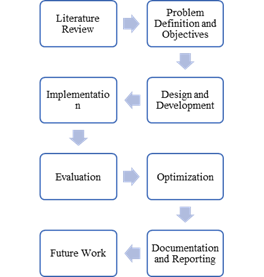
Fig 3 Road Map
Starting with a literature review, the research methodology for creating AI-repairable IoT networks includes problem definition and objectives, design and development, implementation, testing, evaluation, optimization, documentation and reporting, and future work. Machine learning and deep learning strategies for network fault management are reviewed in the literature. Define the problems with fault detection and recovery in IoT networks, create a conceptual framework, test the system in a controlled environment or simulation platform, evaluate its performance using quantitative and qualitative metrics, make improvements based on evaluation results, report and document the research, and suggest future self-healing system advancements and directions.
Need of Research
The exponential growth in both the size and complexity of IoT systems makes research into self-healing IoT networks that use AI to detect and recover from faults an absolute necessity. The dynamic nature and large number of networked devices in current IoT systems can be overwhelming for traditional network management approaches, making them more prone to errors and disruptions. Improved system reliability, less downtime, and automatic, real-time fault detection and recovery are all goals of AI-driven solutions that aim to make networks more resilient. To keep IoT systems resilient and efficient in the face of changing network conditions, research into this area is essential for the development of complex algorithms and frameworks. Research into self-healing technology is crucial for the development of secure and scalable Internet of Things (IoT) networks in the future since it can solve new problems including data privacy, security breaches, and diverse device integration.
Table 2 Aspect wise trend description
| Aspect | Description | Current Research Trends | Examples of AI Techniques |
| Growth of IoT Systems | Rapid increase in size and complexity, leading to management and fault recovery challenges. | Focus on scalability and complexity management in IoT. | Deep Learning, Neural Networks |
| Challenges | Traditional management struggles with dynamic environments, raising error rates. | Development of adaptive management strategies. | Anomaly Detection, Reinforcement Learning |
| Goals of AI-Driven Solutions | Improve reliability, reduce downtime, and enable real-time fault detection and recovery. | Emphasis on self-healing capabilities. | Predictive Analytics, Genetic Algorithms |
| Importance of Research | Key to developing algorithms for resilience and efficiency in changing conditions. | Interdisciplinary approaches combining AI and networking. | Support Vector Machines, Decision Trees |
| Future Relevance | Crucial for secure, scalable IoT networks addressing data privacy and integration issues. addressing data privacy and integration issues. | Integration of AI with emerging IoT standards. | Federated Learning, Transfer Learning |
| Potential Impacts | Enhanced operational efficiency, lower maintenance costs, and improved user experience. | Increased automation in network operations. | Clustering Algorithms, Ensemble Methods |
| Research Directions | Explore advanced machine learning, hybrid self-healing approaches, and AI integration with IoT protocols. | Focus on real-time processing and decision-making. | AI-Enhanced Edge Computing, Multi-Agent Systems |
Future scope
Internet of Things (IoT) networks that can detect and repair faults on their own, with the help of artificial intelligence, have tremendous potential to improve network efficiency and reliability in the future. The demand for increasingly complex and adaptive self-healing methods is rising in tandem with the development and proliferation of IoT networks. In order to deal with the growing variety and complexity of IoT settings, such as edge and fog computing, future studies may concentrate on making AI algorithms more scalable. To further improve privacy and decrease data transport overhead, there is a chance to incorporate sophisticated AI techniques like federated learning, which enables distributed model training across numerous devices. Reinforcement learning also allows self-healing systems to learn and refine their fault recovery mechanisms over time, which could increase their adaptability. In order to create self-healing solutions that can be used anywhere, it is essential to investigate cross-domain applications and ensure that different Internet of Things standards and protocols can communicate with each other. To conclude, self-healing IoT networks can only be reliable and strong if privacy and security issues are adequately addressed. This is especially true in autonomous fault detection and recovery procedures.
References:
- Abdulrazak, B., Codjo, J. A., & Paul, S. (2022). Self-healing approach for IoT architecture: AMI platform. Lecture Notes in Computer Science. Springer International Publishing, 3–17. https://doi.org/10.1007/978-3-031-09593-1_1
- Aldrini, J., Chihi, I., & Sidhom, L. (July 06, 2023). Fault diagnosis and self-healing for smart manufacturing: A review Journal of Intelligent Manufacturing. Springer Science and Business Media LLC. https://doi.org/10.1007/s10845-023-02165-6
- Alhanaf, A. S., Balik, H. H., & Farsadi, M. (November 20, 2023). Intelligent fault detection and classification schemes for smart grids based on deep neural networks. Energies. MDPI, 16(22), 7680. https://doi.org/10.3390/en16227680
- Aliu, O. G., Imran, A., Imran, M. A., & Evans, B. (2013). A survey of self organisation in future cellular networks. IEEE Communications Surveys and Tutorials, 15(1), 336–361, First Quarter. https://doi.org/10.1109/SURV.2012.021312.00116
- Asghar, M. Z., Nieminen, P., Hämäläinen, S., Ristaniemi, T., Imran, M. A., & Hämäläinen, T. (2017). Towards proactive context-aware self-healing for 5G networks. Computer Networks, 128, 5–13. https://doi.org/10.1016/j.comnet.2017.04.053
- Chen, M., Zhang, M., Yang, Z., Zhou, C., Cui, D., Haick, H., & Tang, N. (2024). AI‐driven wearable mask‐inspired self‐healing sensor array for detection and identification of volatile organic compounds. Advanced Functional Materials, 34(3). Wiley. https://doi.org/10.1002/adfm.202309732
- Gomez-Andrades, A., Munoz, P., Khatib, E. J., de-la-Bandera, I., Serrano, I., & Barco, R. (August 2016). Methodology for the Design and Evaluation of Self-Healing LTE Networks. IEEE Transactions on Vehicular Technology, 65(8), 6468–6486. https://doi.org/10.1109/TVT.2015.2477945
- Gopakumar, P., Reddy, M. J. B., & Mohanta, D. K. (March 13, 2015). Fault detection and localization methodology for self-healing in smart power grids incorporating phasor measurement units. Electric Power Components and Systems. Informa Uk Limited, 43(6), 695–710. https://doi.org/10.1080/15325008.2014.995839
- Haydarlou, A. R., Overeinder, B. J., & Brazier, F. M. T. (2005). A self-healing approach for object-oriented applications 16th International Workshop on Database and Expert Systems Applications (DEXA2005), Copenhagen, Denmark, 2005 (pp. 191–195). https://doi.org/10.1109/DEXA.2005.30
- Johnphill, O., Sadiq, A. S., Al-Obeidat, F., Al-Khateeb, H., Taheir, M. A., Kaiwartya, O., & Ali, M. (July 17, 2023). Self-healing in cyber–physical systems using machine learning: A critical analysis of theories and tools. Future Internet. MDPI, 15(7), 244. https://doi.org/10.3390/fi15070244
- Karamthulla, M. J., Narkarunai, J., Malaiyappan, A., & Prakash, S. (May 16, 2023). AI-powered self-healing systems for fault tolerant platform engineering: Case studies and challenges. Journal of Knowledge Learning and Science Technology ISSN ISSN: 2959-6386 [Online], 2(2). Open Knowledge, 327–338. https://doi.org/10.60087/jklst.vol2.n2.p338
- Khalil, K., Eldash, O., Kumar, A., & Bayoumi, M. (November 2019). Self-healing hardware systems: A review. Microelectronics Journal. Elsevier BV, 93, Article 104620. https://doi.org/10.1016/j.mejo.2019.104620. https://images.app.goo.gl/5Le9Zvvtw8ZxCcZ68
- Kotwal, N., & Prabhakar, B. (2009). Physical needs and adjustments made by the elderly. Studies on Home and Community Science, 3(2)(2), 115–221. https://doi.org/10.1080/09737189.2009.11885285
- Nahi, S., Zare, K., & Faghihi, F. (February 15, 2023). doi: 10. Estimation of restoration duration for reliability-based self-healing service by wind power plant. Energy Sources, Part A. Informa Uk Limited, 45(1), 1241–1256. https://doi.org/10.1080/15567036.2023.2178547
- Nand Kumar, E. (December 31, 2023). Self-Healing Networks AI-Based Approaches for Fault Detection and Recovery. Power System Technology. Science Research Society, 47(4), 371–386. https://doi.org/10.52783/pst.206
- Selim, M. Y., & Kamal, A. E. (2023). Robust X-haul failure mitigation for 6G networks: Adding more self-healing antennas to small cells International Telecommunications Conference (ITC-Egypt), Jul. 18, 2023. https://doi.org/10.1109/ITC-Egypt58155.2023.10206115
- Soni, V., Yadav, H., Semwal, V. B., Roy, B., Choubey, D. K., & Mallick, D. K. (2023). A Novel Smartphone-Based Human Activity Recognition Using Deep Learning in Health care. Lecture Notes in Electrical Engineering. Springer Nature, 493–503. https://doi.org/10.1007/978-981-19-5868-7_36
- Wang, Y., Pham, D. T., & Ji, C. (August 19, 2015). Self-healing composites: A review. Cogent Engineering. Informa Uk Limited, 2(1), Article 1075686. https://doi.org/10.1080/23311916.2015.1075686
- Zhang, T., Zhu, K., & Hossain, E. (January 2022). ‘Data-Driven Machine Learning Techniques for Self-Healing in Cellular Wireless Networks: Challenges and Solutions,’ Intelligent Computing. Intelligent Computing, 2022. American Association for the Advancement of Science (AAAS). https://doi.org/10.34133/2022/9758169
- Walia, P. (2024). Role and application of artificial intelligence in business. Shodh Sari-An International Multidisciplinary Journal, 03(02), 244–252. https://doi.org/10.59231/sari7700
Cite this Article:
Manju, M., & Shrivastva, V. K. (2025). Review of Self-Healing Iot Networks based Ai-Driven Fault Detection and Recovery. International Journal of Applied and Behavioral Sciences, 02(01), 230–244. https://doi.org/10.70388/ijabs250121
Statements & Declarations:
Peer-Review Method
This article underwent double-blind peer review by two external reviewers.
Competing Interests
The author/s declare no competing interests.
Funding
This research received no external funding.
Data Availability
Data are available from the corresponding author on reasonable request.
Licence
Review of Self-Healing Iot Networks based Ai-Driven Fault Detection and Recovery © 2025 by Manju and V.K.Srivastav is licensed under CC BY-NC-ND 4.0. Published by IJABS.