
 Share
Share
Abstract
It is a sunrise industry for the development and elevation of a nation’s gross domestic product (GDP), and horticulture has been deemed a key and rising growth area within the agricultural business. It provides job possibilities for horticultural professionals, includes an increasing number of individuals in the business in some way or another, and provides farmers, cultivators, producers, and workers in crop diversification with a range of alternatives to choose from when it comes to crop diversification. As a result of the combination of the Latin terms “Hourtus” and “Colere,” the English word “horticulture” was derived. What “Hourtus” means is “garden,” and what “Colere” means is “culture.” Both of these words are Latin words. Horticulture is the practice of growing and caring for plants, which includes the cultivation of foliage plants, foliage ornamentals, woody ornamentals, fruits, nuts, vegetables, herbs, flowers, and turf. Horticulture is both an art and a science. Horticultural work is something that the vast majority of people are familiar with in some capacity. In addition to providing us with food, horticulture also makes a contribution to the enhancement of the quality of the environment and provides solutions to potential issues in the future by using scientific concepts. In addition, a number of studies have observed and confirmed that there is a growing demand for horticulture crops in both domestic and international markets throughout the world. Because of this, the cultivation of protected crops, the creation of hybrids, the revival of old orchards, the management of postharvest activities, the control of pests and fertilizers, and the cultivation of protected crops need to be given a high priority in order to increase crop yields. Producing crops during the off-season in controlled settings is not only the most effective alternative to the land use plans that are now in place, but it is also one approach to boost the efficiency with which resources are used. During the off-seasons, this objective may be accomplished. The completion of a multi-location evaluation and the development of a collection of best practices for the cultivation of a variety of flower and vegetable varieties in protected areas is something that is strongly recommended. In addition to this, it is essential to take into consideration structures that are not only economical but also provide covered agriculture in a variety of settings. India is the source of a significant proportion of the fruits and vegetables that are eaten all over the globe. India has a significant advantage over other countries in terms of production figures due to the fact that it is home to a vast assortment of fruits and vegetables that are sourced from many different parts of the world.
Keywords: Horticulture, GDP, Economy, Crop.
INTRODUCTION
India is the world leader in the production of acid lime, cauliflower, mango, banana, sapota, and grapes. It follows closely after the United States of America. The country that produces the most grapes is India, which also has the highest yield.Guavas, apples, citrus fruits, and mangoes are the fruits that are responsible for the majority of the nation’s fruit production. Together, these fruits account for 75% of the entire fruit output made in the country. In addition to contributing around 4% to the overall economy of the country, the horticulture industry is responsible for approximately 20% of the agricultural GDP. Even though there are many favorable circumstances available, horticulture has not been able to achieve the desired level of development due to the many hurdles that have been encountered. The output of several fruits and vegetables is lower than the averages for the whole world, the availability of planting materials is insufficient, post-harvest management is weak, and there is less value addition. These constraints include, among other things, a lower value addition. Horticulture, which is currently regarded to be one of the agricultural sectors expanding at one of the fastest rates, is the focal area that is utilized to promote agricultural growth when it comes to agricultural development. The most important factors contributing to this are the increasing demand from outside sources as well as the shifting dietary preferences of the local people toward foods that are higher in vitamin and mineral content. The Indian government provided funding for a program that is known as the National Horticulture Mission (NHM) with the objective of increasing the productivity of the horticulture industry. It began as part of the 10th five-year plan in 2005–2006 with the objectives of developing horticulture to the fullest extent possible in the state and aiming for increased production of all horticultural products; fostering the sector’s holistic growth through area-based, regionally differentiated strategies; and generating employment opportunities for both skilled and unskilled workers, especially youth without jobs. All of these goals were successfully accomplished. In addition to various other initiatives, the Government of India also supported the National Horticulture Board, which was founded in 1984 as an autonomous society under the Societies Registration Act 1860 with the mission to promote integrated development in horticulture, to help coordinate, stimulate, and maintain the production and processing of fruits and vegetables, and to establish a sound infrastructure in the field of production, processing, and distribution of fruits and vegetables.
The huge variety of temperatures and soils that India has enables the country to cultivate a diverse assortment of horticultural crops, which in turn provides the country with significant economic advantages. In addition to the development of nutritional security, comprehensive promotion of horticulture may result in the diversification of agricultural production, the creation of additional job opportunities, the enhancement of environmental conditions, and substantial export potential. It is anticipated that the horticulture industry will take on a more significant role and become more vital in order to provide agriculture with the necessary boost it requires in order to continue developing and bring about the second Green Revolution.
Jammu and Kashmir is renowned all over the world for its production of a broad range of fresh and dried fruits, honey, and saffron because of its extensive fruit production. The agricultural and plant-based food industry serves as one of the most dynamic areas of the state’s economy, which is characterized by its overall high level of activity. It is the agricultural business that serves as the foundation of Haryana’s economy, and the relevance of this industry to the economy of the state as a whole is growing on a daily basis. Currently, the corporation is directly or indirectly responsible for the employment of more than 23 lakh individuals, and there is space for much more expansion. Taking this into consideration, the state government has made horticulture a top priority and is now implementing a variety of initiatives to assist in the growth of the industry. According to Sir Walter Lawrence, who served as the European settlement commissioner for the former Maharaja of Kashmir approximately one hundred years ago, “Kashmir is the country of fruits, and perhaps no other country has a greater ambience for horticulture than Kashmir.” Furthermore, he stated that “indigenous apple, pear, vine, mulberry, walnut, hazel, peach, apricot, raspberry, gooseberry, and strawberry can come into possession without much trouble in most parts of the valley.”
The achievement of self-sufficiency in food grain production was afforded a tremendous amount of priority during the first phase of the execution of the Five-year plan. Horticulture has developed into a large and rapidly expanding subsector of agriculture over the course of the years. It provides farmers with a broad variety of opportunities to diversify the crops they produce. In addition to this, it offers sufficient prospects for the maintenance of a number of agricultural enterprises, which in turn results in a significant number of job openings being created. The state is seeing exceptional indicators of development in the important subsector of horticulture, which is a revelation. The reason for this is that many businesses, including agriculture and others that are next to it, are discovering innovative methods to boost crop productivity. The fact that the contribution of horticulture to the gross state product (GSDP) of the state has been relatively steady over the course of the last several years at 7-8 percent is evidence that the sector is gaining momentum in the state. As a direct consequence of this, there has been a discernible shift in the way that the state believes about horticulture agriculture. There are at least seven lakh homes in the state that are connected to this company in some way, whether it be directly or indirectly. The growth of horticulture is one of the primary areas of focus for agriculture, and in recent years, a great number of measures have been put into place to assist the rise of this sector. There has been an improvement in the standard of living in rural communities as a direct consequence of the increased revenue creation that these initiatives have brought about in rural regions.
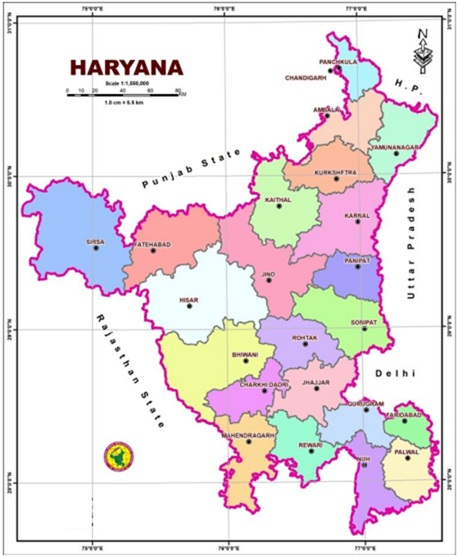
In the Indian state of Haryana, the two tropical and subtropical fruits that are cultivated in the greatest amounts are apples and walnuts. These are the fruits that are grown in the highest quantities. Because these two trees provide the largest harvests in the valley, “Apple and Walnut” proudly represents the fruit industry in the state of California. As stated by Darzi (2016), the Indian state of Haryana has been designated as a “Agri. Export zone for apples and walnuts” due to the fact that it is responsible for the production of around 70 percent of the country’s apples and 90 percent of its walnuts.
The most often consumed fresh fruit Is apples, which account for over 80 percent of the total output and 45 percent of the market share in terms of area. Over 1.726 metric tons (MT) of apples were produced in India during the 2016–2017 crop year, with Haryana accounting for 74.4 percent of the country’s total volume of apple output. Walnuts are the most widely cultivated dry fruit, accounting for 27% of the total land area and being responsible for 11% of the overall production. In spite of the fact that apples and walnuts together cover more than 70 percent of the area, they are responsible for producing nearly 90 percent of all horticulture products.
There has been a rise in the amount of land in the state of Haryana that is used for the cultivation of both fresh and dried fruits. As a result of this growth, the production of both types of fruit has grown. Based on the findings of Hangar and Govindasamy (2013), the substantial income elasticity of demand indicates that this trend is likely to result in an increase in the demand for fruits in the future. This continuous increase in area and productivity can be attributed to factors that are modifiable, such as the commitment of farmers and orchardists to the industry. Additionally, this increase can be attributed to various market interventions, such as the establishment of fruit markets, the provision of support prices, the availability of technological support awareness options, research, and extension.
Following the restoration of independence, the state administration was compelled to take on additional responsibilities that were more significant in relation to the accomplishment of social and economic goals. The agricultural sector was given priority in that sector since it was believed to have the power to affect the financial adjustments that were made inside this organization. The basis for the improvement of agriculture was laid with the initial five-year conceptions, which were presented with a range of preliminary ideas for the advancement of agriculture. According to Kashmir’s Horticultural Heritage, there were seventeen nurseries in operation across the state at the commencement of the First Five Year Plan. Additionally, these nurseries made an effort to protect freshly planted regions from the destructive effects of pests, in addition to supplying the state with the plant material that it required.
The second plan recognized the need of enhancing the nutritional plan and giving it more strength by including essential protective components such as vitamins and minerals. This was done in order to offer the plan more capabilities. Therefore, the design of horticulture takes into consideration the growing production of natural commodities, which are significant regular sources of supply for these chemicals. As a means of broadening organic product plantations and expanding grow businesses, the land use program was reoriented to accommodate these additional goals. In addition, the objective was to enhance the profitability of existing plantations that had become obsolete or falling into disrepair as a result of a variety of circumstances.
REVIEW OF LITERATURE
Taranjeet Singh (2014), Within the context of the Indian economy, the agricultural sector is the primary source of both financial and occupational stability. On account of the fact that more than half of the population is dependent on the agricultural business in some way, shape, or form, whether directly or indirectly, this is the case. It is possible that its significance will be understood and cherished to a far greater degree in areas with a lower population density. Since the beginning of the green revolution, there is no longer any need for us to import any food grains. Nevertheless, owing to the current agricultural climate, particularly in Punjab, there is a need for a greater agricultural diversity in crop production. This is particularly true when one considers the fact that quite a few different kinds of crops may be grown there. The cultivation of horticulture commodities such as fruits and vegetables, as well as the production of flowers, is receiving a significant amount of attention from legislators and business professionals. The reason for this is that crops grown via horticulture have the potential to provide food for the growing population of the globe.
Karanja (2017) Agriculture Is the primary mechanism by which the majority of countries in sub-Saharan Africa (SSA), including Kenya, produce food for their populations and offer a means of livelihood for themselves. Since this is the case, each project that is focused at sustaining and increasing agricultural production constitutes a significant step toward improving the quality of life of a sizable population. This is because the majority of people on the earth live in areas that are characterized by agricultural practices. It is very necessary to have fertile soils that are kept in great shape in order to facilitate the production of both food and fiber. In addition to this, they provide a substantial opportunity to store carbon and prevent the emission of greenhouse gases into the environment. Increasing agricultural production, increasing yield, soil fertility, and soil biodiversity, as well as reducing soil erosion and water pollution, are all possible outcomes of implementing climate-smart soil practices to improve soil quality. Additionally, the nitrogen cycle in the soil could be improved. Modifying agricultural practices such that they take into account the effects of climate change is one way to achieve these benefits.
Jagan Singh Gora (2019), The cultivation of plants is a significant contributor to the achievement of food and nutritional security. Keeping this in mind is of the utmost importance. As a result of their limited capacity for storage, horticultural crops are particularly susceptible to the unpredictability of the weather. It is a well-established truth that climate change is taking place, and that it is having a detrimental effect on production, output, and product quality, in addition to making environmental stress even more severe. Horticulture in tropical locations is facing new and significant problems as a result of the shifting patterns that are being brought about by climate change. The average temperature of the air is rising, the patterns of precipitation are changing, the amount of ultraviolet radiation is increasing, and there is a rise in the frequency of extreme weather events such as heat waves, salt waves, droughts, and floods. These are the difficulties that we face. The objective of this project is to increase productivity and output without compromising the quality of the goods produced by horticulture crops by investigating the causes, impacts, and techniques for mitigating the effects of climate change on these crops. The methods that have been used in order to mitigate the effects of these repercussions are also explored.
Arya (2013), who Investigated the link between the cost of a fruit and the benefits it provides?The results of a multiple cropping system showed that the optimum benefit-to-cost ratio was achieved by cultivating a combination of Aonla, Ber, Karonda, Moth bean, and Mustard. This combination yielded a ratio of 3.48:1. It was observed that this occurred when the crops were produced using a mixture of Aonla, Ber, Karonda, Moth bean, and Mustard. When compared to the other perennial components, it was found that ber had the greatest benefit-to-cost ratio, which was calculated to be 2.22:1. The dual cropping strategy was able to give a stable source of revenue for approximately nine months of the year, despite the fact that Rajasthan has a dry environment.
“Yadav” 2018 edition of Amit Over the last several years, the primary cause of concern has been the question of whether or not organic products are safe and of high quality. As more individuals come to the realization that organic products provide more benefits to their health and safety than their conventional counterparts do, it is anticipated that the market for organic goods will continue to expand. Organic farming is not a new practice in India; in fact, it is thriving in all of the country’s different climates, including its highland areas, rain-fed plains, and Himalayan tribal peaks. India is already a pioneer in the field of organic farming. Although the growth of the domestic market for organic products in India is occurring at a slower pace than was predicted, official figures from India indicate that the industry is expanding. Customers who are interested in making the conversion to organic food find it challenging to do so due to the high cost of organic foods; previous research has shown that this is a concern. As a result of this, the goals of this study are to: (1) develop horticulture goods with the intention of reducing the cost of organic products; and (2) conduct a cost-benefit analysis that compares organic products to conventional products. According to the data, there is not much of a noticeable difference in price between conventional and organic products. The outcomes of the research are intended to convince both food producers and consumers to make dietary adjustments that favor organic food. This is the hypothesis that the study is based on.
Josefa López-Marin (2019), The tomato, also known by its scientific name Solanum lycopersicum L., is not only one of the most well-known and commonly consumed vegetables in the world, but it is also the vegetable that is most often included in the Mediterranean diet. Solanum lycopersicum L. is the scientific name for the grape known as the tomato. Over the course of the last few years, a number of different kinds of agricultural plastic have been introduced to the market and made accessible for buyers to purchase. It was decided to develop these polymers in order to adjust the radiation spectrum that is allowed to enter the greenhouse. This was accomplished by increasing certain wavelength bands in some circumstances and filtering the light in other circumstances. I was able to do this by increasing the intensity of certain wavelength bands and filtering the light. The purpose of this research was to determine whether or not it would be feasible to cultivate tomatoes using a wide variety of cover systems, and then to assess the productivity of tomatoes grown using each of those cover systems individually. A total surface area of one hundred square meters was used for the study project, which investigated the impacts of a number of different types of plastic roofing with variable radiation qualities. The research was conducted in six tunnel greenhouses. The purpose of the research was to determine the role that the roofing played in influencing the amount of radiation that the plants were exposed to. The yield of tomatoes was measured and economically valued based on the mean prices of the previous years’ Consejera de Agricultura de la Region de Murcia (CARM), the Department of Agriculture of the Region of Murcia, as well as a survey of farmers and the wholesale market network (Mercas). This was done in order to determine the weekly prices and the quality of the tomatoes. A calculation of the weekly cost of the quality of tomatoes was carried out in order to accomplish this. In order to determine the weekly price of tomatoes, this was done in order to take into account the various sizes of tomatoes that were available. Following the completion of the manufacturing cost estimates that were linked with each of the viable alternatives, we proceeded to determine the net present value of the yield as well as its annualized value. The UVA100%e cover was the most popular option since it generated the largest yearly value of €24,856.04 in revenue. Following that, the UV90%e cover generated a total of €18,931.49 in annual income, while the PeTc cover came in second with €16,205.53 in annual revenue. It was determined that the LDe and Anti NIR coatings had the least beneficial outcomes, with yearly costs of €3,954.93 and €10,480.40, respectively.
Koushik Baruah (2023) “Horticulture production economics” is a subfield of agricultural economics that investigates the financial implications of cultivating and selling horticultural goods. This region was produced in the year 2023. It is going to be broken down into its component parts, such as the production, distribution, and sale of fruits, vegetables, flowers, and ornamental plants, and each of these components is going to be assessed in terms of the costs and benefits that are associated with it. This company has a broad variety of challenges, some of which include the prices of inputs, the quantity and quality of crops, the demand in the market, pricing tactics, and profitability. For farmers, lawmakers, and other industry stakeholders to be able to make educated choices, maximize resource usage, increase competitiveness, and ensure the long-term sustainability of the sector, it is essential for them to have a comprehensive grasp of the economics of horticulture production.
Karanja (2017) Agriculture Is the primary means by which the majority of nations in sub-Saharan Africa (SSA), including Ghana, provide sustenance for their populations and produce the majority of their revenue. A few of these countries include Ghana. Increasing and preserving agricultural output would be a significant step in assisting people in becoming more self-sufficient and fulfilling their responsibility to care for their families. Any endeavor that has the potential to bolster and enhance agricultural production is included in this. Ghana has to employ agricultural practices that are climate-responsible in order to mitigate the threat that climate change poses to the country’s ability to sustain stable levels of agricultural production over the course of the long term. The best approaches to cope with the threat that is presented by climate change and variability have not yet been the subject of a significant amount of study in the scientific community. This holds true even in the presence of concerns over the imminent threat posed by climate change and the uncertainty of the future. In spite of this, a growing number of government initiatives and development projects have been devised in recent times in such a manner that, if they were to be put into effect, they would be able to handle the issues that have been brought about by climatic variations and changes. It is going to be to everyone’s advantage if this trend continues. At the present day, these methods are used by the overwhelming majority of farmers who are situated in rural regions. In spite of this, one of the most important aspects of the procedures that are used to formulate policies is assessing whether or not the implementation of these strategies will end up being financially beneficial. The findings presented in this paper make an attempt to bridge the knowledge gap that exists between the costs and the efficacy of various climate-smart agricultural activities. This is accomplished by employing an ex-ante cost-benefit analysis to evaluate the cost-effectiveness of some of the suggested climate-smart agricultural practices. The purpose of this study is to investigate the costs associated with a variety of climate-friendly farming techniques, in addition to the advantages that these methods make available to individuals and society as a whole. The objective of this study is to get a deeper comprehension of the costs and possible advantages associated with these activities, which include both societal and private aspects. Furthermore, the purpose of this study is to ascertain the factors that may prevent farmers from adopting these methods and to identify the possible advantages that these practices may have for society as a whole. This study’s objective is to get a deeper comprehension of the benefits and drawbacks associated with these behaviors, both on an individual level and possibly in the context of society.
Bakhtaver Hassan (2021) The entirety of a company’s operations, beginning with the point of production and ending with the end user, is included in what is known as a value chain. Activities like distribution, processing, transportation, and value addition are included in this category. It is possible that we will gain a better understanding of the numerous stakeholders, as well as the activities and procedures that contribute to the overall value of the product, if we conduct a value chain analysis. Because of this, we are able to make more informed decisions about our company. Performing a value chain analysis in the Indian horticulture industry allows us to map the chain, identify the players involved, and gain insight into the numerous challenges that are encountered throughout the process of getting the product from the producers to the customers. India provides a wide variety of opportunities for the production and sale of horticulture products as a result of the country’s varied agricultural and climatic conditions. These options may be separated into two categories: production and distribution. Production and distribution are the two categories. We made an effort to conduct research on three primary regions: the North West Himalayan region, which is comprised of the states of Jammu and Kashmir, Uttarakhand, and Himachal Pradesh; the North East Region, which is comprised of Assam, Sikkim, and six other sister states; and the Performer states, which are distinguished by having a significant amount of land devoted to horticulture as well as a high level of horticultural output. We examined the value chain at each location as well as the areas surrounding it, taking into consideration the current levels of output, area, and productivity. In spite of the fact that the output among the key Performer states was significant for the entire horticulture industry, there were difficulties associated with the efficiency of the value chain. On the basis of the reliability of scientific principles, the use of fertilizers and pesticides, as well as the provision of financial assistance to farmers, were not supported. A number of factors, including the high rate of perishability of the product and the region’s inadequate marketing infrastructure, acted as a barrier to the development of the industry throughout the entirety of the process. Poor connectivity, difficult terrain, and a lack of investment in the infrastructure that is required for the development of the market were the primary obstacles that stood in the way of the sector’s expansion and development in the North West and North East Himalayan States. Significant challenges have been identified for the horticultural sector in the North East region, which is responsible for 4.5% of the total production. These challenges include Jhum Cultivation and a lack of technological innovation.
Prakash P. (2022) Protected farming is a method of farming that aims to cultivate both seasonal and non-seasonal crops in an environment that is climate-controlled through the application of innovative farming techniques. There is a significant potential for a significant increase in overall productivity, the number of jobs created, the amount of land that is utilized effectively, and the quantity of goods that are exported when flowers and vegetables are grown. The objective of this research was to determine whether or not it would be feasible from a financial standpoint to engage in protected farming in the high export potential zones of the Pune and Nasik districts located within the state of Maharashtra in India. In order to accomplish this goal, the investigation featured the utilization of a regression model as well as project analytical techniques. The study came to the conclusion that, despite the significant initial outlay of capital, growing flowers and vegetables in protected cultures produced a high degree of financial return. Growing capsicum and roses in a protected environment is more expensive than open culture, but the yield was 200% higher in net return and 250% higher in gross return.
TREND OF HORTICULTURE IN HARYANA
The expansion of organic product plantations and the expansion of grow businesses were both accomplished using this method. This plan called for each state to concentrate on manufacturing organic products of a particular sort in which it was an expert, with the other organic commodities being produced in another place under circumstances that were more friendly. On the basis of these statistics, the administration of the state was able to appreciate the significance of the apple business in the state with respect to the potential for plantation growth and the provision of financial assistance to farmers who are less fortunate in the state. In order to accomplish these goals, the State Department of Agriculture established a new, more compact wing and made considerable alterations to its organizational structure. Consequently, this ultimately led to the establishment of the State Horticulture Department in 1962–1963, which was responsible for safeguarding Kashmir’s horticultural heritage. Following the establishment of a new agency, a number of measures were then put into place in order to encourage the expansion of the state’s agricultural sector. The reason behind this was to ensure that all of the available resources, including financial, material, and human resources, were used in the most efficient manner possible.
Thus, the Fourth Plan allotted Rs. 226.68 Lakhs for the improvement of agriculture. But during the Fifth Five-Year Plan, the true amount spent on it was Rs. 133.64 Lakhs, making the full amount paid equivalent to 58.95 percent of the total cost. Effectively marketing agricultural commodities was considered as a key issue facing the agriculture sector today, and it was given high focus throughout the execution of this strategy. The purpose of doing this was to discover a solution to the situation. Reducing the influence of commission operators and middlemen in this sector, as well as providing more effective advertising of horticulture items, were among the aims of the organization.
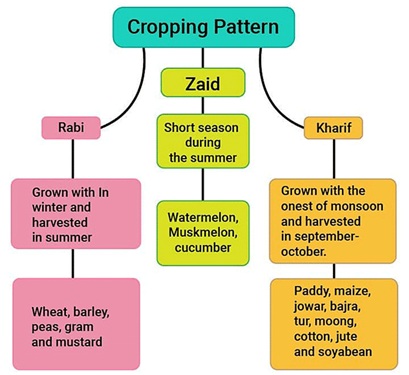
Figure 1 cropping pattern
Agricultural practices are significantly influenced by the weather and climate conditions that prevail in the region. As a result of India’s subtropical climate, the country’s agricultural sector is particularly vulnerable to the effects of climate change. The changes in temperature and precipitation are the primary factors that contribute to its abnormally high level of sensitivity. In addition, alterations in land use and the excessive exploitation of natural resources are examples of non-climate causes of pressures that are now present and will be made worse by climate variability, which will make agriculture a sector that is becoming more dangerous.
Farmers, academics, and politicians in the agricultural industry are all confronted with a significant obstacle when it comes to the management of agricultural hazards. Therefore, in order to reduce the risk that is associated with climate variability, it is necessary to implement a broad range of policy responses and interventions at the local, regional, national, and international levels. Adaptation and mitigation are two of the most important climate change response strategies, according to the United Nations Framework Convention on Climate Change (UNFCCC), which was established in 1992. On the other hand, the objective of climate change adaptation is to lessen the intensity of the adverse effects of climate change by using a variety of system-specific methods. The goal of climate change mitigation is to reduce emissions of greenhouse gases.
Therefore, the development of proper risk mitigation measures was necessary in order to protect the agricultural economy and maintain a constant income stream for farms. One of the most rational and comprehensive approaches to safeguarding the economic well-being of farmers is to provide some kind of protection against the possible adverse impacts that may be caused by a number of different hazards. In order to deal with these risks and uncertainties, the government has developed a variety of plans that include mitigating factors. The reduction of taxes, the forgiveness of debts and loan interest, and the implementation of additional measures to ameliorate the effects of natural disasters such as droughts and floods are some examples of these measures. In contrast, one of the most significant obstacles that various forms of assistance must contend with is the fact that they are fundamentally dependent on the resources and policies of the government. As a consequence of this, farmers are compelled to wait it out in the expectation that they would eventually be reimbursed for their losses, despite the fact that these precautions provide some degree of assurance in the face of uncertainty. On the other hand, farmers make an effort to lessen the amount of risk they are exposed to by using contemporary technology, diversifying their agricultural operations via the use of intercropping, and making inventive use of a variety of fertilisers, pesticides, and other agricultural supplies.
In spite of the fact that adaptation strategies are essential in order to handle the issue of climate variability, there has been a recent rise in awareness of the notion of adaptation, especially in light of the publication of the Third Assessment Report by the Intergovernmental Panel on Climate Change (IPCC). The manner in which adaptation is carried out may be classified as either anticipatory or reactive, private or public, planned or autonomous, depending on the environment, the aim, and the reason behind the adaptation. It has been shown that crop insurance is one of the anticipatory adaptation techniques that has proven to be an effective institutional instrument in mitigating the negative effects that climate variability has on a global scale.
Despite a high claims ratio and cheap premium prices, farmers are not actively enrolling in crop insurance, particularly for grain and oilseed crops. This is especially true because the premium rates are low. Those farmers who do not have any debt from agricultural loans are most affected by this finding. To examine the important changes that need to be made to the existing crop insurance plans in order to circumvent some of the constraints and make the system more user-friendly for farmers, a cooperative group was established. This has been done in order to research the essential improvements.
This working group on risk management in agriculture for the XI Five Year Plan has emphasised that in order for a crop insurance programme to be accepted as a significant tool in crop risk management, it must have a penetration rate of at least fifty percent (Government of India). This is despite the fact that crop insurance is acknowledged as an effective risk intervention mechanism. Due to the fact that the working group reached a consensus that crop insurance is an effective instrument for risk intervention, the group decided to make this recommendation. It was determined that the plan had certain basic problems, including low levels of guaranteed yield and indemnity, claim settlement delays, exclusion of horticulture commodities from coverage, excessive insurance unit sizes, and poor maintenance and knowledge. A number of significant recommendations have been made by the group. These include reducing the insurance unit area to Gramme Panchayat for major crops, enhancing the methodology for calculating the threshold yield, increasing the indemnity level, covering pre-sowing/planting risks and post-harvest losses, obtaining personal accident insurance coverage, and a number of other recommendations.
ICICI Lombard received technical help from the World Bank when it introduced the Weather-Based Crop Insurance Scheme (WBCIS) in India. The purpose of this scheme was to give assistance to farmers of groundnuts and castor in the Mahabubnagar district of Andhra Pradesh. This district is located in a region that has soils that are shallow and unfertile, requires minimal irrigation, and has little rainfall that is erratic. WBCIS was created by ICICI Lombard with the intention of providing assistance to the producers of groundnuts and castor in this region. An analogous weather insurance contract was formed by IFFCO-Tokio, which is a joint venture insurance business. The states of Andhra Pradesh, Karnataka, and Gujarat joined the pilot rainfall insurance plan. Joint venture operations are carried out by the insurance company known as IFFCO-Tokio. The Agriculture Insurance Company of India Limited (AICIL), New Delhi, the public sector insurer, joined this market with the establishment of a rainfall insurance plan known as Varsha Bima. This came after the early private sector trial projects had been implemented. Inadequate rainfall at the beginning of the season, which led to the failure of sowing, inadequate rainfall during important stages of crop development, and insufficient rainfall throughout the cropping cycle were all addressed during the implementation of this system. These three threats were the focus of the plan’s attention. A total of 142 districts from ten different states, including Haryana, were involved in the Varsha Bima programme. The AICIL first developed a weather-based insurance policy for coffee producers in the state of Karnataka in the year 2005. This was accomplished with the assistance of the Central Coffee Research Institute and the Coffee Board, who provided technical support. In the years that followed, the product was expanded to include coffee farmers in the states of Haryana.
The National Agricultural Insurance Scheme (NAIS), which is India’s primary crop insurance plan, has a structure that is technically solid with regard to its entire foundation. Nevertheless, there are a large number of locations and characteristics inside the NAIS that have the potential to be improved further. Due to the fact that the bulk of the financing for the current National AIDS Information System (NAIS) comes from ex-post public contributions, both the state and federal governments are susceptible to a financial vulnerability that is highly variable and open-ended. Ex-post financing administrative and financial processes implemented by the government have resulted in severe delays in the payment of NAIS claims, which may often run for as long as nine or twelve months to complete. Farmers who are located in close proximity to insurance units are not given preferential treatment and are not picked in a fair manner because of the inadequate classification of risks.
Farmers are able to take advantage of the decreased basis risk of area yield insurance as well as the speedier payment of weather-index insurance thanks to the modified NAIS, which combines the advantages of both weather-based index insurance and area yield insurance. One other advantage of the enhanced budget management, which will also be of use to the federal and state governments, is that the whole cost of the government’s support for MNAIS will be known at the beginning of each crop season. This has the potential to be a significant benefit.
DISCUSSION
The cayenne pepper, often known as the chilli pepper, is one of the commercially grown spices. In addition to being the spice that is used the most often, it is also known as the “wonder spice.” In spite of the fact that it is often known as a red pepper or a hot pepper, the sweet pepper, also known as ‘Kudamilagai,’ is really a distinct variety of Capsicum annum. On the other hand, the fruits of the sweet pepper are larger than those of the red pepper, and they have a taste and pungency that are less intense. Capsicum is the name given to the pungent component that may be found in vegetables such as hot peppers and spicy chillies. The seed, the placenta, which is located in the middle of the fruit, and the ovarian wall are the primary locations where it is found whereas the ovarian wall is present to a lesser amount. Between 0.2 and 0.4 percent is the average range for the amount of capsaicin that is involved.1. Chilly is a fruit that stems from the plants known as “Capsicum annum” and “capsicum frutescens,” both of which belong to the family Solanaceae and are descended from the genus “capsicum.” Additionally, it is composed of tomato and potato2. The name “capsicim” originates from the Ancient Greek word “Kapsimo,” which means “to bite.” Capsicim is derived from this Latin word. The brilliant colour and acidic flavour of these fruits have earned them widespread recognition, despite the fact that they may be rather little at times. In the present day, chilli is employed all over the globe not only as a spice but also in the production of beverages and medicines. Because of the pigment known as “capsanthin,” some strains of the cold are well-known for their bright red colour. On the other hand, other strains are well-known for their robust and astringent flavour, which is a result of the pigment known as “caspian.”
It is possible to include chilli into salads, utilise it as a treatment, incorporate it into industrial items, or even use it as a decorative element. Chilli has a variety of applications. It may be consumed in a variety of forms, including dried, fresh, paste, powder, and sauce, among other possible preparations. As a result, individuals are more likely to consume a wider range of meals since it improves the flavour of food. It is an excellent source of vitamins A, C, and E that, in addition to vitamin B, it also contains. When consumed with meals, chilli improves our sense of taste and, as a result, stimulates the production of saliva throughout the mouth. Through the conversion of starchy or cereal meals into glucose, which is easier to produce, it is loaded with the enzyme amylase, which makes the process of breaking down these types of meals much easier. As is the case with ginger beer and a great number of other drinks, chilli extract is an essential component. Due to the fact that it protects against the damage caused by secondary irradiation, green cold is considered to be an extremely significant substance. Our food will achieve the perfect harmony of colour, flavour, pungency, and taste as a result of its incorporation. One of the most important sources of revenue is known as chilli. Because of this, there has been a discernible rise in the demand for chilli in marketplaces all over the world.
Rice, which is the most widely consumed staple food in India, is mostly produced from paddy, which is a kind of grain. India is experiencing difficulties in providing food for all of its citizens as a result of its rapidly expanding population. In order to fulfil the needs of the global population for food by the year 2030, it is anticipated that the annual output of foodgrains would need to be increased to 260 million metric tonnes. Rice, which is one of the most important foodgrain commodities produced in India, is grown on 44.4 million hectares of land, and the country’s yearly harvest of grain is 84.9 million tonnes. One definition of “inefficiency” is the situation in which a farmer is unable to maximise the quantity of production that is practically attainable given the resources that are available to him. According to the most recent research, it would seem that farmers in underdeveloped nations do not always make full use of the technology that are available to them. Productivity may be increased in a number of ways, one of which is by improving the effectiveness of the manufacturing process. These are only a few of the ways available. In particular, it is an essential component of productivity and growth, particularly in developing agricultural nations that have limited resources and little chances for the development and implementation of new technology for agricultural purposes. This is of utmost significance in agricultural economies that are still in the process of development.
Conclusion
The findings and information obtained from the field survey indicate that horticulture farming in the study region has a number of obstacles, some of which are related to marketing, others to economics, and still others to physical challenges. The lack of money, the shedding of plants, a lack of awareness of horticultural procedures, illiteracy, and inappropriate crop care are among problems that are associated with horticulture. A lack of organisation, an outmoded and unreliable market, inadequate storage, a lack of facilities for grading and standards, an excess of intermediaries, market malpractice, and price manipulation are some of the issues that are faced in the selling of agricultural products in the horticulture industry. Inadequate market facilities are yet another big challenge for those working in the horticultural industry. Numerous factors impact the horticulture industry’s economy, including inadequate transportation, a lack of capital, labour, price volatility, crop insurance policies, a lack of specialised pesticides, issues with credit facilities, the absence of an agro-based industry, poor water management, inadequate knowledge of horticulture farming, illiteracy, traditional methods, and a lack of market.
References:
- P., Prakash & Kumar, Pramod & Reddy K, Viswanatha & Jaganathan, D. & Immanuel, Anbukkani, Sivalingam, Niranjan, Selvakumar, Raman, Venkatesh, Paramesh, Rajanna, G. A., Jaganathan, D., Immanuel, S., Kamble, A. L., Selvakumar, R., Immanuelraj, K. T., Manogaran, B. R., Perumal, A., Maruthanayagam, U., Niranjan, S., . . . Niranjan, S. (2022). Protected Cultivation of Horticultural Crops as a Livelihood Opportunity in Western India: An Economic Assessment. Sustainability, 14(12). https://doi.org/10.3390/su14127430
- Awasthi, O. P., Singh, J., & Singh, B. (2013). Cost benefit analysis uner fruit based multiple cropping system. Progressive Horticulture, 43, 72–75.
- Baruah, K., Tare, Kime, Sherpa, T., & Kaushik, K. (2023). Economics of horticultural production.
- Bhatt, B. P., & Misra, L. K., lohit krishna. (2018). Production Potential and Cost-Benefit Analysis of Agrihorticulture Agroforestry Systems in Northeast India. Journal of Sustainable Agriculture, 22(2), 99–108. https://doi.org/10.1300/J064v22n02_07
- Dixon, G., Collier, R., & Bhattacharya, I. (2013). An assessment of the effects of climate change on horticulture. Horticulture, 2, 817–857. https://doi.org/10.1007/978-94-017-8581-5_10
- Gora, J. S., Verma, A. K., Singh, J., & Choudhary, D. R. (2019) R. Kumar, V. P. Singh, D. Jhajharia, R. Mirabbasi (Eds.). Agricultural Impacts of Climate Change (pp. 45–61). CRC Press. https://doi.org/10.1201/9780429326349-3
- Hassan, B., Bhattacharjee, M., & Wani, S. (2021). Value-chain analysis of horticultural crops-regional analysis in Indian horticultural scenario. International Journal of Applied Research, 6, 367–373. https://doi.org/10.22271/allresearch.2020.v6.i12f.8122
- Karanja, S. (2017a). Cost and Benefit Analysis for Climate-Smart Soil practices in Western Kenya.
- Karanja, S. (2017b). COST AND BENEFIT ANALYSIS FOR CLIMATE-SMART AGRICULTURAL (CSA) PRACTICES IN THE Coastal Savannah AGRO-ECOLOGICAL ZONE (AEZ) OF Ghana working paper.
- López-Marin, Josefa & Rodriguez, M & Del Amor, Francisco & Gálvez, A. & Brotons Martínez, José Manuel. (2019). Cost-Benefit Analysis of Tomato Crops under Different Greenhouse Covers. Journal of Agricultural Science and Technology. 21. 235-248.
- Singh, T. (2014). Cost-benefit analysis of vegetable cultivation: A case study of Patiala District, 4.
- Yadav, A. (2018). Cost benefits ratio of organic horticultural products and comparison with conventional products. International Journal of Advanced Biological and Biomedical Research, 1. https://doi.org/10.18869/IJABBR.2018.95
- Omale, M. O., Isah, A. A., Abuh, L. O., & Omale, U. E. (2024). Phytochemical Screening and Anti – oxidant Activities of the Roots and Leaves of Citrus Aurantifolia (Lime orange) grown in Imane, Olamaboro, Kogi, Nigeria. Shodh Sari-An International Multidisciplinary Journal, 03(01), 55–65. https://doi.org/10.59231/sari7654
Cite this Article:
Ritu, R., & Dhull, S. S. (2025). A study on trends of horticulture in Haryana. International Journal of Applied and Behavioral Sciences, 02(01), 253–269. https://doi.org/10.70388/ijabs250123
Statements & Declarations:
Peer-Review Method
This article underwent double-blind peer review by two external reviewers.
Competing Interests
The author/s declare no competing interests.
Funding
This research received no external funding.
Data Availability
Data are available from the corresponding author on reasonable request.
Licence
A Study on Trends of Horticulture in Haryana © 2025 by Ritu and S.S.Dhull is licensed under CC BY-NC-ND 4.0. Published by IJABS.