
 Share
Share
Abstract
As the need for renewable energy continues to increase, recent years have seen major developments in energy-harvesting methods. These piezoelectric devices work by converting mechanical energy from the surroundings into electrical energy. Here, we focus on enhancing the energy output voltage of piezoelectric materials using various techniques.We synthesized Ba-doped ZnO (BaZ) powders through the co-precipitation process, calcination of powder at 500°C. The prepared ceramic powders exhibited phase formation, as confirmed by X-ray diffraction (XRD). Flexible composite films were fabricated by incorporating calcined Ba-doped ZnO particles into PVDF at a filler concentration of 5 wt.%. The films, produced using the drop-casting technique, had an average thickness of around 60 µm. The structural properties of the fabricated films were characterized by X-ray diffraction, and their surface morphology was investigated using Scanning Electron Microscopy (SEM). To evaluate energy harvesting capabilities, the devices were subjected to mechanical excitation via a shaker, and the resulting voltage output was recorded through the films’ electrical contacts. The measured output voltages were 6.32V and 24.6V for PVDFand 5 wt.% CaZ-PVDF films, respectively. These voltage outputs demonstrate the capability of the fabricated films to power small electronic devices.
Introduction
Harvesting energy from various renewable sources, including solar, tidal, thermal, chemical, and mechanical energy from the environment, has garnered significant attention as a means to address critical global challenges such as the rapid depletion of fossil fuels, global warming, and energy crises. [1, 2].Mechanical energy is considered one of the most widespread, readily available, and abundant renewable sources. Different methods have been investigated to capture it, including triboelectric effects, electromagnetic induction, and piezoelectric conversion. Among these, the piezoelectric approach is particularly appealing due to its ability to generate high output energy [3,4].The electroactive semicrystalline homopolymer poly(vinylidene fluoride) (PVDF), composed of the repeating unit –(CH₂–CF₂)–, together with its copolymers including P(VDF-TrFE), PVDF-HFP, and P(VDF-TrFE-CFE), demonstrates remarkable piezoelectric, pyroelectric, and ferroelectric behaviours. These materials also offer good thermal stability and chemical resistance, making them ideal candidates for the aforementioned applications [5-7]. The semicrystalline nature of PVDF allows it to exist in different crystalline phases, namely α, β, γ, δ, and ε, with α, β, and γ occurring most frequently. The α-phase, defined by a TGTG′ (trans–gauche+–gauche−) arrangement, and the γ-phase, characterised by a TTTGTTG′ chain sequence, possess lower piezoelectric performance in contrast to the β-phase. The β-phase, with its all-trans (TTTT) conformation, exhibits the highest spontaneous polarization, making it the most piezo-electrically active [8, 9].Zinc oxide (ZnO), a wide bandgap n-type semiconductor, is frequently incorporated into composite films to boost their dielectric and ferroelectric characteristics.Nevertheless, increasing the filler concentration may reduce the inherent flexibility of polymer matrices. To address this, reducing the nano-filler content while achieving improved properties—either through ionic doping or by combining ZnO with other fillersis considered a more effective approach to preserving the polymeric characteristics of composite films[10-13].Studies indicate that incorporating Ba into ZnO nanoparticles significantly boosts their dielectric constant and high-temperature ferroelectricity. Since Ba²⁺ (1.35 Å) is about 1.8 times larger than Zn²⁺ (0.74 Å), this ionic size disparity generates local dipoles within the lattice. Consequently, Ba doping in the ZnO matrix is anticipated to enhance its piezoelectric properties. Numerous investigations have explored the structural, optical, dielectric, ferroelectric, photocatalytic, magnetic, and gas-sensing properties of barium-substituted ZnO nanoparticles[14-20].
Experimental Section
Preparation of Mn-Doped ZnO Ceramic Powder
A simple co-precipitation method was employed to synthesize Ba-doped ZnO (BaZ) ceramic powder [21]. For this synthesis, Barium Chloride and Zinc Chlorideprecursors were used for Barium and zinc, respectively. The precursors were dissolved in distilled water at room temperature and stirred continuously for 2hours using a magnetic stirrer to form a homogeneous solution [22].Subsequently, sodium hydroxide (NaOH) solution, acting as a strong base, was added slowly into the mixture to promote the formation of precipitates. The mixture was allowed to stand without agitation until the precipitates fully settled at the base of the beaker. The precipitates were then thoroughly washed several times using ethanol and distilled water to ensure purity. He clean precipitates were oven-dried at 90°C for 12 hours and later calcined at 500°C for 2 hours in a muffle furnace, yielding BaZ ceramic powder.
Preparation of flexible composite films consisting of BaZ/PVDF
Polyvinylidene fluoride (PVDF), BaZ powder, and N,N-dimethylformamide (DMF) were used to produce flexible composite films. Firstly, DMF and PVDF powder were mixed continuously on magnetic stirring for 1 hour at 40 °C, yielding a clear and homogeneous solution.In a separate step, BaZ powder, pre-calcined at the desired 5 wt.% concentration, was dispersed in DMF and ultra-sonicateduntil all the particles broke into powder form. The resulting BaZ suspensions (5 wt.%) were then blended with the PVDF solution and stirred magnetically at 45 °C for 2 hours to achieve uniform dispersion. The homogeneous mixture was drop-cast onto a clean glass substrate and subsequently dried in an oven at 80 °C for 1 hour. This process yielded a flexible BaZ/PVDF composite film on the substrate, which could be easily peeled off. All synthesis steps were performed under ambient air conditions, and electrical connections were established using copper wires.
Result and Discussion
Structure Analysis of the Composition of BaZCeramic Powder
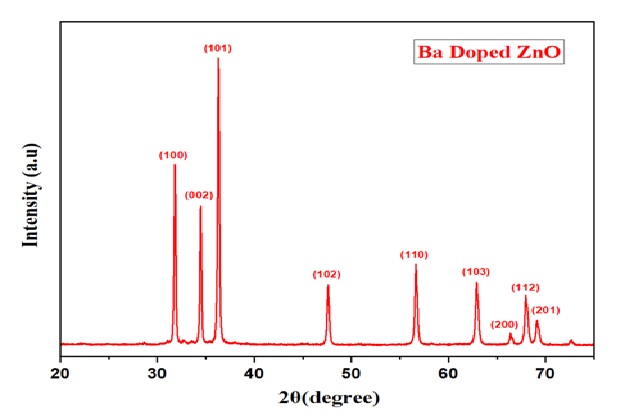
Fig.1 XRD Analysis of BaZ Ceramic Powder.
XRD profiles of Ba-doped ZnO (BaZ) particles are displayed in Fig. 1. As a wide-bandgap semiconductor, ZnO generally adopts wurtzite or zinc blende crystal structures. The wurtzite structure of ZnO is characterized by two polar surfaces, consisting of Zn and O, which create a dipole moment and spontaneous polarization along the c-axis, giving ZnO its piezoelectric properties [23]. The observed peaks closely match the pure ZnO crystalline structure listed in the JCPDS database (card number: 361451), confirming the hexagonal wurtzite phase of ZnO [24]. The introduction of Barium as a dopant causes no significant changes in the diffraction pattern, suggesting that Ba²⁺ ions replace Zn²⁺ ions within the lattice while preserving the hexagonal wurtzite structure. The absence of additional peaks supports this conclusion. However, the lower diffraction peak intensity in BaZ nanoparticles compared to ZnO suggests the successful incorporation of Ba dopant ions in place of Zn ions [25].
XRD and SEM Analysis of 0 and 5 wt. %BaZ/PVDF Composite Films
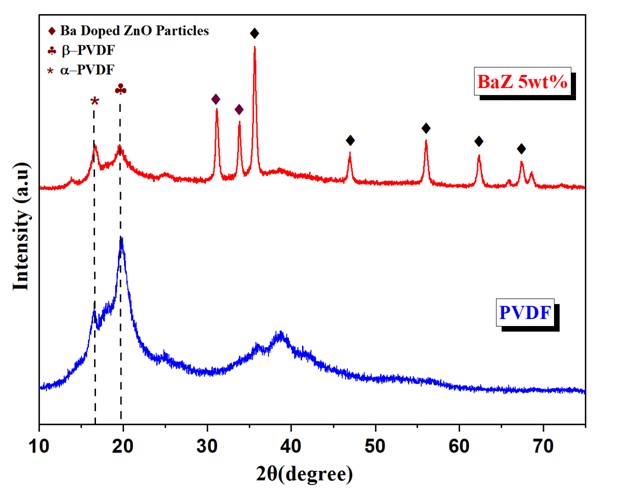
Fig. 2 XRD plots of both pure PVDF and BaZ/PVDF composite film.
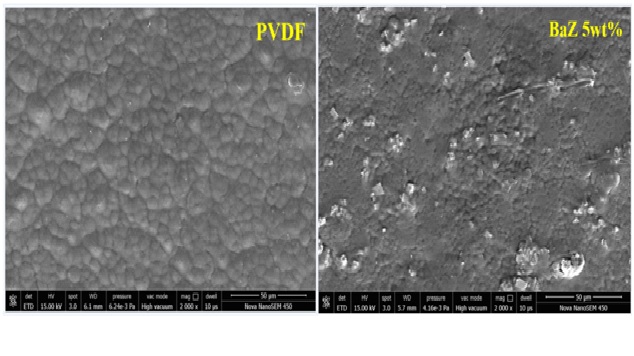
Fig. 3 SEM images of PVDF and BaZ/PVDF composite film.
XRD plots of 0 and 5 wt.%BaZ/PVDF flexible composite films are displayed in Fig. 2. In all the films, a diffraction peak at 20° corresponds to the electroactive polar β-phase of PVDF, while a broad diffraction peak at 18.0° indicates the presence of the non-polar α-phase in the films [26]. It is visible from the XRD peaksthatBaZ particles intensify as their concentration in the PVDF matrix reaches 5 wt. %. The SEM images in Fig. 3 illustrate the surface morphology of both 0 and 5 wt. % ofBaZ flexible composite films, confirming that BaZ particles are evenly embedded throughout the PVDF matrix. This even distribution of BaZ particles facilitates the alignment of dipoles in a specific direction and promotes the efficient movement of charges within the composite film, thereby enhancing the device’s performance [27, 28].
Piezoelectric Voltage Output from the PEG Device.
Fig. 4Voltage output of the (a) PVDF (b) 5 wt.% BaZ PEG Device
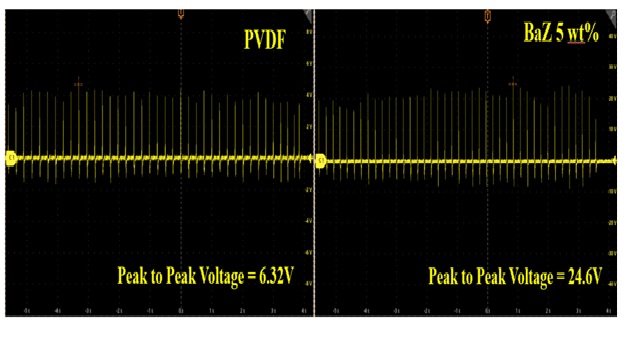
Fig. 5 Shows Application by Glowing LED Light.
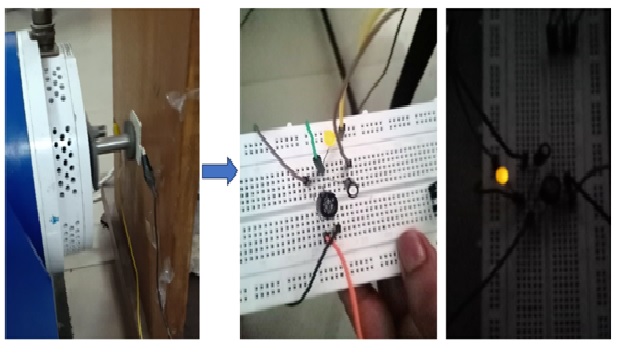
Fig. 4 illustrates the voltage responses of two devices: one fabricated from pure PVDF and the other incorporating a BaZ/PVDF composite film. Incorporation of BaZ fillers in the compositePEG device notably improved the produced voltage output relative to the 0 wt. % PEG device.The maximum voltage generated was 24.6 V of 5 wt. % ofBaZ, and 6.32 V for pure and 0 wt. % PVDF PEG. This voltage generation results from the deformation of the film’s crystal structure under applied stress, which leads to the alignment of electric dipoles [29,30].Fig. 5 shows the energy harvesting application by glowing LED light from the PEG device manufactured from BaZ/PVDF composite film.
Conclusion
We synthesizedBaZ powder and confirmed its structure using XRD analysis. The composite films, produced by solvent casting, were subsequently characterized by XRD to evaluate their crystalline nature. Findings reveal that the addition of BaZ aids in the emergence of the polar electroactive phase, resulting to increased filler crystallinity. Moreover, embedding BaZ within the PVDF matrix modifies the device behaviour and enhances its piezoelectric response. Under mechanical excitation from a shaker, the voltage output of the BaZ/PVDF PEG reached a maximum of 24.6 V.
References:
- Anand, A., & Bhatnagar, M. C. (2019). Effect of sodium niobate (NaNbO3) nanorods on β-phase enhancement in polyvinylidene fluoride (PVDF) polymer. Materials Research Express, 6(5), Article 055011. https://doi.org/10.1088/2053-1591/aaefd9
- Bhamare, V. S., Kulkarni, R. M., & Santhakumari, B. (2019). 5% barium doped zinc oxide semiconductor nanoparticles for the photocatalytic degradation of linezolid: Synthesis and characterisation. SN Applied Sciences, 1(1), 1–12. https://doi.org/10.1007/s42452-018-0114-8
- Bornand, V. (2015). Ferroelectric and dielectric properties in Li-doped ZnO nanorods. Thin Solid Films, 574, 152–155. https://doi.org/10.1016/j.tsf.2014.12.011
- Bukkitgar, S. D., Shetti, N. P., Kulkarni, R. M., & Doddamani, M. R. Electro-oxidation of nimesulide at 5% barium-doped zinc oxide nanoparticle modified glassy carbon.
- El Mir, L. (2017). Luminescence properties of calcium doped zinc oxide nanoparticles. Journal of Luminescence, 186, 98–102. https://doi.org/10.1016/J.JLUMIN.2017.02.029
- Furukawa, T. (1989). Ferroelectric properties of vinylidene fluoride copolymers, Phase Transitions AMultinatl. J, 18(3–4), 143–211.
- Gopala Krishnan, V., & Elango, P. (2017). Influence of Ba doping concentration on the physical properties and gas sensing performance of ZnO nanocrystalline films: Automated nebulizer spray pyrolysis (ANSP) method. Optik, 141, 83–89. https://doi.org/10.1016/j.ijleo.2017.05.045
- Habibur, R. M., Yaqoob, U., Muhammad, S., Uddin, A. S. M. I., & Kim, H. C. (2018). The effect of RGO on dielectric and energy harvesting properties of P(VDF−TrFE) matrix by optimizing electroactive β phase without traditional polling process. Materials Chemistry and Physics, 215, 46–55. https://doi.org/10.1016/j.matchemphys.2018.05.010
- Hoque, N. A., Thakur, P., Biswas, P., Saikh, M. M., Roy, S., Bagchi, B., Das, S., & Ray, P. P. (2018). Biowaste crab shell-extracted chitin nanofiber-based superior piezoelectric nanogenerator. Journal of Materials Chemistry A, 6(28), 13848–13858. https://doi.org/10.1039/C8TA04074E
- Hussain, M., Khan, A., Nur, O., Willander, M., & Broitman, E. (2014). The effect of oxygen plasma treatment on the mechanical and piezoelectrical properties of ZnO nanorods. Chemical Physics Letters, 608, 235–238. https://doi.org/10.1016/j.cplett.2014.06.018
- Jeyachitra, R., Senthilnathan, V., & Senthil, T. S. (2018). Studies on electrical behaviour of Fe doped ZnO nanoparticles prepared via co-precipitation approach for photo-catalytic application. Journal of Materials Science: Materials in Electronics, 29(2), 1189–1197. https://doi.org/10.1007/s10854-017-8021-0
- Joshi, R., Kumar, P., Gaur, A., & Asokan, K. (2014). Structural, optical and ferroelectric properties of V doped ZnO. Applied Nanoscience, 4(5), 531–536. https://doi.org/10.1007/s13204-013-0231-z
- Katsouras, I., Asadi, K., Li, M., Van Driel, T. B., Kjær, K. S., Zhao, D., Lenz, T., Gu, Y., Blom, P. W. M., Damjanovic, D., Nielsen, M. M., & de Leeuw, D. M. (2016). The negative piezoelectric effect of the ferroelectric polymer poly (vinylidene fluoride). Nature Materials, 15(1), 78–84. https://doi.org/10.1038/nmat4423
- Kochervinskii, V. V. (2003). Piezoelectricity in crystallizing ferroelectric polymers: Poly (vinylidene fluoride) and its copolymers [A review]. Crystallography Reports, 48(4), 649–675. https://doi.org/10.1134/1.1595194
- Mahdi, R. I., Gan, W. C., & Abd Majid, W. H. (2014). Hot plate annealing at a low temperature of a thin ferroelectric P (VDF-TrFE) film with an improved crystalline structure for sensors and actuators. Sensors, 14(10), 19115–19127. https://doi.org/10.3390/s141019115
- Mahdi, R. I., Gan, W. C., Halim, N. A., Velayutham, T. S., & Majid, W. H. A. (2015). Ferroelectric and pyroelectric properties of novel lead-free polyvinylidenefluoride- trifluoroethylene–Bi0. 5Na0. 5TiO3 nanocomposite thin films for sensing applications. Ceramics International, 41(10), 13836–13843. https://doi.org/10.1016/j.ceramint.2015.08.069
- Pandey, R., Sb, G., Grover, S., Singh, S. K., Kadam, A., Ogale, S., Waghmare, U. V., Rao, V. R., & Kabra, D. (2019). Microscopic origin of piezoelectricity in lead-free halide perovskite: Application in nanogenerator design. ACS Energy Letters, 4(5), 1004–1011. https://doi.org/10.1021/acsenergylett.9b00323
- Pi, Z., Zhang, J., Wen, C., Zhang, Z. B., & Wu, D. (2014). Flexible piezoelectric nanogenerator made of poly (vinylidenefluoride-co-trifluoroethylene)(PVDF-TrFE) thin film. Nano Energy, 7, 33–41. https://doi.org/10.1016/j.nanoen.2014.04.016
- Pradeev Raj, K., Sadaiyandi, K., Kennedy, A., Sagadevan, S., Chowdhury, Z. Z., Johan, M. R. B., Aziz, F. A., Rafique, R. F., Thamiz Selvi, R., & Rathina Bala, R. (2018). Influence of Mg doping on ZnO nanoparticles for enhanced photocatalytic evaluation and antibacterial analysis. Nanoscale Research Letters, 13(1), 229. https://doi.org/10.1186/s11671-018-2643-x
- Roundy, S., Wright, P. K., & Rabaey, J. (2003). A study of low-level vibrations as a power source for wireless sensor nodes. Computer Communications, 26(11), 1131–1144. https://doi.org/10.1016/S0140-3664(02)00248-7
- Sah, D. K., & Amgoth, T. (2020). Renewable energy harvesting schemes in wireless sensor networks: A Survey. Information Fusion, 63, 223–247. https://doi.org/10.1016/j.inffus.2020.07.005
- Sarker, M. R., Julai, S., Sabri, M. F. M., Said, S. M., Islam, M. M., & Tahir, M. (2019). Review of piezoelectric energy harvesting system and application of optimization techniques to enhance the performance of the harvesting system. Sensors and Actuators A, 300, Article 111634. https://doi.org/10.1016/j.sna.2019.111634
- Saroj, R. K., Kaushik, S. D., Chopra, S., & Dhar, S. (2019). Influence of barium doping on structural and magnetic properties of c-ZnO epitaxial layers grown on c-GaN/sapphire templates. Thin Solid Films, 691, Article 137582. https://doi.org/10.1016/j.tsf.2019.137582
- Shingange, K., Mhlongo, G. H., Motaung, D. E., & Ntwaeaborwa, O. M. (2016). Tailoring the sensing properties of microwave-assisted grown ZnO nanorods: Effect of irradiation time on luminescence and magnetic behaviour. Journal of Alloys and Compounds, 657, 917–926. https://doi.org/10.1016/j.jallcom.2015.10.069
- Shirdel, B., & Behnajady, M. A. (2017). Sol–gel synthesis of Ba-doped ZnO nanoparticles with enhanced photocatalytic activity in degrading rhodamine b under UV-A irradiation. Optik, 147, 143–150. https://doi.org/10.1016/j. ijleo.2017.08.059
- Srinet, G., Kumar, R., & Sajal, V. (2014). High Tc ferroelectricity in Ba-doped ZnO nanoparticles. Materials Letters, 126, 274–277. https://doi.org/10.1016/j. matlet.2014.04.054
- Yan, C., Deng, W., Jin, L., Yang, T., Wang, Z., Chu, X., Su, H., Chen, J., & Yang, W. (2018). Epidermis-inspired ultrathin 3D cellular sensor array for self-powered biomedical monitoring. ACS Applied Materials and Interfaces, 10(48), 41070–41075. https://doi.org/10.1021/acsami.8b14514
- Yun, S., Zhang, Y., Xu, Q., Liu, J., & Qin, Y. (2019). Recent advance in new-generation integrated devices for energy harvesting and storage. Nano Energy, 60, 600–619. https://doi.org/10.1016/j.nanoen.2019.03.074
- Zamiri, R., Mahmoudi Chenari, H., Moafi, H. F., Shabani, M., Salehizadeh, S. A., Rebelo, A., Kumar, J. S., Graça, M. P. F., Soares, M. J., & Ferreira, J. M. F. (2016). Ba-doped ZnO nanostructure: X-ray line analysis and optical properties in visible and low frequency infrared. Ceramics International, 42(11), 12860–12867. https://doi.org/10.1016/j.ceramint.2016.05.051
- Zhang, C., Chi, Q., Dong, J., Cui, Y., Wang, X., Liu, L., & Lei, Q. (2016). Enhanced dielectric properties of poly (vinylidene fluoride) composites filled with nano iron oxide- deposited barium titanate hybrid particles. Scientific Reports, 6, Article 33508. https://doi.org/10.1038/srep33508
Statements & Declarations:
Peer-Review Method
This article underwent double-blind peer review by two external reviewers.
Competing Interests
The author/s declare no competing interests.
Funding
This research received no external funding.
Data Availability
Data are available from the corresponding author on reasonable request.
Licence
Fabrication of Ba-Doped ZnO/PVDF Composite Films for Piezoelectric Energy Conversion Applications © 2025 by Garima & Suman Bhukal is licensed under CC BY-NC-ND 4.0. Published by IJABS.