
 Share
Share
Abstract
This paper discusses the effect of different internal engine parameters of four-stroke, single cylinder petrol engine on the performance as well as emission characteristics. The system of experiment consisted of the fact that the volume of the combustion chamber could be altered with the help of the spacer rings that allowed to operate the engine under the various internal conditions. The engine was run with constant speed and at a variety of loads. Special performance parameters such us brake thermal efficiency, brake specific fuel consumption (BSFC) and emissions (CO, HC, NOx) were noted. The findings entailed that the proposed configurations enabled increased thermal efficiency and fuel consumption. Nevertheless, the same settings promoted an increase in NOx emissions because of high temperatures of combination. In general, the results underpin the necessity of the optimization of the internal parameters of the engine so that to provide the balance between the performance and the environmental attitude.
Keywords: Variable Compression Ratio (VCR), Internal Combustion Engine, Thermal Efficiency, Brake Specific Fuel Consumption (BSFC), Emissions.
Introduction
The enhancement of the performance of internal combustion (IC) engines is still a very important challenge in the automotive and power generation industries when higher fuel prices and advanced emission standards are coming. The compression ratio (CR) proves to be one of the greatest parameters affecting the engine efficiency. An increased CR tends to increase the thermal efficiency as this would have been suggested by the thermodynamic Otto and Diesel cycle theories. Nevertheless, conventional engines are restricted by their limited compression ratio, which do not perform well under different load and speed conditions. A CR designed to work efficiently during low-loads can knock at high loads, and a low CR designed to work under high load may lower part-load efficiency.
The solution that has come up to counter this trade-off is Variable Compression Ratio (VCR) technology. The system of VCR enables the modulation of the compression ratio at any condition of engine operation and in this way ensures a compromise in engine operation, fuel consumption and emission control. Despite the several mechanical solutions invented to attain VCR (variable piston height, eccentric crankshafts and multi-link connecting elements) adoption is not widespread as yet because of complexity and cost. The given study tries to draw an experimental conclusion regarding the influence of a change in compression ratio on the efficiency and power gain object of a single-cylinder IC engine.
Literature Review
Hasan et al. (2023) examined the performance of an engine under the influence of variable compression ratios and the unregulated hydrocarbon (HC) emissions using a single-cylinder research engine using commercial gasoline. Through their work a) they were able to prove that the thermal efficiency benefits when the compression ratio was raised, but that change took place in the development of unburned hydrocarbons, at least at part-load. The authors emphasized that there should be some consideration of gaining efficiency and using emission control measures.
Pandey and Kumar (2022)investigated a hydrogen port injection spark-ignition (SI) engine in order to study the impacts of variable compression ratio and equivalence ratio of the engine on its performance, combustion, and emission. They established that an increase in the compression ratios increased the brake thermal efficiency, combustion stability and lowered considerably the carbon-based emissions. Nevertheless, they observed an increase of NOx formation at rich mixtures and at increased compression levels as well.
Babagiray et al. (2023)aimed at the streamlining of operating conditions in a homogeneous charge compression ignition (HCCI) type engine with a variable compression ratio device. Their findings indicated that VCR contributed to the operating range of the HCCI engine which is stable to increase. The paper focused on the point that to achieve low emissions and high efficiency in a stimulant situation, it was vital to attain proper adaptation of CR.
Methodology
The work flow of the research was well designed in order to test the behaviour of a single cylinder petrol engine performance and emissions. It contains the descriptive text of the research design, experimental set up, data acquisition method, and data analysis method to measure Brake Thermal Efficiency (BTE) and nitrogen oxide (NOx) emission at different loads. The strategy was meant to provide consistency, accuracy, and relevance of results hence making it possible to make conclusive arguments of engine efficiency and emission optimization.
Research Design
An experimental research design was employed in carrying out this study in order to determine the performance and emission of a four-stroke single cylinder petrol engine. The aim was to measure Brake Thermal Efficiency (BTE) and NOx emission at different loads on a quantitative and structured basis.
Experimental Setup
A variable compression ratio engine was tested together with an eddy current dynamometer. The various levels of loads in the engine were used and the fuel type; compression ratio remained constant. BTE was determined as fuel input and Braking power and COx emissions utilized a calibrated gas analyser.
Data Collection
Sixteen test examples were used in the collection of data. BTE and NOx were noted at every run. Such values were further assigned into ranges (e.g., BTE: less than 25 percent, 25-30 percent, etc.; NOx: less than 100 ppm, 100-200 ppm, etc.) to be compared.
Data Analysis
The outcomes were tabulated and presented as a graph based on a percentage. The readings of the majority of BTE were between 30% and 35%, whereas on the contrary, the concentration of NOx emissions was the highest within 200-300 ppm. This represented reasonable efficiency and surprisingly high emissions, indicating that the rates can be improved.
Results and Discussion
Table 1 gives the distribution of Brake Thermal Efficiency (BTE) in the range of efficiencies. There were those samples that noted BTE in the low range and those were within mid-range categories. The BTE values were also higher in a part of the samples. Figure 1 displays this distribution graphically as a representation of percentage.
Table 1: Distribution of Brake Thermal Efficiency (BTE)
| BTE Range (%) | Frequency | Percentage (%) |
| Below 25 | 2 | 12.50 |
| 25 – 30 | 5 | 31.25 |
| 30 – 35 | 6 | 37.50 |
| Above 35 | 3 | 18.75 |
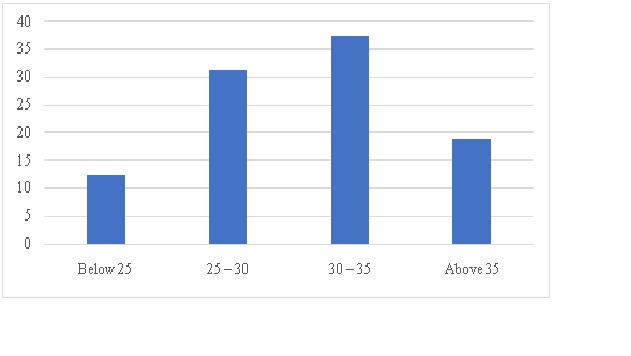 Figure 1: Graphical Representation of the Percentage of Distribution of Brake Thermal Efficiency (BTE)
The data shows that most engines (37.50%) had a BTE that was between 30-35 percent which implies that 30-35 percent might be the most common range in the performance level. Almost a third (31.25%) is also among the 25-30 percent mark, the intermediate efficiency. A mere 18.75% of all the readings obtained high efficiency above 35%, with a low efficiency below 25% representing a slight proportion (12.50%). This means that despite the fact that this engine usually operates with an acceptable level of efficiency, there is still a potential of making things to be ideal when it comes to improving its thermal efficiency.
The table 2 above shows the number of I/R emissions that were in the different concentration levels of nitrogen oxide (NOx) in parts per million (ppm) ranges. The information shows that the indicated readings have lower than 100 ppm readings and between 100 to 200 ppm and 200 to 300 ppm. Some samples too indicated high levels of above 300 ppm. They are illustrated visually by Figure 2.
Table 2: Distribution of NOx Emission Levels
| NOx Emission Range (ppm) | Frequency | Percentage (%) |
| Below 100 | 3 | 18.75 |
| 100 – 200 | 4 | 25.00 |
| 200 – 300 | 5 | 31.25 |
| Above 300 | 4 | 25.00 |
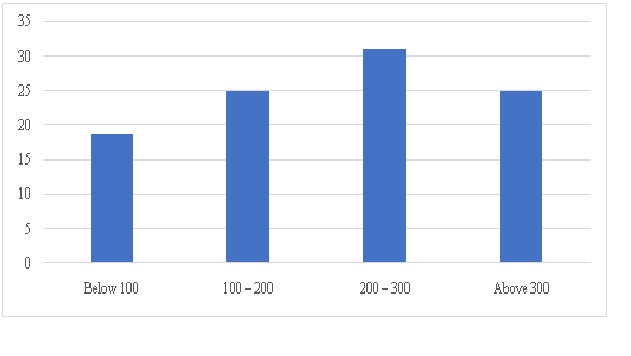
Figure 2: Graphical Representation of the Percentage of Distribution of NOx Emission Levels
The largest HDs of NOx (31.25%) were observed in the range of 200-300 ppm, which signifies the pattern of moderate- to high levels of emissions in the examined design of the engine. The fact that 25.00 percent of the samples fell in 100 200 ppm and above 300 ppm also confirms the assertion of significant emission level. The proportion of low emissions among the samples is only 18.75 with the value below 100 ppm, which implies that the control of combustion parameters might be required to minimize the NOx emission and meet the emission guidelines.
Conclusion
This paper therefore summarizes that, varying of internal engine parameters, specifically the compression ratio, has great effect on the performance and the emission characteristics of a four-stroke and single-cylinder petrol engine. The effects of varying the combustion chamber volume by means of spacer rings allowed recording of the variation of several parameters such as Brake Thermal Efficiency (BTE), as well as variations of the NOx emissions due to variations of conditions. The results were that elevated compression ratios enhanced thermal performance and fuel economy with the majority of the BTE values occurring in 30-35 percent region. Nonetheless, this was achieved at the expense of higher emissions of NOx mostly because of the rise in combustion temperatures. The experimental results support the fact that thoughtful optimization of the engine parameters is required to strike an optimal balance between improved performance and environmental standards, emphasizing the significance of combining performance optimization procedures and effective emission control measures.
References:
- Babagiray, M., Kocakulak, T., Ardebili, S. M. S., Calam, A. L. P. E. R., & Solmaz, H. A. M. İ. T. (2023). Optimization of operating conditions in a homogeneous charge compression ignition engine with variable compression ratio. International Journal of Environmental Science and Technology, 20(5), 5311–5332. https://doi.org/10.1007/s13762-022-04499-9
- Hasan, A. O., Al-Rawashdeh, H., Abu-Jrai, A., Gomaa, M. R., &Jamil, F. (2023). Impact of variable compression ratios on engine performance and unregulated HC emitted from a research single cylinder engine fueled with commercial gasoline. International Journal of Hydrogen Energy,48(68), 26619–26628. https://doi.org/10.1016/j.ijhydene.2022.09.025
- López, J. J., García, A., Monsalve-Serrano, J., Cogo, V., &Wittek, K. (2020). Potential of a two-stage variable compression ratio downsized spark ignition engine for passenger cars under different driving conditions. Energy Conversion and Management, 203, Article 112251. https://doi.org/10.1016/j.enconman.2019.112251
- Musthafa, M., & Kandavel, T. K. (2022). Performance characteristics of a variable compression ratio CI engine simulation using artificial neural network. Energy Sources, Part A,44(1).
- Pandey, J. K., &Kumar, G. N. (2022). Effect of variable compression ratio and equivalence ratio on performance, combustion and emission of hydrogen port injection SI engine. Energy, 239, Article 122468. https://doi.org/10.1016/j.energy.2021.122468
- Raji, N. A., Kuku, R. O., Openibo, A. O., &Owolabi, E. A. (2024). Influence of compression ratio on the performance characteristics of a spark ignition engine. Production Engineering, 5–12.
- Rakopoulos, C. D., Rakopoulos, D. C., Kyritsis, D. C., Andritsakis, E. C., & Mavropoulos, G. C. (2022). Exergy evaluation of equivalence ratio, compression ratio and residual gas effects in variable compression ratio spark-ignition engine using quasi-dimensional combustion modeling. Energy, 244, Article 123080. https://doi.org/10.1016/j.energy.2021.123080
- Rufino, C. H., &Ferreira, J. V. (2021). Study on the efficiency of a spark-ignition variable displacement and compression ratio engine. International Journal of Engine Research,22(8), 2607–2621. https://doi.org/10.1177/1468087420944345
- Sahoo, S., Kumar, V. N. S. P., &Srivastava, D. K. (2022). Quantitative analysis of engine parameters of a variable compression ratio CNG engine using machine learning. Fuel, 311, Article 122587. https://doi.org/10.1016/j.fuel.2021.122587
- Yang, R., Sun, X., Liu, Z., Zhang, Y., &Fu, J. (2021). A numerical analysis of the effects of equivalence ratio measurement accuracy on the engine efficiency and emissions at varied compression ratios.Processes,9(8), 1413. https://doi.org/10.3390/pr9081413
Cite this Article:
Mumbai, I. M. U., & Chandgude, A. K. (2025). A study on the effect of variable compression ratio on I.C. engine efficiency. International Journal of Applied and Behavioral Sciences, 02(02), 162–168. https://doi.org/10.70388/ijabs250146
Statements & Declarations:
Peer-Review Method
This article underwent double-blind peer review by two external reviewers.
Competing Interests
The author/s declare no competing interests.
Funding
This research received no external funding.
Data Availability
Data are available from the corresponding author on reasonable request.
Licence
A Study on the Effect of Variable Compression Ratio on I.C. Engine Efficiency © 2025 by Abhimanyu Kisan Chandgude is licensed under CC BY-NC-ND 4.0. Published by IJABS.