
 Share
Share
Abstract
ZBFN is a cultivating work on upholding the regular development of yields without adding composts and pesticides or some other unfamiliar components. The Zero Budget Natural Farming (ZBFN) Program was carried out in 2015-16 by the Government of Haryana (GoAP) in response to this one-of-a-kind circumstance. The goal of the program was to improve farmers’ access to government assistance and monitor the climate. Plans with zero finances assume that there will be no additional costs associated with the construction of the object being planned. The Zero Budget Natural Farming (ZBFN) organization is responsible for coordinating the appropriate homestead increase practices and has a focus on lowering expenditures. “Mr. Palekar is credited for initiating ZBFN in the middle of the 2000s in Maharashtra via his own on-ranch experiments. If there are no financial plans, there will be no expenses, which means there will be no need for market-based information sources. The soil only contributes 1.5% of the nutrients that plants need, while the remaining 98.5% comes from the air, water, and solar-derived energy. In point of fact, even the minimum 1.5 percent is available in certain quantities of each kind of soil, but in a structure that is difficult to reach. Therefore, it is possible for small living organisms in the ground to increase with the use of desi cow poo, and neither manure nor pesticide is necessary. The ZBFN program’s goal is not only to raise ranch remuneration; rather, it tries to solve social issues by giving the rancher with a larger degree of autonomy.
Keywords: – India’s, Zero, Budget, Agriculture
INTRODUCTION
Composts and inorganic chemicals were widely used during the green revolution, and it is generally believed that this was one of the factors that contributed to the availability of sufficient food in a number of industrialised and agricultural nations. India’s food grain output increased from 115.6 million tonnes in the agricultural year 1960–1961 (2016) to over 281.37 million tonnes in the 2018–2019 fiscal year. This increase was made possible by the methods that were used, which resulted in considerable profits. Between the years 1951–1952 and 2016–2017 (2018), the yearly consumption of n, p, and k composts went from 0.07 million tonnes to more than 25.95 million tonnes. This is a significant increase. An increase of about 260 times is seen by this. It is possible that a rise in the use of manure might be responsible for fifty percent of the gain in food grain output that occurred in the previous year, according to the Annual Report 2017–18 published by the Ministry of Agriculture and Farmers’ Welfare. An imbalance in the scales of soil health was caused by the abuse of composts, which was pushed by the green revolution (Patra 2016). This led to the extinction of major soil microorganisms.
Institutional And Financial Support
“A three-tiered structure of grassroots foundations, including rancher Self Help Groups (SHGs), town leagues of farmers, and Farmer Producer Organizations (FPOs), has been established in order to carry out the transformation, make it happen, and provide support for it. The institutions that were formed around the concepts of collection, intercession, and assistance are responsible for providing credit and risk management along with value fastening benefits to farmers. For instance, marginal farmers (MFs) might get incentives to open and operate natural pest management (NPM) stores in their communities, where they can sell local seeds and NPM inputs such as bio pesticides. NPM shops that establish up business in accordance with a plan of action will each get one hundred thousand rupees. CHCs are being encouraged to begin using household tools and work trucks in their daily operations. Town rancher’s leagues (VFF) are formed via the merger of several organizations, such as Rytu Mitra Groups (RMGs) and Rancher’s Self Improvement Groups (FSHGs).
OBJECTIVES OF THE STUDY
- To learn how various nutrient sources affect crop yield and quality, and
- To observe how different treatments affect soil characteristics and production costs.
India’s Zero Budget Agriculture
The severe agricultural crisis that is making farming with a restricted range of activities economically unfeasible serves as the conceptual basis for zero budget natural farming. Workers are prevented from accessing privatized seeds, data sources, and marketplaces, which also raises their costs. As a consequence of high production costs, high loan fees for loans, variable yield market prices, expanding costs for data sources based on petroleum derivatives, and growing costs for private seeds, farmers in India are increasingly finding themselves stuck in an ongoing cycle of debt. This is a situation that is becoming more common. More than twenty thousand farmers have left India over the course of the last twenty years, which accounts for more than twenty-five percent of the agricultural labour force in the country. Extensive research has shown that there is a connection between rancher suicides and accountability. The majority of farmers in India, regardless of their size, have a difficult time meeting their obligations.
Through the permanent reduction of production expenses and the elimination of dependency on loans, “zero budget” farming seeks to assist overburdened farmers in breaking the cycle of responsibilities that they are now facing. Since the term “budget” is connected to both expenses and credit, the phrase “zero budget” denotes a scenario in which there is no usage of credit and no cash expenditure for the purchase of any inputs. This represents a situation in which there is no budget at all. The term “natural farming” refers to agricultural practices that are executed in harmony with the natural environment and do not include the use of any artificial chemicals. Because of the severe agricultural crisis that was brought about by India’s neo liberalization of the economy, agriculture in its most limited sense has become an economically unsustainable profession. This is a result of the intense agricultural crisis. The economic restraints that accompany the restrictions placed on workers’ access to private seeds, information sources, and marketplaces must also be taken into consideration. Because of variables such as high production costs, high loan fees for borrowing, fluctuating market yield costs, growing prices of information obtained from petroleum derivatives, and proprietary seeds, Indian farmers are caught in a never-ending cycle of debt. This is a consequence of a number of causes. Since the beginning of this century, there have been around two hundred and fifty thousand rural farmers in India who have committed suicide. A number of studies have shown a connection between the feeling of responsibility that ranchers have and the suicide rates that they experience. Every farmer in India, regardless of their size, has a challenging situation when it comes to meeting their obligations.
In this perspective, farming with a “zero budget” provides the opportunity to escape the cycle of debt for overworked farmers by drastically cutting production costs and removing dependency on technology advancements. Given that the term “budget” may refer to either “expenses” or “credit,” the term “zero budget” is used to indicate a spending plan that does not pay for inputs or make use of credit in any manner. The term “natural farming” refers to farming that is carried out in a manner that is in harmony with nature and does not include the use of any manmade chemicals.
Current Challenges and Opportunities
The innovations brought about by the Green Revolution unquestionably brought about ground-breaking improvements in the manner in which the nation produces its food; yet, it has also presented the nation with new challenges. The most significant challenges of the second generation include a decline in the usefulness of factors, a lack of and imbalanced utilization of supplements, particularly of N, a low level of effectiveness in the use of water and supplements, the depletion of natural resources, a lack of clean water for water systems, an increase in the cost of data sources, an increase in the frequency of diseases and pests, an increase in concern regarding the wholesome quality and wellbeing of food, and the unfriendly effect of environmental change. To increase pay, especially for the 80% of farmers who are small and marginal, owning property under 2 ha, we need technologies and innovations that will allow them to save money on inputs and have more pay as a result of increased usefulness, quality products, and connections to value chains and markets.
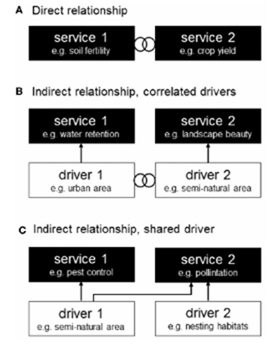
Figure 1. Possible connections between the two ecosystem services (services 1 and 2). Ecosystem services are correlated directly in (A) and indirectly via (B) two related drivers or (C) a common driver.
Due to the fact that the use of synthetic composts is associated with a decline in the overall component efficiency rather than increases in crop usefulness, production costs, soil health, and climate, it is required to conduct a comprehensive analysis. This is a duty that is absolutely necessary in view of the growing relevance of agriculture. Compost was an essential component in the development of high-yielding harvest strains, which led to a significant rise in the amount of food grain produced. This conclusion is shown by the fact that the amount of manure (N+P2 O5 + K2 O) that was used grew from 1.98 Mt in 1969-1970 to 18.07 Mt in 1999-2000. As evidence for this contention, compost was the primary component that resulted in an increase in the amount of food grain produced. There was a downward tendency in the consumption of manure throughout the course of those three decades, as seen by an average growth of 16.5% in the 1970s, 12.04% in the 1980s, and 5.6% in the 1990s. This was the case when the analyses of the data took into account all of the relevant elements.
Numeric Gross Summary Farming
One kind of farming that does not entail the use of any substances is called Zero Budget Natural Farming, or ZBFN for short. This method includes reducing all costs associated with plant growth and harvesting to zero, with the idea that the expenditures incurred by the farmer are returned by intercropping. When Finance Minister Nirmala Sitharaman proclaimed “Zero Budget Natural Farming” during her talk on the 2019 budget, she presented it as a strategy to boost farmers’ income. This gave the statement an undeniable element that cannot be disputed.
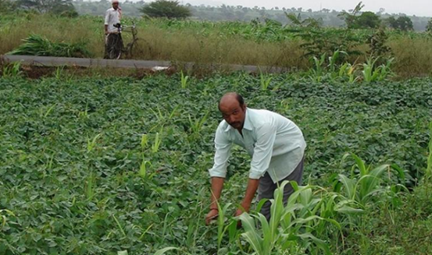
Fig 2. Farming with no financial constraints
Absence of an expenditure plan in the context of agriculture, the phrase “natural farming” refers to a system that is based on the agricultural practices of traditional Native American communities rather than on the use of artificial or synthetic chemicals. Subhash Palekar, an expert in agriculture, was the one who first suggested it. He was also the one who created it in the 1990s as an alternative to approaches that relied on material composts, pesticides, and intensive irrigation. Palekar conceived of it with the purpose of using it as an alternative to the practices that were used throughout the Green Revolution. The agricultural production of this one-of-a-kind technique is dependent on the natural environment that is located in the surrounding area. Reverting to agricultural practices that were common before to the green revolution is one of the strategies that is being pursued in an effort to bring down production costs to nearly nil. It asserts that the usage of costly data sources such as pesticides, manures, and higher water systems is not required since there is no desire to make use of these sources.
Zbfn’s Importance Is Implied in the 2018–19 Economic Survey
Fertilisers and pesticides are inorganic chemical inputs that most farmers heavily use. These chemicals deplete soil fertility and impair water-dependent ecosystems. Farmers in India depend on their land for a livelihood, but they face a major threat from the extensive use of poisons and pesticides. A substantial drop in production costs is possible with the support of zero-budget farming. Natural fertilisers, pesticides, and soil protection techniques like mulching might help farmers on a tight budget. Sustainable and economical natural farming is based on the four cardinal principles of Jivamrita, Bijamrita, Acchadana (Mulching), and Whapasa. Mulching, other soil conservation techniques, and using natural pesticides and fertilisers are options for farmers on a tight budget. Maintaining soil fertility and quality requires keeping agricultural waste in the ground for long periods of time. Once disease and pest management are under control, sustainable and cost-free farming may begin. To ensure a steady supply of food in an ever-warmer world, we need an all-encompassing strategy that incorporates the best practices of sustainable agriculture.
CONCLUSION
For each treatment, two forage cuttings were collected from a variety of plants, including sorghum, pearl millet, oats, and sarson, among others. Some of the growth characteristics of the crop that were recorded include the number of shoots or plants per square meter, the height of the plant measured in centimetres, the number of emergences per square meter, the ratio of the leaf to the stem, the percentage of dry matter content, the accumulation of dry matter per square meter, and the percentage of each crop based on its fresh and dry weight. We also documented fodder output (in tonnes per hectare for both green and dry fodder), plant NPK content (in percent), NPK absorption (in kilogrammes per hectare), and economic aspects (in gross returns per hectare, net returns per hectare, and net returns per rupee invested). In addition to documenting soil properties, we also recorded fodder yield. Wheat crop growth metrics included the following: shoot density per square meter, plant height in centimetres, emergence density per square meter, and dry matter accumulation per square meter. All of these measurements were taken. Consequently, this would allow for a better understanding of the impacts and behaviours that are associated with the various therapy. In order to arrive at the final yield, a great number of factors were taken into consideration. These factors included effective tillers per square meter, spike length per centimetre, test weight per gram, number of grains per spike, yield per kilogram per hectare, crop quality in terms of crude protein content per percent and yield per hectare, soil properties, and economic parameters such as gross returns per hectare, net returns per hectare, and net returns per rupee invested. The course of this investigation resulted in the discovery of a number of notable results in a variety of crops. These findings are summarized in the following succinct manner:
REFERENCES:
- Aulakh, C. S., Singh, H., Walia, S. S., Phutela, R. P., & Gurminder, S. (2018). Evaluation of nutrient sources for organic production of rice (Oryza sativa) _ wheat (Triticum aestivum) cropping system in north-west India. Indian Journal of Agronomy, 63, 137–144.
- Babli, M. P., Kumar, P., & Singh, A. (2017). Influence of various nutrient sources on nutrient content uptake of wheat in pearl millet-wheat cropping sequence. International Journal of Pure and Applied Sciences, 5, 2165–2168.
- Barad, H. L., Patel, C. K., Patel, D. K., Sharma, S., & Joshi, J. R. (2017). Effect of organic manures and levels of inorganic fertilizers with and without banana sap on yield, quality and economics of summer pearl millet (Pennisetum glaucum L.) under south Gujarat conditions. International Journal of Science, Environment and Technology, 6, 2224–2231.
- Bayu, W., Rethman, N. F. G., Hammes, P. S., & Alemu, G. (2006). Effects of farm yard manure and inorganic fertilizers on sorghum growth, yield and nitrogen use in a semiarid area of Ethiopia. Journal of Plant Nutrition, 29(2), 391–407. https://doi.org/10.1080/01904160500320962
- Bhat, M. A., Hussain, A., Teli, N. A., Ganai, M. A., & Jehangir, I. A. (2018). Integrated nutrient management studies in brown sarson (Brassica rapa L.) under temperate conditions of Kashmir valley. Journal of Pharmacognosy and Phytochemistry, 7, 2094–2096.
- Bhilare, R. L., Patil, V. S., Aher, V. B., & Hiray, A. G. (2002). Response of forage cropping sequences to farm yard manure and fertilizer under irrigated condition. Indian Journal of Agronomy, 47, 187–190.
- Boraiah, B. (2013). Effect of organic liquid formulations and manures on growth and yield of capsicum (Capsicum annuum L. var. grossum) [Unpublished PhD thesis]. Department of Agronomy, University of Agricultural Sciences p. 417.
- Brar, M. S. (2015). Studies on the performance of multicut sorghum with pearl millet hybrids at different seed proportions and methods of sowing [Unpublished MSc thesis], p 86. Department of Agronomy, Forages and Grassland Management. CSKHPKV.
- Chadha, S., Jabeen, A., Chauhan, S., & Sharma, S. (2019). Comparative performance of di errant vegetable crops under zero budget natural farming and organic farming conditions. National conference on organic and natural farming—A tool for sustainable agriculture and economic development, 28-29 May, 2019, Department of Organic Agriculture and Natural Farming p. 191. CSK Himachal Pradesh Krishi Vishvavidyalaya.
- Chadha, S., Rameshwar, A., Saini, J. P., & Paul, Y. S. (2012). Vedic Krishi: Sustainable livelihood option for small and marginal farmers. Indian Journal of Traditional Knowledge, 11, 480–486.
- Chandrakala, M. (2008). Effect of FYM and fermented liquid manures on yield and quality of chili [Unpublished MSc thesis]. Department of Agronomy, University of Agricultural Sciences, Dharwad p. 85.
- Chekolle, A. W. (2017). Evaluation of synergistic effect organic and inorganic fertilizing system on grain yield of bread wheat (Triticum aestivum L.) at southern Tigray, northern Ethiopia. Advances in Crop Science and Technology, 5(2), 1–5. https://doi.org/10.4172/2329-8863.1000269
- Chongloi, L. L., & Sharma, K. K. (2018). Quality attributes of pea and oat in an intercropping system in rice fallows as influenced by integrated nutrient management. Journal of Pharmacognosy and Phytochemistry, 1, 1663–1667.
- Choudhary, A. K., & Suri, V. K. (2009). Effect of organic manures and inorganic fertilizers on productivity, nutrient uptake and soil fertility in rice (Oryza sativa) _wheat (Triticum aestivum) crop sequence in western Himalayas. Current Advances in Agricultural Sciences, 1, 65–69.
- purpose pearl millet (Pennisetum glaucum) under different fertility levels and nitrogen scheduling. Indian Journal of Agronomy, 59, 410–414
- Choudhary, M., & Prabhu, G. (2014). Quality fodder production and economics of dual.
- Choudhary, M., & Prabhu, G. (2016). Response of fodder oat (Avena sativa L.) varieties to irrigation and fertilizer gradient. Range Management and Agroforestry, 37, 201–206.
- Dabhi, M. S., Patel, M. R., Chaudhari, C. R., Patel, V. N., & Patel, P. M. (2017). Response of oat (Avena sativa L.) varieties to methods of sowing and nitrogen levels on forage yield and quality. International Journal of Chemical Studies, 5, 683–686.
- Dar, N. A., Singh, K. N., Ahmad, L., Sofi, J. A., Bhat, M. E., & Kotru, R. (2014). Influence of date of sowing, cultivars and different fertility levels on fodder oat (Avena sativa L.) under temperate conditions of Kashmir valley. Range Management and Agroforestry, 35, 51–55.
- Davis, D. R. (2009). Declining fruit and vegetable nutrient composition: What is the evidence? HortScience, 44(1), 15–19 19. https://doi.org/10.21273/HORTSCI.44.1.15
- Desai, H. A., Dodia, I. N., Desai, C. K., Patel, M. D., & Patel, H. K. (2015). Integrated nutrient management in wheat (Triticum aestivum L.). Trends in Biosciences, 8, 472–475.
- Deshmukh, A., Sonune, B. A., Gabhane, V. V., & Rewatkar, S. S. (2014). Impact of integrated nutrient management on soil fertility and yield of sorghum genotypes in vertisol. Agricultural Science Digest – A Research Journal, 34(2), 111–114. https://doi.org/10.5958/0976-0547.2014.00026.3
- Devakumar, N., Shubha, S., Gouder, S. B., & Rao, G. G. E. (2014). Microbial analytical studies of traditional organic preparations Beejamrutha and Jeevamrutha. In Proceedings of the Building Organic Bridges. 4th ISOFAR Scientific Conference, Istanbul, Turkey (pp. 639–642).
- Devakumar, N. G., Rao, G. E., & Gowda, S. B. (2008). Activities of organic farming research centre, Navile 12. University of Agricultural Sciences, Bangalore
- Devi, U., Joon, R. K., Sehwag, M., & Kumar, S. (2009). Growth studies of multi-cut oat as influenced by levels of nitrogen, organic manures and Azotobacter inoculation. Forage Research, 35, 152–156.
- Devi, U., Singh, K. P., Kumar, S., & Sehwag, M. (2014). Effect of nitrogen levels, organic manures and Azotobacter inoculation on yield and economics of multi-cut oats. Forage Research, 40, 36–43.
- Singh, K. J., Kalotra, A., & Kaur, I. (2023). Mapping Personalized Marketing: A bibliometric analysis. Shodh Sari-An International Multidisciplinary Journal, 02(03), 372–386. https://doi.org/10.59231/sari7613
- Orji, E. I., Idika, D. O., Okeke, S. U., Anakwue, A. L., & Ntamu, B. A. (2023). Global Warming and Impacts: Green entrepreneurship to the rescue. Shodh Sari-An International Multidisciplinary Journal, 02(04), 222–237. https://doi.org/10.59231/sari7636
Cite this Article:
Satyavarat. (2025). Concept of India’s Zero Budget Agriculture. International Journal of Applied and Behavioral Sciences (IJABS), 2(1), 270–278. https://doi.org/10.70388/ijabs250124
Statements & Declarations:
Peer-Review Method
This article underwent double-blind peer review by two external reviewers.
Competing Interests
The author/s declare no competing interests.
Funding
This research received no external funding.
Data Availability
Data are available from the corresponding author on reasonable request.
Licence
Concept of India’s Zero Budget Agriculture © 2025 by Satyavarat is licensed under CC BY-NC-ND 4.0. Published by IJABS.