
 Share
Share
Abstract
When studying pure number fields, the discriminant and integral basis are cornerstone ideas that shed light on their structure and mathematical characteristics. The algebraic invariants and arithmetic behavior of a number field are affected by the discriminant, which encodes crucial information regarding the field’s ramification and the geometry of its ring of integers. To examine the field’s features, like the structure of its ideal class group and the solutions to Diophantine equations, an integral basis is a set of elements in the ring of integers that forms a basis over the integers. Class number analysis, ideal class group determination, and Hilbert symbol computing are only a few of the many important areas of number theory that benefit greatly from these ideas. Computerising discriminants for fields of high degree and discovering minimal integral bases for fields with complex ramification remain challenging tasks. We still require a deeper understanding of algebraic number theory and more advanced computational approaches to address these challenges, despite the significant progress we’ve made. In mathematical physics, coding theory, and cryptography, where the algebraic properties of number fields influence the efficacy and security of various algorithms, the study of integral bases and discriminants is fundamental for both theoretical and practical reasons.
Keywords: Discriminant, Cryptography, Coding Theory, Mathematical Physics.
Introduction
To comprehend the complex structure and arithmetic characteristics of pure number fields, it is essential to study integral bases in algebraic number theory and discriminants in particular. An integer ring in a number field is composed of algebraic integers that are roots of monic polynomials with integer coefficients; this ring is a finite extension of the rational numbers. A number field’s discriminant is an important algebraic invariant that describes the field’s ramification, i.e. how primes from the base field behave in the extension. It shows in particular how primes might split, be inert, or ramify in the extension. Having this knowledge is crucial for comprehending the field’s arithmetic characteristics, the ideal structure of the ring of integers, and its relationship to the class group, which organizes the ideal classes in the field. For example, the discriminant is crucial in class number theory (class numbers are a measure of the “size” of an ideal class group) and Diophantine equations (solving these equations requires knowledge of the algebraic structure of the field in order to discover integer solutions to polynomial equations).
In contrast, an integral basis is a collection of elements in the integer ring of a number field that constitutes a basis over the integers. This means that any element in the field can be represented as an integer linear combination of the elements in the basis. A strong tool for comprehending the decomposition of prime ideals in number fields is the notion of an integral basis, which is basic to the study of ideal factorization. Because it permits detailed representations of the arithmetic structure of the field, it is especially useful for computing Hilbert symbols and for studying the discriminant of number fields. The effectiveness of computing algorithms and cryptographic protocols is affected by the choice of an optimal or minimal integral basis, which in turn affects many areas of number theory and mathematical applications.
There are still major obstacles to overcome when it comes to computing and using discriminants and integral bases, despite their usefulness and significance. Computing the discriminant for higher-degree fields is more challenging because the discriminant of a number field can become more complex as the field’s degree climbs. It is also computationally difficult to find a minimal integral basis for fields with complex ramification structures. The use of number fields in cryptography and coding theory, for example, to build secure communication systems and efficient error-correcting codes, compounds these difficulties in contemporary applications. The study of discriminants and integral bases will remain a vibrant and important topic of research due to the complex relationship between number fields’ algebraic features and their real-world applications.
Theoretical Foundations: Discriminants and Integral Bases
Integral bases and discriminants in pure number fields have their theoretical roots in algebraic number theory, which provide important information about these fields’ structure and behavior. These ideas can be better grasped by first thinking about a number field K, an extension of the rational numbers Q that is finite. The set of elements in K that are roots of monic polynomials with integer coefficients is called the ring of integers of K ().
Discriminant:
The discriminant of a number field K shows the primes’ ramification behavior in K and assesses how “non-trivial” the ring of integers OK is. In mathematics, a specific basis of the field K over Q is used to define the discriminant . If , , …, comprise OK components that constitute a Z-basis for K over Q; the discriminant is determined by the determinant of the matrix whose entries are the traces of products of these basis elements. More so, in the event that 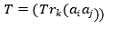
 ))
))
The discriminant is defined as the matrix of traces.

where (x)x conjugates in the field extension are added together to provide the trace of element x ∈ K. An essential invariant for comprehending the number field’s mathematics, the discriminant stores information regarding the consequences of prime ideals in .
Integral Basis:
Each number field K has an integral basis, which is a collection of elements {, , …, } on the set of all integers OK such that each element of OK is uniquely expressed as a linear combination of these basis elements expressed as integers. Alternatively stated, is a free Z-module of rank n, and its constituents are, …, to create a Z-basis. Next, any element an in the set can be represented as:

where, , …, ∈Z. Because it streamlines the investigation of the ideal class group and the discriminant calculation, selecting an integral basis is crucial. A crucial component of number-theoretic computations is the minimal integral basis, which is a basis that minimizes specific values like the discriminant or the norm of the basic components.
A robust structure for comprehending number field mathematics is provided by the combination of the discriminant and integral basis. The integral basis allows one to explore algebraic structure and factorization in the number field, while the discriminant helps to classify the ramification of primes and assess the complexity of the ring of integers.
Properties of Discriminants in Pure Number Fields
An important invariant in algebraic number theory, the discriminant of a pure number field K encodes crucial information regarding the structure of the field, including its ramification features and the ideal class group. It sheds light on the behavior of primes in the base field Q in the extension field K and is intimately related to the ring of integers . Discriminants in pure number fields are defined by a variety of important features.
Ramification:
The discriminant’s connection to ramification is one of its most basic features. The term “ramification” is used in the context of number fields to describe the action of prime ideals in the base field’s ring of integers when they are extended to the number field. Primes in Q can either divide, stay unchanged, or ramify in K, as shown by the discriminant . If a prime p in Q splits the discriminant and does not split into different prime ideals in the ring , then we say that p ramifies in K. Any prime p that factors into many prime ideals in is said to split; any prime p that stays a single prime ideal in the field extension is said to be inert.
Significance and Size of the Discriminant:
To measure the “complexity” of the number field, one can look at the discriminant size. An extensive ramification structure and more complex mathematical features of the field are usually indicated by a bigger discriminant. Fields with enormous discriminants, for instance, are notoriously difficult to investigate and frequently necessitate highly advanced computer approaches. Contrarily, fields with small discriminants are often structurally simpler and could be easier to work with theoretically and computationally. An additional function of the discriminant is the field’s class number, which is a measure of the unique factorization failure in the integer ring.
Discriminant and Basis:
Choosing an integral basis for the ring of integers is another important aspect of the discriminant. Using a certain Z-basis, the discriminant is defined, , …, of , in which the degree of the number field is denoted by n. The discriminant is calculated by taking the determinant of the trace matrix)), this is involving the trace function which adds up all the conjugates of the field elements. Although the discriminant remains constant regardless of the basis, the size of the discriminant can be affected by the basis that is chosen. So, the discriminant does indeed reflect the field’s “global” structure, but the size of this structure can change depending on the basis used.
Relation to Other Invariants:
In addition to the Hilbert symbol and the ideal class group, the discriminant is related to several significant invariants in number theory. These invariants are computed with the discriminant, which also affects the field’s class number, which is a count of the number of unique ideal classes in . In general, the ideal structure of a field is simpler when the discriminant is small or zero, and more complex with a big discriminant, leading to a higher-class number and more ideal class groups.
Sign of the Discriminant:
You can learn more geometric details about the number field from the discriminant’s sign, which is its positive or negative value. The discriminant is typically positive for real quadratic fields and negative for imaginary ones. This difference is essential for knowing the field’s topology and geometry, especially with respect to the class group and the field’s fundamental unit.
Discriminant Growth in Extensions:
Field extensions cause the discriminant to act in a predictable way when thinking about extensions of number fields. A relationship between the discriminants of the subfields of an extension K and Q can be established if K is an n-dimensional extension of Q. An essential tool for comprehending the arithmetic characteristics of field extensions is the discriminant of the field for a Galois extension, which is intimately related to the discriminants of the intermediate fields.
To sum up, the discriminant of a number field reveals a wealth of information regarding the field’s geometry, algebra, and arithmetic, as well as the consequences of primes. Its characteristics are fundamental to comprehending the ideal structure of the integer ring, the action of prime ideals in extensions, and the computing difficulties of dealing with number fields.
Applications of Discriminants and Integral Nases in Algebraic Number Theory
In algebraic number theory, crucial to comprehending the structure and mathematics of number fields, the ideas of integral bases and discriminants have many uses. Ideal theory, class groups, and solutions to Diophantine equations—three of the field’s most important topics—are all illuminated by these instruments. Some important uses of integral bases and discriminants in algebraic number theory are listed below.
Ideal Theory and Factorization:
Studying ideal theory is one of the main uses of discriminants and integral bases. An ideal is a subset of the ring of integers in algebraic number fields that expands the idea of prime numbers in 𝑍. An essential function of the discriminant is to characterize the behavior of prime ideals in Q when extended to the number field, whether they divide, ramify, or remain unchanged. The discriminant encodes this information, which aids in comprehending the field-level factorization features of ideals and their structure.
In order to explore ideal decomposition, an integral basis is a crucial tool for representing members of the ring of integers as integer combinations of basic elements. To study prime ideal behavior and categorize them according to factorization features, the integral basis-computed norm and trace functions are employed. Understanding how a prime in 𝑄 factors into prime ideals in the number field is a key component of prime ideal decomposition, which is intrinsically related to the discriminant. Classifying and computing the factorization of ideals in the ring of integers is essential for understanding the ideal class group of the field, and one can do this with the help of discriminants and integral bases.
Class Groups and Class Numbers:
The study of a number field’s class group and class number revolves around discriminants and integral bases. A number field’s ring of integers class group is a measure of the unique factorization failure. The presence of a trivial class group in a number field indicates that, just like integers in Z factor into primes, every ideal in the ring of integers in that field may be uniquely factored into prime ideals. Nevertheless, distinct factorization is ineffective in the majority of number fields, and the class number of the field quantifies the magnitude of the optimal class group.
Crucial details on the group’s structure are revealed by the discriminant. In general, a smaller discriminant indicates a simpler structure, whereas a larger one usually indicates a more complicated ideal class group with more non-principal ideal classes. One can learn about the field’s ideal class group and class number by looking at the discriminant. Moreover, one may explicitly calculate ideal class groups with the use of integral bases, which aids in finding out if a number field has unique factorization and gives a better picture of the arithmetic of the field.
Diophantine Equations:
Diophantine equations are polynomial equations that seek integer or rational solutions; discriminants and integral bases are useful tools for solving these problems. In many instances, the number-theoretic characteristics of the field produced by the equation’s coefficients can be used to find solutions to Diophantine equations. It is possible to study quadratic forms, which are degree two polynomial expressions, by examining the discriminant of the corresponding quadratic number field. When trying to figure out whether Diophantine equations, like the ones that come up when studying Pythagorean triples or more complicated algebraic identities, are solvable, the discriminant of a quadratic field comes in handy.
Understanding the factorization of ideals and finding integer solutions to higher-degree Diophantine equations requires knowing the structure of the ring of integers, which can be obtained from the discriminant of the number field created by the solutions of the equation. When solving Diophantine equations in broader contexts, integral bases can be essential because they give an explicit way to define elements of number fields in terms of their algebraic components.
Algebraic Geometry and Galois Theory:
The Galois group of extensions of number fields is studied in algebraic geometry and Galois theory using the discriminant and integral bases. As a fundamental aspect of Galois theory, one can study the consequences of primes in an extension by calculating its discriminant. The structure of the Galois group is associated with the behavior of polynomial roots under field automorphisms; the discriminant is fundamental for understanding this behavior.
In addition, algebraic curves and the related modular functions are studied using integral bases. The field extensions in algebraic geometry can be studied by applying the discriminant and selecting an appropriate integral basis. This helps mathematicians to comprehend the connections between various algebraic structures, like the rings of integers in number fields and the function fields of algebraic curves.
Cryptography:
The development of cryptographic protocols dependent on the difficulty of problems in algebraic number theory is an example of a more contemporary use of integral bases and discriminants in cryptography. To build lattice-based cryptography systems, one uses number fields, discriminants and integral bases; the security of the system is dependent on the difficulty of solving issues linked to ideal lattices. A number field’s discriminant is related to the smallest distance between points in the lattice, and integral bases give the structure for effectively building and manipulating such lattices.
The discriminant’s qualities are useful for evaluating the robustness and security of lattice-based cryptography systems, which employ the challenge of locating short vectors in these lattices to safeguard encryption techniques. Furthermore, public-key cryptography uses ideal class groups and their relationship to the discriminant to build secure encryption algorithms, which in turn rely on number-theoretic issues with factorization and solving Diophantine equations.
Challenges and Open Problems
Even though discriminants and integral bases are basic tools for studying pure number fields, algebraic number theory is still facing a number of big obstacles and hurdles. These problems stem from the detailed theory behind them as well as the computing difficulty of dealing with big and complicated number fields. New theoretical insights and computational tools are needed to tackle these problems.
Computational Complexity of Discriminants:
Predicting discriminants for number fields, particularly high-degree ones, is a major obstacle. The computation of the discriminant becomes more challenging as the degree of the field increases above Q. The determinant of a trace matrix provides the discriminant, but the size of this matrix rises exponentially with the degree of the field. Therefore, it may be necessary to allocate significant computer resources in order to compute the discriminant for fields of large degree. Fields with complicated ramification patterns, which are hard to forecast and define algorithmically, make the problem much more difficult to handle. Computational algebraic number theory still has not solved the unsolved issue of efficient algorithms for computing discriminants, particularly for large degree or intricate fields.
Finding Minimal Integral Bases:
Finding minimal integral bases is another tough problem. In order to express each element of the integer ring as a linear combination of basic elements with integer coefficients, an integral basis can be used. For many invariants, such the discriminant or the elements’ norms, finding a basis that minimizes them is the objective. Though such minimal bases can be found in theory, it can be computationally demanding, particularly for subjects with complicated implications. Considering non-Galois extensions or fields with complex structures, where the ideal decomposition is not readily available, further complicates the situation. Theoretical and computational number theory are greatly affected by the outstanding challenge of efficiently finding minimal integral bases for general number fields.
Ramification and Ideal Factorization:
Another challenging topic is the study of ramification in number fields, which involves how primes from 𝑄 split or remain inactive in the number field. Although the discriminant stores information regarding prime ramification, it is still challenging to comprehend the exact structure of ramification in extensions with several degrees. For fields with large discriminants in particular, the complicated and not necessarily tractable task of finding the factors of prime ideals in the ring of integers is a particular issue. Another area where unanswered questions continue to be present is the ideal class group, which categorizes the many factorizations in the ring of integers. Many problems regarding the behavior of class numbers and the efficiency of methods for class group calculation remain unresolved, and ongoing research focuses on the structure of the class group and its link to the discriminant.
Cryptographic and Algorithmic Applications:
Number fields are finding more and more applications in coding theory and cryptography, which brings with it new difficulties. Utilizing their algebraic qualities for operations like encryption and key generation, number fields are frequently utilized in contemporary cryptographic systems to construct safe protocols. There is a clear correlation between the difficulty of computing the discriminant and finding integral bases in vast fields and the security of these systems. The efficiency and security of these algorithms must be guaranteed as computational methods advance, especially with the ever-increasing size and complexity of the number fields employed in cryptography. Research into the relationship between computational complexity and number theory is continuing in this field, and there are still many unanswered questions about how to create algorithms that are both efficient and safe to use.
Geometric and Arithmetic Properties:
Looking at number fields via a theoretical lens reveals a number of open questions in geometry and mathematics. In domains with higher dimensions or big discriminants, the relationship between the discriminant and the ideal class group is not completely understood. We still have a long way to go in understanding how discriminants behave under field extensions and what arithmetic qualities they have, such their growth rate and effect on class numbers. There are also unanswered problems about the rank and structure of higher-dimensional class groups, as well as their relationship to the discriminant, which is another field of active research.
Conclusion
To sum up, algebraic number theory continues to rely on research into the structure and behavior of pure number fields, namely discriminants and integral bases, as a foundational area. Important facts on primes’ effects on number fields, the ideal class group, the integer ring structure, and other mathematical features are given by the discriminant. In a similar vein, an integral basis is a potent instrument for studying number field factorization and ideal decomposition, which in turn lays the groundwork for comprehending the field’s algebraic features and solving Diophantine equations. Theoretical applications of these ideas span the whole spectrum of number theory, from the study of class numbers and Hilbert symbols to the computations at the heart of contemporary coding theory and cryptography.
Nonetheless, integral bases and discriminants both provide very difficult problems, especially in high-degree or complex-ramification fields, despite their importance. Difficult problems involving complex algorithms and advanced computational methods persist, such as computing discriminants for fields with a high degree and discovering minimal integral bases. Since number fields are employed for error correction and encryption in coding theory and cryptography, these problems stand out more than in other areas. It is critical for the advancement of both theoretical research and practical applications that new approaches and tools are continuously developed to tackle these issues.
In the future, our knowledge of algebraic number fields will be greatly enhanced by research into integral bases and discriminants. Computation of discriminants and integral bases will likely become more accessible and practical as computer power improves and new theoretical advances, leading to the emergence of more efficient methods. By closing the gap between mathematical theory and its practical applications, these advancements will improve our knowledge of number fields and pave the way for stronger applications in disciplines such as secure communication and error correction.
Statements & Declarations:
Peer-Review Method: This article underwent double-blind peer review by two external reviewers.
Competing Interests: The author/s declare no competing interests.
Funding: This research received no external funding.
Data Availability: Data are available from the corresponding author on reasonable request.
Licence: Discriminant and Integral Basis in Pure Number Fields: Properties, Applications, Challenges © 2026 by Pooja & Sharma, Alok is licensed under CC BY-NC-ND 4.0. Published by IJABS.
References:
- Borevich, Z. I., & Shafarevich, I. R.(1966). Number theory. Academic Press.
- De Koninck, J. M., & Mercier, A.(2007). 1001 problems in classical number theory. American Mathematical Society.
- Dedekind, R., Uber die Anzahl der Idealklassen in reinen kubischen Zahlk¨orpern, ¨ Journal f¨ur die reine und angewandte Mathematik, 121, 1900, 40-123.
- Funakura, T.(1984). On integral bases of pure quartic fields. Mathematical Journal of Okayama University, 26, 27–41.
- Gáal, L.(2017). Remete, Integral basis and monogenity of pure number fields. Journal of Number Theory, 173, 129–146.
- Gu’ardia, J., Montes, J., & Nart, E.(2012). Newton polygons of higher order in algebraic number theory. Transactions of the American Mathematical Society, 364(1), 361–416.
- Guàrdia, J., Montes, J., & Nart, E.(2015). Higher Newton polygons and integral bases. Journal of Number Theory, 147, 549–589. https://doi.org/10.1016/j.jnt.2014.07.027
- Hameed, T.(2015). Nakahara, Integral bases and relative monogenity of pure octic fields. Math. Soc. Sci. Math. Roumanie Tome, 58(106)(4), 419–433.
- Jakhar, A.(2021). Explicit integral basis of pure sextic fields. Rocky Mountain Journal of Mathematics, 51(2), 571–580. https://doi.org/10.1216/rmj.2021.51.571
- Jakhar, A.(2022). Explicit integral basis of Q(p1p2 √ a), 2022. Journal of Number Theory, 240, 254–271. https://doi.org/10.1016/j.jnt.2022.01.009
- Jakhar, A., Khanduja, S. K., & Sangwan, N.(2021). On integral basis of pure number fields. Mathematika, 67(1), 187–195. https://doi.org/10.1112/mtk.12067
- Jakhar, , & Sangwan, N.(2019). Integral basis of pure prime degree number fields. Indian Journal of Pure and Applied Mathematics, 50(2), 309–314. https://doi.org/10.1007/s13226-019-0326-7
- Marcus, D. A.(1977). Number Universitext. Springer-Verlag.
Cite this Article:
Pooja, & Sharma, A. (2026). Discriminant and integral basis in pure number fields: Properties, applications, challenges. International Journal of Applied and Behavioral Sciences, 3(1), 174–185. https://doi.org/10.70388/ijabs250171