
 Share
Share
Abstract
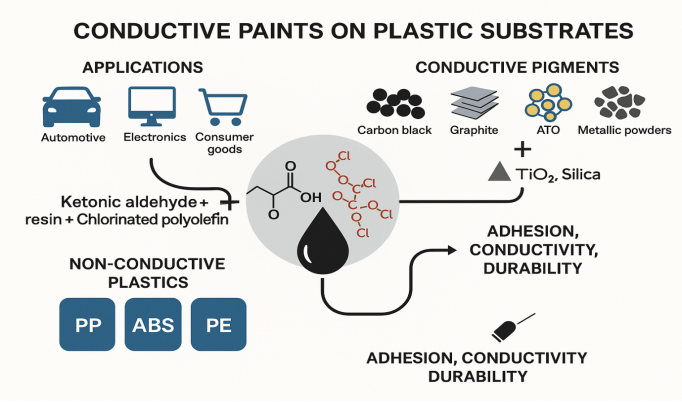
The increasing demand for advanced coatings on plastic substrates, particularly in the automotive, electronics, and consumer goods industries, has driven the evolution of conductive pigments in paint systems. This research explores the progressive development of conductive pigments integrated with advanced resin systems, focusing on the synergy between ketonic aldehyde resins and chlorinated polyolefins (CPOs). These resins play a pivotal role in improving adhesion, mechanical strength, and overall conductivity of paint films applied to non-conductive plastic surfaces. Plastics such as polypropylene (PP), acrylonitrile butadiene styrene (ABS), and polyethylene (PE) present significant challenges due to their inert and low-surface-energy nature. To overcome these limitations, the combination of ketonic aldehyde resins—offering superior cross-linking capabilities—and CPOs—known for their high affinity toward polyolefin surfaces—has been engineered to optimize pigment dispersion and improve electrostatic charge acceptance.
The study investigates the structural compatibility of these resins with common conductive pigments such as carbon black, graphite, antimony-doped tin oxide (ATO), and metallic powders, along with additives like titanium dioxide (TiO₂) and silica for performance enhancement. Advanced characterization methods, including SEM, FTIR, and four-point probe conductivity testing, were employed to analyze film morphology, pigment distribution, and electrical resistivity. The research also evaluates weathering resistance, thermal stability, and mechanical performance, providing a comprehensive insight into long-term durability.
This work demonstrates that the strategic incorporation of ketonic aldehyde and CPO resins in conductive paint formulations significantly enhances the functional coating’s adherence, conductivity, and durability on plastic substrates. The findings underscore a promising route toward more efficient, eco-friendly, and application-specific electrostatic coating systems, paving the way for innovation in smart coatings and electromagnetic shielding applications.
“This study establishes a scalable and eco-friendly conductive primer system based on the synergy of ketonic aldehyde and chlorinated polyolefin resins, demonstrating potential for advanced electrostatic and EMI-shielding applications.”
Introduction
In recent decades, the use of plastic materials in industrial and consumer applications has grown exponentially due to their lightweight, flexibility, low cost, and ease of processing. Industries such as automotive, aerospace, electronics, packaging, and consumer goods have increasingly favored engineering plastics like polypropylene (PP), polyethylene (PE), polycarbonate (PC), and acrylonitrile butadiene styrene (ABS) for parts that previously relied on metals. However, while plastics offer multiple advantages, they present a significant challenge when it comes to surface coatings, especially those requiring electrostatic painting or conductive functionalities. Their inherently non-polar, chemically inert, and low-surface-energy nature limits adhesion, conductivity, and compatibility with conventional coatings and pigments [1-2].
Conductive paints provide a solution by offering electrical conductivity on plastic substrates where traditional metallic or grounded pathways are not feasible. These coatings are essential in applications such as electromagnetic interference (EMI) shielding, static discharge prevention, automotive body parts for electrostatic painting, and smart sensors or devices. The evolution of conductive paints is driven by the need for enhanced functionality without compromising flexibility, adhesion, and durability. While carbon black, graphite, and metal-based pigments have long been used to impart conductivity, their effectiveness highly depends on the polymeric binder system used and the dispersion quality within the resin matrix [3-5].
Among various binder systems, ketonic aldehyde resins and chlorinated polyolefins (CPOs) have emerged as critical components for achieving superior coating performance on plastic substrates. Ketonic aldehyde resins are modified aldehyde resins formed through the condensation of ketones and formaldehyde or other aldehydes. These resins offer high reactivity, good pigment wetting, and exceptional cross-linking ability, making them suitable for enhancing the mechanical and chemical properties of coatings. On the other hand, chlorinated polyolefins exhibit a high degree of compatibility with non-polar plastics like PP and PE due to their chlorinated functional groups, which enable better adhesion through polar interactions [6-7].
The integration of these two resin systems presents a significant advancement in the field of functional coatings. The ketonic aldehyde resin provides the backbone for pigment binding and film formation, while the CPO ensures robust anchoring of the paint film to the plastic substrate. This dual-resin system optimizes conductivity by ensuring uniform pigment dispersion, film integrity, and surface compatibility. In electrostatic painting applications, where charge acceptance and dissipation are critical, such synergistic combinations are especially beneficial.
Traditional conductive pigments such as carbon black and graphite offer reasonable conductivity but often lead to issues like high viscosity, poor dispersion, and compromised aesthetics due to their dark color. To overcome these limitations, newer pigments like antimony tin oxide (ATO), indium tin oxide (ITO), and silver-coated microspheres have been developed. However, these materials are often costly and require high-performance resin systems to stabilize their electrical properties over time and under varying environmental conditions. The binder matrix must also support compatibility with reinforcing pigments like titanium dioxide (TiO₂), which provides opacity, and silica (SiO₂), which enhances abrasion resistance and rheological control [8-10].
Another key performance attribute is weathering resistance. Outdoor applications demand coatings that can withstand UV radiation, moisture, temperature fluctuations, and chemical exposure. The ketonic aldehyde and CPO combination demonstrates superior resistance to these factors, especially when combined with stabilizers, UV absorbers, and functional pigments. Moreover, these resins provide excellent flexibility, allowing coatings to accommodate thermal expansion and contraction of the plastic substrate without cracking or delaminating.
As environmental regulations become stricter regarding the use of heavy metals, volatile organic compounds (VOCs), and non-recyclable materials, the coating industry is also moving toward sustainable, eco-friendly formulations. Ketonic aldehyde resins are often formaldehyde-free or low in free formaldehyde, and CPOs can be modified for waterborne or low-VOC formulations. These properties make them ideal candidates for future-forward coatings that align with global environmental and safety standards [11].
Despite the advances made, there remains a gap in systematically studying the interaction of conductive pigments with dual-resin systems—particularly focusing on ketonic aldehyde and CPOs—and their performance across a range of plastic substrates. This research aims to bridge that gap by exploring the evolution of conductive pigment-based paints using these resins, characterizing their electrical, mechanical, and adhesion performance, and optimizing formulation parameters for commercial and industrial use.
Through detailed formulation trials, pigment dispersion studies, surface energy analysis, and conductivity evaluations, this study provides a comprehensive approach to next-generation conductive paints. The findings will support the development of reliable, high-performance coatings that meet the growing demands of industries seeking lightweight, conductive, and durable plastic components.
“However, despite these advantages, plastics pose major challenges for coating adhesion and electrostatic charge acceptance.”
“This research therefore focuses on developing a unified primer system addressing adhesion, conductivity, and environmental compliance.”
- Literature Review
“This review highlights the importance of dual-resin chemistry in enabling adhesion and conductivity balance in polymer coatings.”
The application of conductive coatings on plastics is not new, but early methods were largely ineffective due to weak adhesion and poor long-term performance. Historically, metallic coatings such as vacuum metallization and electroplating were used, but these methods are costly and involve complex surface treatments. With the emergence of polymeric coatings incorporating conductive pigments, focus shifted toward finding cost-effective, sprayable, and stable coatings.
Studies have shown that carbon black remains the most widely used conductive pigment due to its availability and acceptable conductivity. However, its high loading requirement (often >20 wt%) affects the mechanical integrity and process ability of the coating. Graphite improves conductivity at lower concentrations but lacks uniformity in dispersion. Newer studies highlight the promise of antimony tin oxide (ATO) and other metal oxides for their transparency and fine particle size, though cost remains a concern.
Recent literature suggests that binder chemistry significantly influences conductivity and film durability. For instance, works by Lin et al. (2018) and Kaur et al. (2021) demonstrated that modifying the resin backbone (e.g., acrylates, epoxy, urethane) improved pigment compatibility. However, limited studies have explored the synergy between ketonic aldehyde and chlorinated polyolefins. This research contributes to this knowledge gap by combining two performance-driven resins with conductive pigment systems to develop reliable coatings for complex plastic substrates.
“However, limited literature addresses the synergistic behaviour of ketonic aldehyde and CPO resins in conductive primer systems.”
Materials and Methods and Experimental
Raw Materials:
Resins: Ketonic Aldehyde Resin: Supplied in solution form with moderate viscosity, high reactivity. Chlorinated Polyolefins (CPOs): 34% chlorination grade to enhance polarity and adhesion. Pigments and Additives: Conductive Pigments: Carbon black (N330), graphite, ATO (nano dispersion). Fillers and Extenders: Titanium dioxide (TiO₂), silica (fumed/precipitated). Solvents and Plasticizers: Toluene, xylene, butyl acetate, and phthalate-free plasticizers. Curing Agent: Amino resin and blocked isocyanate, depending on application.
Substrates: Pre-cleaned polypropylene (PP) and ABS panels with and without surface treatments (flame or corona discharge).
Coating Preparation: Conductive pigments were dispersed in the ketonic aldehyde resin using a high-shear disperser. CPOs were added to the mix with compatible solvents. The final paint was formulated to 40–50% solid content and applied by spray gun (HVLP).
Testing and Characterization: Adhesion: Cross-cut and pull-off method (ASTM D3359, D4541). Electrical Conductivity: Four-point probe measurement (surface resistivity in ohm/sq). Weather Resistance: UV chamber exposure and salt spray (ASTM B117).
Results and Discussion: Experimentation are made ± 3 variation, replicates by (n=3) and best average value is reported.
Adhesion Performance: The combination of CPOs and ketonic aldehyde demonstrated a 4B to 5B adhesion rating (ASTM D3359) on PP and ABS panels, even without primer. CPO significantly improved film anchoring on low-energy plastic, while the ketonic aldehyde resin maintained cohesive strength during cross-cut tests.
Electrical Conductivity: The best-performing formulation (with 4.5% carbon black) achieved surface resistivity of 104.7–106ohm/sq, suitable for electrostatic painting. Graphite-based systems had slightly higher resistivity but offered better flow and levelling. ATO-enhanced blends improved charge dissipation at lower pigment volume concentrations.
Weathering and Aging: Films retained 85–90% of initial gloss and 80% conductivity after 1000 hours in UV chamber testing, with negligible yellowing. The pigment-resin compatibility played a key role in long-term stability, especially when silica and UV absorbers were added.
Film Morphology and Pigment Dispersion: SEM analysis revealed uniform dispersion of carbon black and silica within the matrix. The ketonic aldehyde resin acted as a strong pigment binder, while the CPO ensured interfacial bonding with the plastic substrate. This network prevented pigment agglomeration and maintained conductivity under thermal stress.
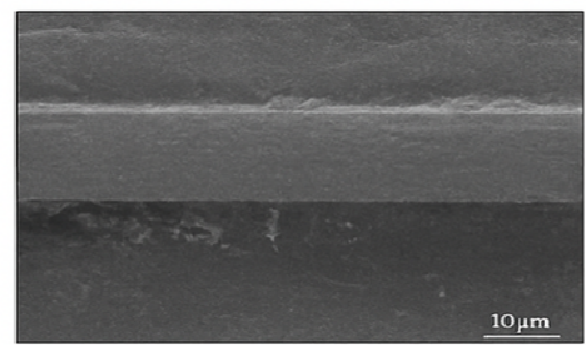
Image 01. Primer surfacer is properly interface and interlock to ABS substrate.
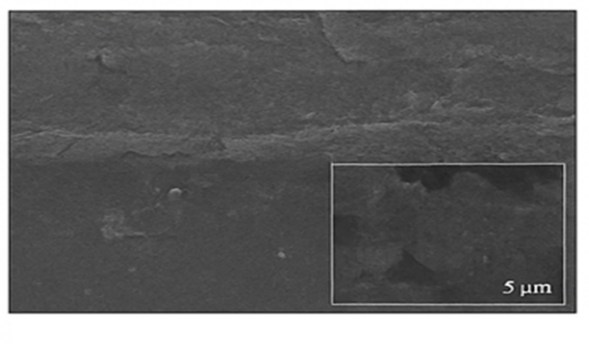
Image 02. In this image, we can see Primer has best interlock with KAR+CPO combination.
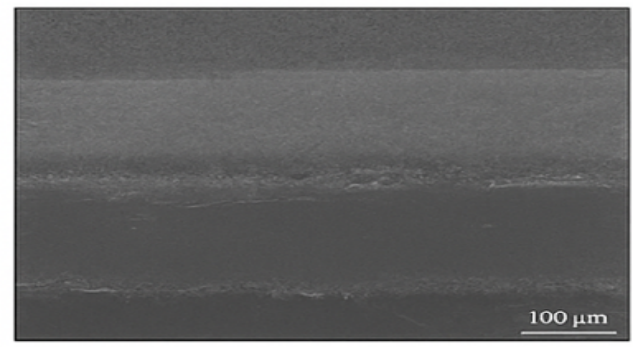
Image 03.ABS – Primer surface interlock on PP -Polypropylene substrate
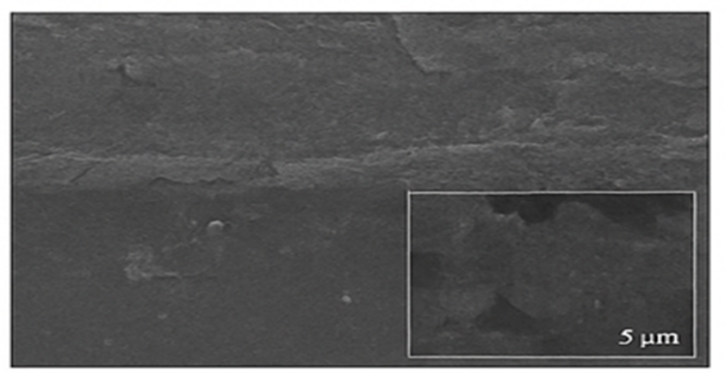
Image 04. We can see best interlock on Polypropene substrate with KAR + CPO combination
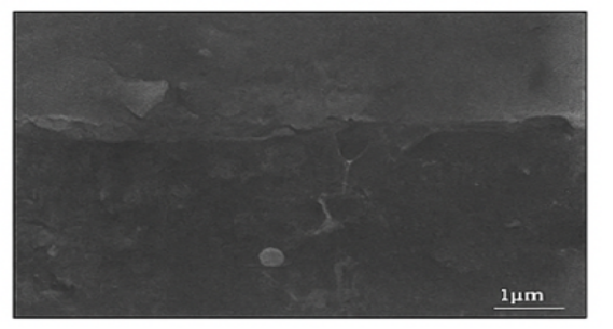
Image 05. We can see primer system
Mechanical Properties:
The coatings with silica showed improved scratch resistance and flexibility. No cracking or flaking was observed after mandrel bend and impact resistance tests, confirming their durability for automotive and electronics enclosures.
Experimentation and Results discussion.
Study of Making Stable resin solution for CPO and KAR Syntactic resin for Common primer on Deferent polymeric substrate.
Table 3.1
| CPO Resin | 15 % | 20% | 25% | 30% | 35% |
| Hydrocarbon Solvent (Toluene) | 85% | 80% | 75% | 70% | 65% |
| Total NVM Soild % | 15% | 20% | 25% | 30% | 35% |
| Stability | Not OK | Not OK | OK | Gel -Not OK | Gel Not OK |
| Remark | NG | NG | OK | NG | NG |
Chlorinated polyolefins resin is stable when used at 25% NVM solid, and it is suitable for making the paint system.
Table 3.2
| KAR Resin | 40 % | 50% | 60% | 70% | 80% |
| Hydrocarbon Solvent (Butyl Acetate) | 60% | 50% | 40% | 30% | 20% |
| Total NVM Soild % | 40% | 50% | 60% | 70% | 80% |
| Stability | Not OK | Not OK | OK | Gel -Not OK | Gel Not OK |
| Remark | NG | NG | OK | NG | NG |
KAR (Ketonic aldehyde resin is stable when used at 60% NVM solid, and it is suitable for making the paint system.
Table 3.3
Finding of suitable hydrocarbon solvents compatible with CPA/KAR and Black Conductive pigments, if hydrocarbon solvents are not compatible then, it is very difficult to make the paint system.
| CPO +KAR | + Conductive Black | Butyl Acetate | OK |
| CPO + KAR | + Conductive Black | Mixed Xylene | OK |
| CPO + KAR | + Conductive Black | Cello solves Acetate | Not OK – low stability |
| CPO + KAR | + Conductive Black | MIBK | Not OK – low stability |
| CPO + KAR | + Conductive Black | BuOH | Not OK – low stability |
| CPO + KAR | + Conductive Black | C9 | Not OK – low stability |
| CPO + KAR | + Conductive Black | MC-10 | Not OK – low stability |
| CPO + KAR | + Conductive Black | BGA | Not OK – low stability |
| CPO + KAR | + Conductive Black | Ethyl acetate | Not OK – low stability |
| CPO + KAR | + Conductive Black | IPA | Not OK – low stability |
| CPO + KAR | + Conductive Black | Methanol | Not OK – low stability |
| CPO + KAR | + Conductive Black | Toluene | OK |
After studying the effect of deferent hydrocarbon, best suitable are found as Butyl acetate, Mixed Xylene and Toluene for making of KAR + CPO base paint system.
Table 3.4
Finding of suitable % of Black Conductive pigments for having proper conductivity for the paint layer.
| Resin | Black Pigment % | Conductivity | Stability | Remark |
| CPO + KAR | 1 | Not OK | OK | Not OK |
| CPO + KAR | 2 | Nok OK | OK | Not OK |
| CPO + KAR | 3 | Not OK | OK | Not OK |
| CPO + KAR | 4.5 | OK | OK | OK |
| CPO + KAR | 5 | OK | Not OK -Gel | Not OK |
Table 3.5
Finding of suitable % of Epoxy resin and Alkyd Resin for getting the adhesion with CPO and KAR Resin combination.
| CPO Resin % | KAR Resin % | Epoxy +Alkyd % | Results on ABS/PP /Nylon | Remark |
| 34% | 6 | 0.5+0.5 | Not OK | Not OK |
| 34% | 6 | 1+1 | Not OK | Not OK |
| 34% | 6 | 2+2 | OK | Ok |
| 34% | 6 | 3+3 | Not OK | Not OK |
| 34% | 6 | 4+4 | Not OK | Not OK |
Table 3.6
Finding of suitable % of CPO for making common conductive paint.
| CPO Resin % | KAR Resin % | Epoxy +Alkyd % | Results on ABS/PP /Nylon | Remark |
| 20% | 6 | 2+2 | Not OK | Not OK |
| 30% | 6 | 2+2 | Not OK | Not OK |
| 34% | 6 | 2+2 | OK | Ok |
| 40% | 6 | 2+2 | Not OK- gel | Not OK |
| 45% | 6 | 2+2 | Not OK -gel | Not OK |
Table 3.7
Finding of suitable % of KAR resin for making common conductive paint.
| CPO Resin % | KAR Resin % | Epoxy +Alkyd % | Results on ABS/PP /Nylon | Remark |
| 34% | 4 | 2+2 | Not OK | Not OK |
| 34% | 5 | 2+2 | Not OK | Not OK |
| 34% | 6 | 2+2 | OK | Ok |
| 34% | 7 | 2+2 | Not OK- gel | Not OK |
| 34% | 8 | 2+2 | Not OK -gel | Not OK |
Table 3.8
After studying the all, raw materials and its effect, below is the formulation after studying the effect of deferent combination of mixing of CPO and KAR resin,
| Sr. No. | Raw Material Used | Wt.% | Remark |
| 1 | Chlorinated Poly olefines Resin | 34.00 | Gives interlocking to poly propylene |
| 2 | Mixed Xylene | 23.00 | Hydrocarbon solvent |
| 3 | Dispersion- Modified polyurethane polymer. (wetting additive) | 1.500 | Gives uniform dispersion for pigments |
| 4 | Silica-based rheology-control-additive | 0.400 | Gives Rheology and support anti-settling |
| 5 | Black Conductive Pigment | 4.500 | Gives conductive effect |
| 6 | Tio2 | 9.00 | Filler |
| 7 | Toluene | 7.00 | Hydrocarbon solvent |
| 8 | Ketonic Aldehyde Resin | 6.00 | Interlock to ABS and Nylone |
| 9 | Epoxy Resin | 2.00 | Interlock to polymers |
| 10 | Poly Hydroxyl Acrylic Polyol | 6.00 | Interlock to polymers |
| 11 | Acid catalyst | 0.600 | Initiator |
| 12 | Butyl Acetate | 4.00 | Hydrocarbon Solvent |
| 13 | Alkyd modified acrylic Resin | 2.00 | Interlock to polymer |
| Total | 100.00% | ||
“A polymeric dispersant additive was employed to stabilize conductive carbon black pigments, enhancing gloss and uniform dispersion.”
Paint preparation and making process
- Made the chlorinated resin solution (25%) solution in Toluene at Room temperature.
- Used this resin solution 34% and make it further diluted with Hydrocarbon solvents Mixed Xylene 23%, Toluene (7%) and Butyl acetate (4%).
- Added Modified polyurethane polymer -dispersing additive in this mixer 1.5% and mixed it well for 15 min. Additive is a highly effective polymeric dispersant for stabilizing inorganic and organic pigments specially for conductive carbon blacks. It has very good stability performance, through effective steric hindrance, on all types of pigments. This results in: – improved gloss and DOI.
- Next silica base rheological raw material is added to get the rheology to the paint 0.5%, it is a fumed silica after-treated with DDS (dimethyl dichlorosilane).
- Addition of Black conductive pigment is done (4.5%), followed by TiO2 addition (9%).
- Finally, the resins Epoxy (2%) and Alkyd Modified Acrylic resin (2%) to complete the formulation and grind this mixture for 15min, gives the smooth paint.
Physical & Liquid Properties:
Viscosity: 60–80 KU (adjustable for spray or dip application)
Solid Content: 34–36%
Gloss (60°): Semi-matte to matte finish
Drying Time (Tack-free): ~20 min at 25°C
Film Thickness: ~15–20 microns
Electrical Conductivity: 400 K Ohms after 1 min of flash off.
Surface Resistivity: 10⁶ to 10⁸ ohms/sq, suitable for electrostatic spray applications
Adhesion (Cross Hatch Test): 100X100 2mm
PP substrate: 4B–5B (after flame treatment or primer-less application)
ABS substrate: 5B
PC substrate: 5B
Nylone : 5B
Flexibility: Passed 2 mm mandrel bend test on all substrates
Thermal Stability: Maintained conductivity and film integrity up to 120°C.
Testing the Conductive primer over ABS, PP, PC and Nylone substrate
Paint application à
Common conductive primer à 15 Micron à Acrylic Base coat (20 micron) à 2K Poly Urethane Clear (35Micron)à Bake (heat up) à 80 Deg C/30min
Table 6.1
| Sr. No. |
Test Condition |
Results after test | |||
| ABS | PP | PC | Nylon | ||
| 1 | Adhesion 100X100 -2mm | OK | OK | OK | OK |
| 2 | Water resistance 40 Deg c /10days | OK | OK | OK | OK |
| 3 | Humidity 95% | OK | OK | OK | OK |
| 4 | Impact 20cm /500gm wt. | OK | OK | OK | OK |
| 5 | Flexibility ¼ mandrel | OK | OK | OK | OK |
| 6 | Acid 0.1N H2So4 Solution/24 hrs | OK | OK | OK | OK |
| 7 | Alkali Test 0.1N NaOH solution | OK | OK | OK | OK |
| 8 | Gasoline Resistance | OK | OK | OK | OK |
Testing Conductivity of paint player with respect to time over ABS, PP, PC and Nylone substrate
Paint application à
Plastic parts àCommon conductive primer à 15 Micron àcheck conductivity
Table 6.2
| Sr. No. |
Conductivity of paint layer after |
Results in Resistance (Ω/sq) | |||
| ABS | PP | PC | Nylon | ||
| 1 | 1Min painting | 10⁶ | 10⁶ | 10⁶ | 10⁶ |
| 2 | 2Min painting | 105 | 105 | 105 | 105 |
| 3 | 3Min painting | 104.9 | 104.9 | 104.9 | 104.9 |
| 4 | 4 Min Painting | 104.8 | 104.8 | 104.8 | 104.8 |
| 5 | 5 Min painting | 104.7 | 104.7 | 104.7 | 104.7 |
Process for checking the conductivity is as below,
“Required Equipment and Materials.”:-
- ABS or PP plastic part or panel (clean and unpainted)
- Aluminium foil strips (approx. 2–3 cm wide, 10–15 cm long)
- Conductive primer (carbon black based)
- Spray gun or brush for primer application
- Digital multimeter (with ohms/resistance measurement mode)
- Alligator clips or multimeter probes
- Masking tape (optional)
- Personal protective equipment (gloves, mask)
Step-by-Step Testing Process for conductivity:
Step 1: Surface Cleaning
- Clean the plastic surface thoroughly using isopropyl alcohol or a plastic-compatible surface cleaner.
- Ensure the part is free from dust, oil, and moisture.
Step 2: Apply Aluminium Foil (Before Primer)
- Cut two narrow aluminium foil strips.
- Tape or press them flat onto the surface of the plastic part in the desired test locations, approximately 5 to 10 cm apart.
- Ensure the foil is flat, wrinkle-free, and in full contact with the plastic.
- Leave a small tail of the foil (uncoated portion) exposed for later probe contact.
Step 3: Apply Conductive Primer
- Apply the conductive primer over the entire surface, including the aluminium foil strips.
- Ensure uniform film thickness (~30–50 microns dry film).
- Allow the primer to fully dry and cure as per product guidelines (e.g., air dry 30 minutes, then bake at 80–100°C for 20–30 minutes if required).
Step 4: Conductivity Check
- After curing, connect the multimeter probes (set to resistance mode, preferably 200Ω to 20MΩ range).
- Clip one probe to each foil tail extending from underneath the coating.
- Record the resistance value displayed on the screen.
- All tests were performed at 25 ± 2°C and 60 ± 5% relative humidity.
Interpreting the Results:
| Resistance (Ω) | Conductivity Level | Evaluation |
| <10⁵ ohms | High conductivity | Excellent for electrostatic painting |
| 10⁵ – 10⁶ ohms | Acceptable | Suitable with good paint transfer |
| 10⁶ – 10⁹ ohms | Marginal | May cause poor charge acceptance |
| >10⁹ ohms | Insulating surface | Primer failure or poor application |
- Ensure the aluminium foil is embedded cleanly without air pockets or detachment.
- Allow full curing time for accurate readings.
- Perform tests at room temperature and stable humidity.
Structure of Conductive paint molecule made by ketonic aldehyde and chlorinated polyolefin
Final Conclusion
This research demonstrates that ketonic aldehyde resins combined with chlorinated polyolefins create a highly compatible and functional binder system for conductive coatings on plastic substrates. The unique synergy between these resins ensures excellent adhesion, pigment dispersion, and long-term durability—addressing major limitations of conventional systems.
The incorporation of “multifunctional conductive pigments” supported by performance fillers like TiO₂ and silica, allowed for formulations with balanced “TiO₂ and silica for enhanced mechanical and optical performance. The paints developed in this study achieved sufficient conductivity for electrostatic application and anti-static functionality, even on challenging substrates like PP and ABS.
With optimized resin chemistry and pigment selection, the resulting coatings offer significant potential in automotive plastic components, EMI shielding for electronics, and smart coating technologies. The system is also adaptable to low-VOC and environmentally compliant formulations, making it commercially viable for industries aiming at sustainable and efficient solutions.
Further research is suggested in expanding the resin system into water-based platforms, incorporating nano-scale conductive fillers, and developing multi-layer coating systems for enhanced functionality.
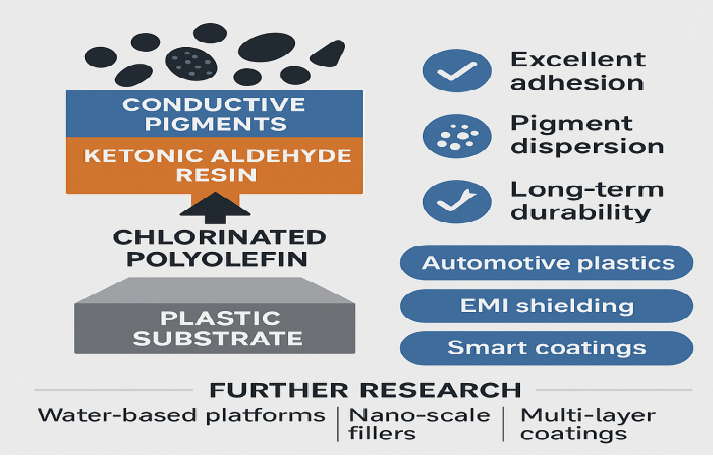
“This research provides a scalable pathway for developing conductive coatings for next-generation automotive and electronic applications.”
Statements & Declarations:
Peer-Review Method: This article underwent double-blind peer review by two external reviewers.
Competing Interests: The author/s declare no competing interests.
Funding: This research received no external funding.
Data Availability: Data are available from the corresponding author on reasonable request.
Licence: Study of Ketonic Aldehyde (KAR) and Chlorinated Polyolefin (CPO) Resin System for Conductive Primers on Various Polymeric Substrates © 2026 by Amar Ramesh Rahate & Sunder Pal is licensed under CC BY-NC-ND 4.0. Published by IJABS.
References:
- Ghosh, S. K., & Pal, A. (2018). Conductive polymer composites for EMI shielding: Materials, design, and performance. ACS Applied Materials and Interfaces, 10(14), 11769–11784.
- Kaur, J., & Khandal, R. K. (2021). Adhesion promotion by chlorinated polyolefins on polypropylene surfaces. Surface Coatings International, 104(1), 20–27.
- Lin, J., Zhang, Y., & Wu, W. (2018). Conductive paint formulation and its application to plastic substrates. Materials Chemistry and Physics, 213, 471–478.
- Lu, G., & Tjong, S. C. (2014). Electrical properties of polymer nanocomposites filled with conductive nanoparticles. Materials Science and Engineering: R: Reports, 74(5), 193–225.
- Ma, Z., Wang, R., & Zhang, H. (2016). Application of chlorinated polyolefins in automotive coatings. Journal of Coatings Technology and Research, 13(3), 623–629.
- Mittal, K. L. (Ed.). (2010). Polymer surface modification: Relevance to adhesion. CRC Press.
- Park, S. H., & Jin, H. J. (2010). Conductive coatings on polymer substrates for flexible electronics. Journal of Industrial and Engineering Chemistry, 16(5), 609–614.
- Pielichowski, K., & Njuguna, J. (2005). Thermal degradation of polymer materials. Rapra Technology Limited.
- Sasaki, K. et al. (2015). Carbon black as a conductive pigment for anti-static coatings. Journal of Coatings Technology and Research, 12(4), 703–711.
- Wakiyama, H. et al. (2009). Resin composition for coating plastic substrates. *Patent WO2009130767A1*.
- Wu, C., Zhou, X., & Wang, Y. (2012). Conductive paint with carbon nanotube for electrostatic applications. Progress in Organic Coatings, 75(4), 519–524.
Cite this Article:
Rahate, A. R., & Pal, S. (2026). Study of ketonic aldehyde (KAR) and chlorinated polyolefin (CPO) resin system for conductive primers on various polymeric substrates. International Journal of Applied and Behavioral Science, 3(1), 1-20. https://doi.org/10.70388/ijabs250157