
 Share
Share
Abstract
This study focuses on the current technological advancements in the field of mechanical engineering systems and sustainable energy policies that can effectively help in combating the problem of climate change with the use of renewable energy sources in urban and rural areas. It brings to the fore such developments as aerodynamic optimization of wind turbines, thermal storage improvements in solar, and Organic Rankine Cycle technology to recover waste heat, all of which can make systems more energy efficient and with lower carbon footprints. The paper also addresses realistic solutions such as rooftop PV, smart inverters, district cooling and rural mini-grids that respond to the energy needs of the various locations. Backed by real-life case studies of India and Kenya, the results highlight the critical importance of mechanical engineering in the transition to a resilient and low-carbon energy future, which provides solutions that are scalable to the local needs, as well as minimizing climate change impacts globally.
Keywords: Renewable energy, Climate change mitigation, Wind turbine, Solar thermal storage, Organic Rankine Cycle (ORC), Urban and Rural Development.
Introduction
Due to fossil fuel use to power electricity plants, industries, and cars, climate change is one of the biggest problems of the 21st century. The greenhouse gases have generated unprecedented global warming, causing weather patterns, natural disasters, and ecological and livelihood threats. A clear shift to low-carbon, sustainable energy systems that reduce emissions and provide reliable power is needed to solve this challenge. This transition is driven by mechanical engineering, which designs and optimizes renewable energy systems. Wind turbine design, solar thermal storage, and waste heat recovery technologies are engineering breakthroughs. These improvements improve energy conversion efficiency and energy system resilience to climatic unpredictability. Adopting sustainable energy solutions requires urban and rural-specific methods. Cities may reduce grid restrictions and emissions using rooftop photovoltaic, smart inverters, district cooling, and electric car facilities. Rural communities use solar mini-grids, biogas digesters, and efficient biomass stoves to close the infrastructural gap and become energy independent. Innovative technology and context-dependent deployment tactics can create climate-resilient and inclusive energy systems. 1.1.
Objectives of the Study
- To analyze technological innovations in renewable energy systems.
- To explore sustainable energy strategies for urban and rural needs.
- To assess their impact on climate change mitigation.
Literature Review
Adewumi et al. (2024) conducted a broad-based policy-based survey of sustainable energy solutions in the face of climate change. They concentrated their discussion on the emerging trends of the world level, such as the increasing influence of the renewable energy into the national power systems, the policies that encouraged the low-carbon technologies, and the global efforts which attempted to accelerate the energy transitions. They also stressed that good policy frameworks, which involved the regulatory approach, financial instruments, and the public private partnerships, were significant in ensuring that sustainable energy systems were widely used.
Erdoğdu et al. (2025) listened to technological innovations and researched the novel practices that led to sustainable production and use of energy. They concentrated on the fact that renewable technology development as well as behavioral change towards energy conservation had to be encouraged. They referred to technologies such as smart grids and demand-side management tools, high-efficiency solar and wind systems. According to the authors, the synergy of the technological solutions and community-based initiatives was one of the keys to the climate mitigation efforts becoming much more effective, and a greener and more resilient future was coming.
Huang et al. (2024) explored the transformational character of digitalization in relation to the uptake of renewable energy and technological innovation in the major Asian economies. They demonstrated in their paper how computer-based technologies, such as artificial intelligence-based prediction, Internet of Things (IoT) solutions, and blockchain-powered energy-related transactions were changing the manner in which renewable energy sources are managed and optimized. They discovered that the digitalization enhanced energy system efficiency and climate uncertainty resilience in China, India, and Japan, thus leading to sustainable development in the long-term development.
Climate Change and Energy Resources
Global energy system stability and sustainability depend on climate change. Rising temperatures, shifting precipitation patterns, and extreme weather events are changing the environment and energy production, distribution, and consumption. Engineers and politicians must understand these relationships to build climate-resilient energy infrastructure. The effects of climate change on energy are complex. Hydropower systems are sensitive to droughts and rainfall uncertainty, which lower reservoir levels and electric production. Water shortages pressurize thermal power plant condensers and rising ambient temperatures reduce cooling efficiency. Changes in wind and gust patterns affect power production predictability and consistency. Solar irradiation is affected by increased cloud cover and weather fluctuations, which affects PV and CSP facilities. These consequences suggest that energy planning should incorporate climate change and create adaptive technology to ensure energy security in a changing environment.
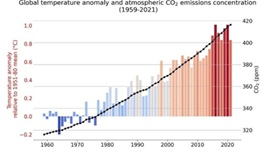
Figure 1: Global temperature anomalies vs. atmospheric CO₂ concentration (1959–2021)
As shown in figure 1, there is a definite rise in the global temperature anomalies and the atmospheric CO 2 concentration between 1959 and 2021. As the level of co2 rose, by roughly 1 o C above the 1951-1980 average, to above 415 ppm, the global temperatures have been soaring. The strong correlation between climate warming and greenhouse gas emissions underlines the importance of sustainable low-carbon energy sources in order to reduce the risks of the climatic changes in the future.
Technological Innovations in Mechanical Systems
The importance of technological advancement in mechanical engineering is to enhance the efficiency, reliability and flexibility of renewable energy systems to reduce the negative impacts of climate change on energy supply.
Wind Energy: Aerodynamic Optimization
The power extracted by a wind turbine is governed by:
𝑃 = ½ pACPv3
In which, p is the density of air, A is the area of the rotor, Cp the power coefficient (max 0.593), and v is the wind speed. Recent developments are the blade twist and adaptive pitch control to keep optimal Cp under different wind conditions, and the use of more advanced composites to build lighter and more flexible blades, which reduce fatigue and enable larger rotors.
Solar Thermal Systems: Thermal Storage Enhancements
One of the main developments in Concentrated Solar Power (CSP) is the inclusion of high-capacity thermal storage systems. Average storage materials are summarized in Table 1.
Table 1: Properties of common thermal storage materials
| Storage Material | Temperature Range (°C) | Heat Capacity |
| Molten salts (NaNO₃–KNO₃) | 290 – 565 | Sensible: ~1.5 kJ/kg·K |
| Phase Change Materials (PCM) | ~300 | Latent heat: ~200 kJ/kg |
Such systems allow CSP plants to save thermal energy at its peak sunlight hours and still generate electricity at times when clouds cover the sun or when it is at night, and thus it makes solar power have a high-capacity factor and dispatchability.
Waste Heat Recovery Using ORC Systems
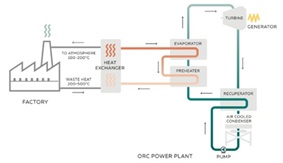
Figure 2: Industrial Waste Heat Recovery cycle works
Organic Rankine Cycle (ORC) plants use waste heat (80-300o C) to generate electricity, increasing the efficiency of the plant on the whole. Thermal efficiency () of ORC system is:
𝜂 = 𝑊𝑛𝑒𝑡/ Qin
Wnet being the network output and Qin the heat input. It is a guide to optimal component sizing, working fluid selection, and heat exchanger design to maximize waste heat use.
Sustainable Strategies for Urban and Rural Development
The approaches to developing resilient energy systems against climate effects should be based on the specific settings. High-density and integrated solutions tend to be more appropriate in the urban environment, whereas rural communities tend to have decentralized systems that do not require the expansion of the grid. Collectively, they can reduce emissions, enhance energy access and enhance the energy security of the whole system. Table 2 below shows a comparison overview of some of the main sustainable energy strategies and solutions that are adopted in both urban and rural environments with their common scales and main advantages.
Table 2: Sustainable energy strategies for urban and rural development
| Context | Strategy / Solution | Scale / System Type | Key Benefits |
| Urban | Rooftop PV + smart
inverters |
Building-scale | Grid support, reduced electricity
bills, voltage and frequency control |
| Urban | District cooling
systems |
Community / district | Up to 30% energy savings over
individual AC units |
| Urban | EV integration with
renewables |
Transport +
distributed generation |
Load shifting, reduced
transportation emissions |
| Rural | Solar mini-grids | 10–200 kW | Electrification for villages,
irrigation, small enterprises |
| Rural | Biogas digesters | Household / farm | Cooking gas, small-scale electricity
from organic waste |
| Rural | Efficient biomass
stoves |
1–5 kW | Cleaner cooking and heating, lower
fuel use, reduced indoor pollution |
Case Studies
Delhi Rooftop Solar with AI-Based Load Management
Pilot projects in Delhi that integrate rooftop PV systems with AI-based load management have shown:
- ~15% decrease in the annual grid demand, mainly through shifting heavy loads like air conditioning and electric vehicle charging to the time of high solar generation.
- Better stability of the grid with automated inverter adjustments.
Kenya Solar-BioGas Hybrid Microgrid
A hybrid mini-grid in rural Kenya integrates solar PV and biogas generation to achieve:
- Dependable (>95 percent uptime) service to about 300 homes, local businesses, schools, and clinics.
- ~50% decrease in firewood consumption, reduced deforestation rate and enhancing air quality in houses due to reduced use of traditional biomass.
Conclusion
This research highlights the centrality of mechanical engineering innovations in achieving a sustainable energy transition to address climate change. By the optimization of the wind turbine aerodynamics, enhancement of the thermal storage in solar systems, and effective recovery of waste heat through ORC systems, considerable progress has been achieved in terms of increasing the efficiency and stability of renewable energy systems. Moreover, the specific solutions to urban environments and rural areas, such as rooftop PV and district cooling integration, decentralized mini-grids, and biogas, show how local solutions can be used to achieve global climate objectives on a combined basis. With powerful case studies, these insights help to confirm that the large-scale implementation of such technologies is the key to a resilient, low-carbon future, allowing for ensuring energy access and environmental stewardship in different communities.
References:
- Adewumi, A., Olu-Lawal, K. A., Okoli, C. E., Usman, F. O., & Usiagu, G. S. (2024). Sustainable energy solutions and climate change: A policy review of emerging trends and global responses. World Journal of Advanced Research and Reviews, 21(2), 408–420.
- Erdoğdu, A., Dayi, F., Yanik, A., Yildiz, F., & Ganji, F. (2025). Innovative solutions for combating climate change: Advancing sustainable energy and consumption practices for a greener future. Sustainability, 17(6), 2697. https://doi.org/10.3390/su17062697
- Gan, K. E., Taikan, O., Gan, T. Y., Weis, T., Yamazaki, D., & Schüttrumpf, H. (2023). Enhancing renewable energy systems, contributing to Sustainable Development Goals of United Nation and building resilience against climate change impacts. Energy Technology, 11(11), Article 2300275. https://doi.org/10.1002/ente.202300275
- Huang, C., Wang, C., Rani, T., & Rehman, S. A. U. (2024). Digitalization’s role in shaping climate change, renewable energy, and technological innovation for achieving sustainable development in top Asian countries. Energy and Environment. https://doi.org/10.1177/0958305X241258799
- Kılkış, Ş., Krajačić, G., Duić, N., Rosen, M. A., & Al-Nimr, M. A. (2022). Effective mitigation of climate change with sustainable development of energy, water and environment systems. Energy Conversion and Management, 269, Article 116146. https://doi.org/10.1016/j.enconman.2022.116146
- Olabi, A. G., & Abdelkareem, M. A. (2022). Renewable energy and climate change. Renewable and Sustainable Energy Reviews, 158, Article 112111. https://doi.org/10.1016/j.rser.2022.112111
- Owusu, P. A., & Asumadu-Sarkodie, S. (2016). A review of renewable energy sources, sustainability issues and climate change mitigation. Cogent Engineering, 3(1), Article 1167990. https://doi.org/10.1080/23311916.2016.1167990
- Saleh, H. M., & Hassan, A. I. (2024). The challenges of sustainable energy transition: A focus on renewable energy. Applied Chemical Engineering, 7(2), 2084. https://doi.org/10.59429/ace.v7i2.2084
- Sapkota, A., Lu, Z., Yang, H., & Wang, J. (2014). Role of renewable energy technologies in rural communities’ adaptation to climate change in Nepal. Renewable Energy, 68, 793–800. https://doi.org/10.1016/j.renene.2014.03.003
- Xing, L., Udemba, E. N., Tosun, M., Abdallah, I., & Boukhris, I. (2023). Sustainable development policies of renewable energy and technological innovation toward climate and sustainable development goals. Sustainable Development, 31(2), 1178–1192. https://doi.org/10.1002/sd.2514
- Kaygusuz, K. (2011). Energy for sustainable development: A case of developing countries. Renewable and Sustainable Energy Reviews, 16(2), 1116–1126. https://doi.org/10.1016/j.rser.2011.11.013.
Cite this Article:
Kumar, R., & Lal, H. (2025). Technological Innovations and sustainable Energy Strategies to combat climate change: Advancing renewable energy for urban and rural development. International Journal of Applied and Behavioral Sciences, 02(02), 119–126. https://doi.org/10.70388/ijabs250143
Statements & Declarations:
Peer-Review Method
This article underwent double-blind peer review by two external reviewers.
Competing Interests
The author/s declare no competing interests.
Funding
This research received no external funding.
Data Availability
Data are available from the corresponding author on reasonable request.
Licence
Technological Innovations and Sustainable Energy Strategies to Combat Climate Change: Advancing Renewable Energy for Urban and Rural Development © 2025 by Rajinder Kumar & Harmesh Lal is licensed under CC BY-NC-ND 4.0. Published by IJABS.